Albanese to compare pivotal moment in AI to renewable energy transition as he outlines approach
Source Entity
Tom McIlroy and Josh Butler
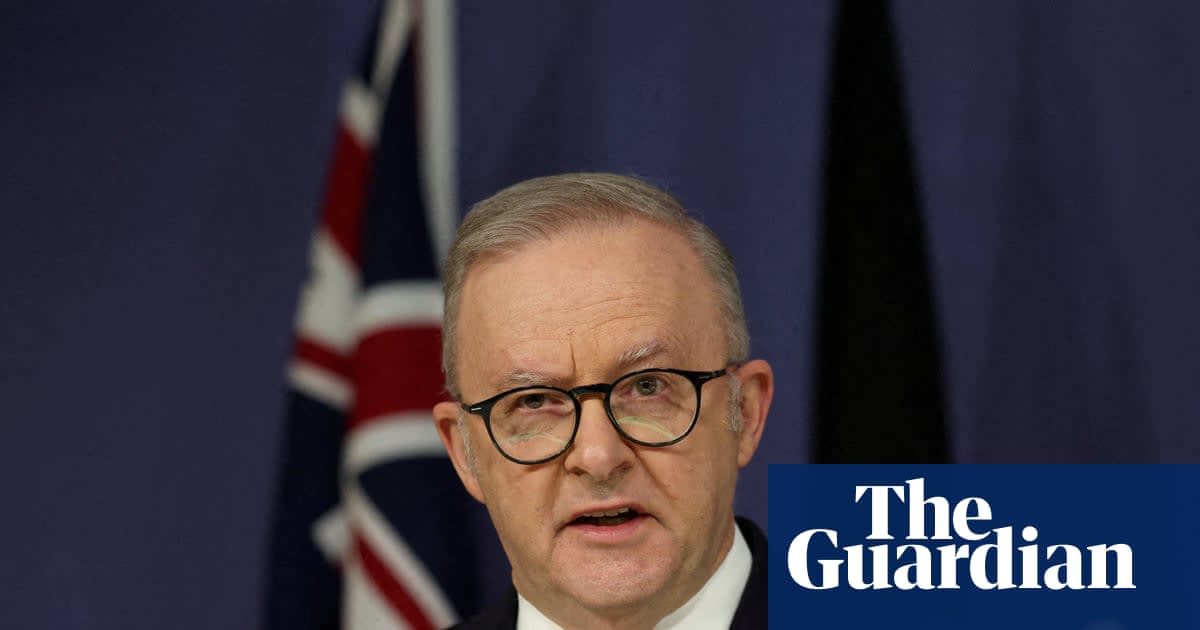
<p>Labor sources say the PM will discuss safety concerns in speech this week but will not provide an update on copyright reforms to protect artists</p><ul><li><p><a href="http://theguardian.com/australia-news/live/2026/jul/14/australia-news-live-nt-police-peter-falconio-anthony-albanese-ai-artificial-intelligence-copyright-antisemitism-royal-commission-bondi-universities-ntwnfb">Follow our Australia news live blog for latest updates</a></p></li><li><p>Get our <a href="https://www.theguardian.com/email-newsletters?CMP=cvau_sfl">breaking news email</a>, <a href="https://app.adjust.com/w4u7jx3">free app</a> or <a href="https://www.theguardian.com/australia-news/series/full-story?CMP=cvau_sfl">daily news podcast</a></p></li></ul><p>Anthony Albanese will describe the progress of AI as an inflection point for society on par with the renewable energy transition, but is not expected to detail progress on copyright reforms to protect creative industries.</p><p>The prime minister will deliver a highly anticipated speech in Sydney on Wednesday to address growing concerns around social licence and the necessary policy guardrails for AI, datacentres and the ability of big tech to profit from Australian intellectual property.</p> <a href="https://www.theguardian.com/australia-news/2026/jul/14/anthony-albanese-ai-speech-safety-copyright-datacentres-social-licence">Continue reading...</a>
The AI Inflection Point: Analyzing Albanese's Strategic Vision
Prime Minister Anthony Albanese is preparing to frame the rise of artificial intelligence not merely as a technological upgrade, but as a fundamental societal inflection point. By comparing the AI revolution to the renewable energy transition, the Prime Minister is signaling that AI will require a similar systemic overhaul of infrastructure, regulation, and public mindset. This analogy is potent; just as the shift to renewables necessitates a move away from legacy fossil fuel systems, the AI transition implies a departure from traditional cognitive and economic workflows, demanding a proactive state-led strategy to manage the volatility of such a transition.
The Quest for 'Social Licence' and Safety Guardrails
A central pillar of the upcoming Sydney speech is the concept of "social licence." In the context of AI, social licence refers to the public's acceptance and trust in the deployment of autonomous systems. Albanese's focus on safety concerns and policy guardrails suggests that the Australian government recognizes a growing anxiety regarding the unchecked proliferation of AI. The mention of datacentres is particularly critical, as the physical infrastructure required to power AI—massive amounts of energy and water—creates a tension between technological ambition and environmental sustainability, mirroring the very renewable energy transition the PM is citing.
The Tension with Big Tech and Intellectual Property
The narrative highlights a critical friction point: the ability of global Big Tech firms to profit from Australian intellectual property. This reflects a broader global struggle over data sovereignty. By addressing how AI models are trained on local data and creative works, the government is acknowledging the risk of "digital colonialism," where value is extracted from Australian creators to enrich offshore corporations. The focus on guardrails is likely intended to ensure that the economic benefits of AI productivity are shared more equitably within the domestic economy rather than flowing exclusively to Silicon Valley.
The Creative Gap: The Omission of Copyright Reform
Despite the focus on Big Tech, a significant point of contention is the PM's expected silence on copyright reforms. For the creative industries—artists, writers, and musicians—the most pressing issue is not general "safety," but the legal framework that prevents their work from being ingested by AI without consent or compensation. By omitting a specific update on copyright, the Labor government may be attempting to balance the needs of the tech sector (which requires vast datasets) against the demands of the artistic community. This omission suggests that the legal complexities of copyright in the age of generative AI remain an unresolved hurdle for the administration.
Global Positioning and Future Trends
Australia's approach, as outlined by Albanese, appears to be carving a middle path between the light-touch regulation of the United States and the highly prescriptive AI Act of the European Union. By focusing on "social licence," Australia is attempting to create a flexible but safe environment for innovation. Looking forward, we can expect the government to lean heavily into the "energy-AI nexus," potentially linking the growth of AI datacentres to the acceleration of renewable energy projects to ensure that the digital transition does not undermine the climate transition.
Conclusion
Prime Minister Albanese's upcoming address represents a pivotal moment in Australia's digital policy. By elevating AI to the same level of importance as the energy transition, the government is acknowledging the existential scale of the technology. However, the success of this vision will depend on whether the government can move beyond high-level analogies to provide concrete protections for intellectual property and clear, enforceable guardrails that protect the public interest without stifling innovation.