The Alpha 21264 CPU: NT's Greatest RISC (1998)
Source Entity
Hacker News
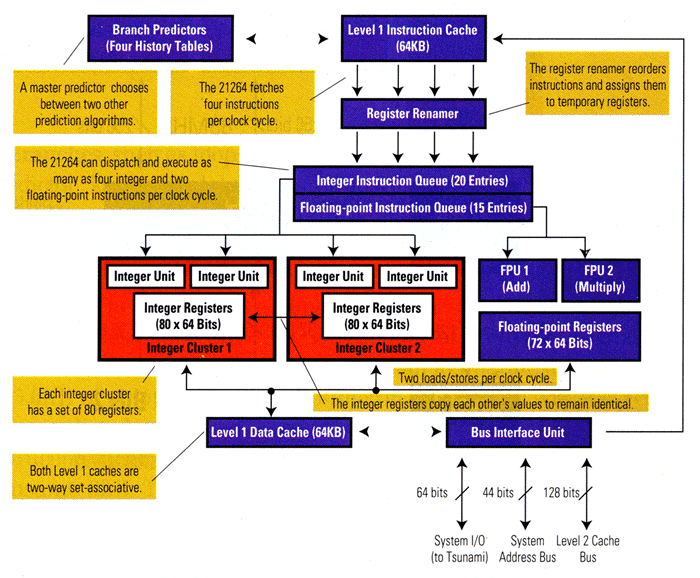
The Alpha 21264 represented a peak in late-90s RISC architecture, offering 64-bit performance for Windows NT while Intel's Merced was still in development. It set a high-speed benchmark for its era, pushing clock speeds past 700MHz.
The Legacy of the Alpha 21264: A RISC Landmark
In the late 1990s, the computing landscape was dominated by a fierce rivalry between established CISC architectures and the rising potential of RISC (Reduced Instruction Set Computer) technology. The Alpha 21264, developed by Digital Equipment Corporation (DEC), stood at the vanguard of this movement. Originally intended for a 1998 BYTE Magazine feature, the documentation of this chip serves as a time capsule for an era when the industry was aggressively transitioning toward 64-bit processing.
Challenging the Intel Hegemony
At the time of its release, the Alpha 21264 was positioned as a formidable alternative to Intel's highly anticipated, yet delayed, 64-bit Merced processor. While Intel was still refining its roadmap, Digital Equipment offered a tangible solution for high-performance computing. By supporting Windows NT, the 21264 bridged the gap between specialized scientific workstation performance and the growing enterprise demand for robust 64-bit operating systems.
Technical Superiority and Clock Speed
The architecture of the 21264 was a marvel of its time, designed to push performance boundaries far beyond standard consumer chips. With expectations of exceeding 700MHz, the processor was significantly faster than many of its contemporaries. This speed was not merely a vanity metric; it represented a fundamental shift in how microprocessors handled data throughput and instruction pipelines, cementing Alpha’s reputation as the gold standard for RISC performance.
The Context of BYTE Magazine and Industry Consolidation
The history of the Alpha 21264 is inextricably linked to the volatility of the tech media and hardware sectors in 1998. The fact that the original analysis was intended for BYTE Magazine—a publication that folded before the article could reach print—highlights the rapid consolidation and shifting fortunes of the tech industry during the dot-com boom. The subsequent publication in Windows NT Magazine and C'T underscores the importance of the chip within the professional and international computing communities.
Long-Term Industry Implications
Looking back, the Alpha 21264 represents a critical node in the evolution of modern processors. While Intel eventually solidified its market dominance, the innovations pioneered by the Alpha architecture—specifically in out-of-order execution and high-frequency design—influenced subsequent generations of CPU development. The 21264 remains a testament to Digital Equipment’s engineering prowess, marking a period where RISC architectures pushed the limits of what was thought possible for desktop and server-grade computing.
Conclusion
In summary, the Alpha 21264 was more than just a fast chip; it was a strategic attempt to redefine the 64-bit computing standard. By delivering high-speed, 64-bit performance for Windows NT in 1998, it provided a glimpse into a future that would eventually become the industry norm. Its legacy persists in the performance-oriented design philosophies that continue to drive microprocessor innovation today.