Amazon’s Zoox robotaxis are now available via Uber
Source Entity
Andrew J. Hawkins
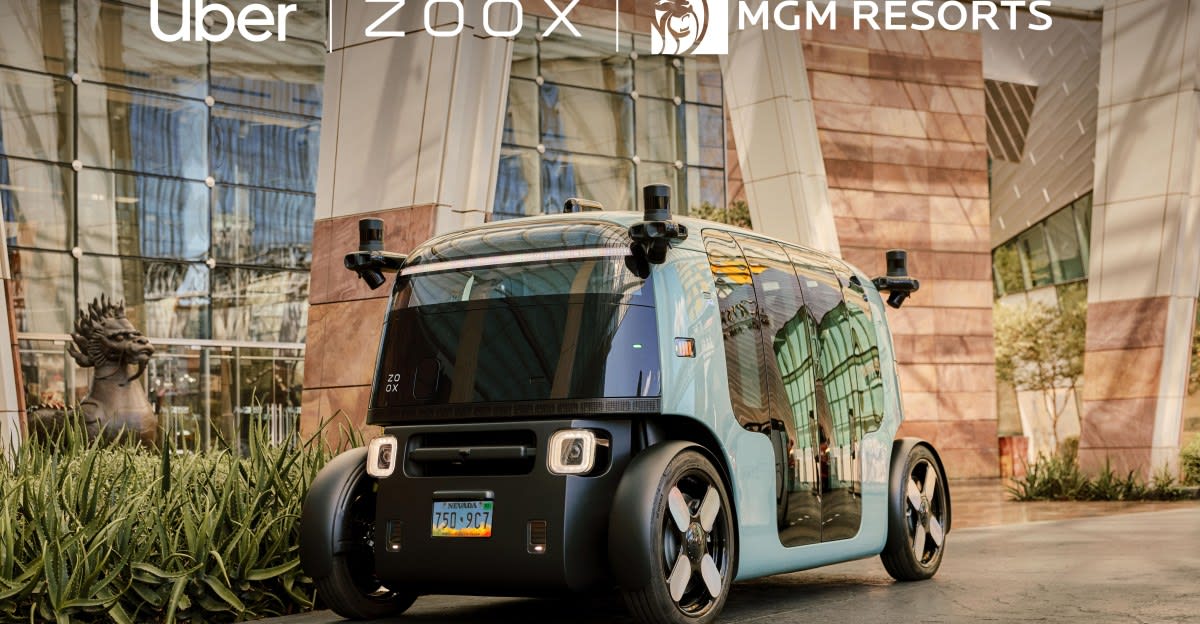
Amazon-owned Zoox has launched its purpose-built, steering-wheel-free robotaxis on the Uber app in Las Vegas. This partnership marks a significant milestone for both companies, expanding Uber's autonomous network and providing Zoox with broader market access.
The Convergence of Autonomous Transit and Ride-Hailing
In a significant development for the autonomous vehicle (AV) industry, Amazon-owned Zoox has officially integrated its robotaxi fleet into the Uber platform. Starting in Las Vegas, riders requesting various Uber services—including UberX, Uber Comfort, and Uber Electric—may now be matched with Zoox’s distinctive, bidirectional, steering-wheel-free vehicles. This launch represents a strategic shift for both tech giants, moving toward a more integrated ecosystem for autonomous mobility.
A Milestone for Uber's Strategic Vision
For Uber, this partnership is a critical component of its broader ambition to serve as the primary global platform for autonomous technology. By incorporating Zoox, Uber continues to diversify its network, which already spans over 30 partnerships involving sidewalk delivery robots, drones, and various self-driving car developers. This "platform-first" approach allows Uber to maintain its relevance in a future where vehicle ownership may decline, positioning itself as the central hub for diverse autonomous transport solutions across North America, Europe, and the Middle East.
Zoox’s Evolution in the Market
For Zoox, the integration into Uber marks its first foray into a third-party ride-hailing application. Previously, Zoox operated largely within its own ecosystem. By leveraging Uber’s massive user base, Zoox gains immediate access to a wider pool of potential riders who might not have otherwise sought out their specific service. This exposure is vital for the company as it seeks to scale its operations and validate its unique, purpose-built vehicle design in a real-world, high-demand environment like Las Vegas.
The Significance of Purpose-Built Design
Unlike many competitors that rely on retrofitted consumer vehicles, Zoox utilizes a purpose-built, bidirectional design that lacks a traditional steering wheel. This approach represents a fundamental rethinking of urban passenger transit. By deploying these specialized vehicles on the Uber network, the companies are testing the feasibility of a future where transit is defined by rider experience rather than the mechanics of driver-operated vehicles.
Broader Implications for Urban Mobility
The collaboration signals a maturing autonomous market where hardware developers and software platforms are increasingly finding synergy. As Uber continues to refine its ability to dispatch mixed fleets of human-driven and autonomous vehicles, the inclusion of Zoox serves as a bellwether for the future of urban mobility. If successful, this model of third-party integration could become the standard for AV companies looking to scale their operations without building independent consumer-facing apps from scratch.
Future Trends and Market Outlook
Looking ahead, the success of this deployment in Las Vegas will likely dictate the pace of expansion for both entities. The industry is currently in a phase of rapid experimentation, and the ability to seamlessly transition passengers between different types of autonomous and human-driven transport is the ultimate goal. As this partnership progresses, we can expect a continued focus on reliability, safety, and the optimization of ride-hailing algorithms to accommodate vehicles that operate without traditional human controls.
Multiple Citing Sources