Why AMI Labs’ Alexandre LeBrun won’t call his AI ‘AGI’ or ‘superintelligence’
Source Entity
Kate Park
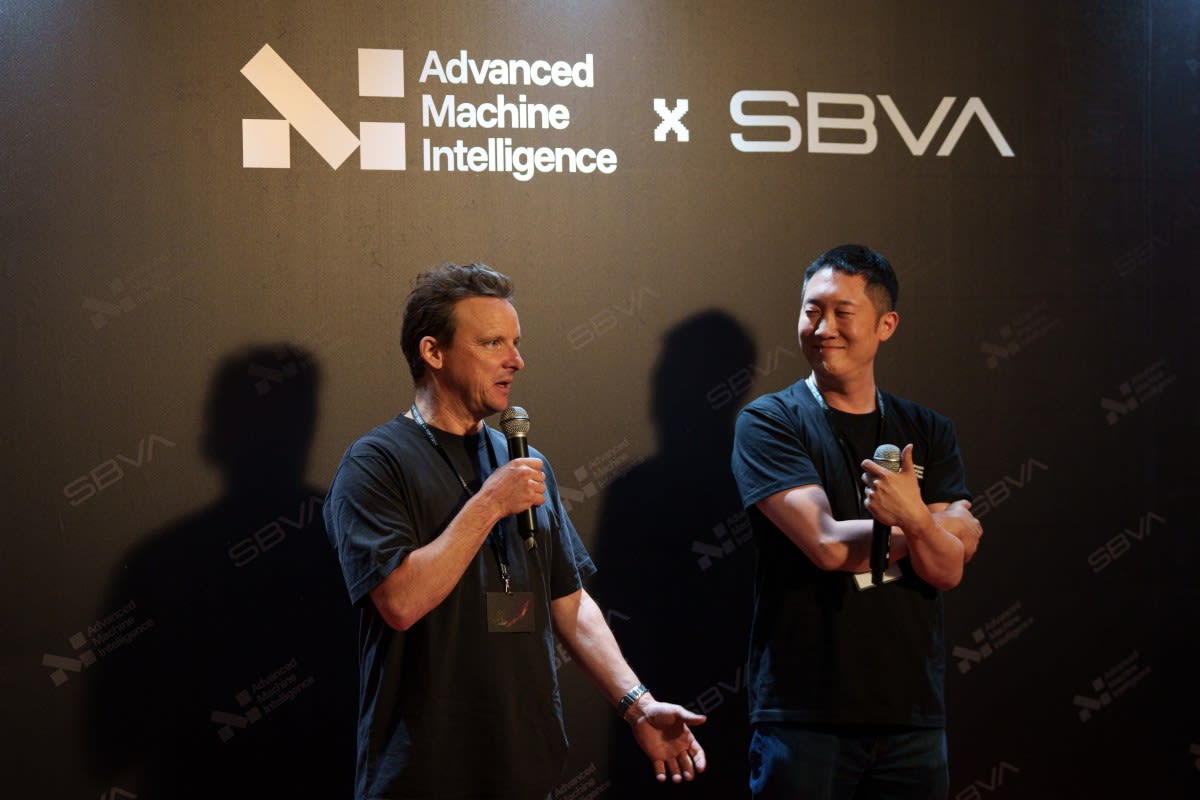
Alexandre LeBrun, CEO of AMI Labs—a startup focused on world models and linked to AI pioneer Yann LeCun—has publicly distanced himself from the industry-standard terms 'AGI' and 'superintelligence,' arguing against the current hype cycle in favor of a more grounded architectural approach to AI.
Beyond the Hype: Alexandre LeBrun's Critique of AGI and Superintelligence
In an era where the artificial intelligence industry is dominated by a race toward "Artificial General Intelligence" (AGI) and the theoretical advent of "superintelligence," Alexandre LeBrun, the CEO of AMI Labs, is taking a contrarian stance. By dismissing these terms, LeBrun is not merely engaging in a semantic debate but is signaling a fundamental divergence in how AI should be developed and understood. While giants like OpenAI and Google often frame their goals around reaching a human-level or superhuman cognitive threshold, LeBrun and AMI Labs are focusing on the technical reality of how machines perceive and interact with the world.
The Problem with AGI as a Metric
The refusal to use the term "AGI" stems from the fact that the term itself lacks a rigorous, scientific definition. For many in the industry, AGI has become a marketing buzzword used to attract venture capital and maintain a sense of inevitability regarding AI's dominance. LeBrun’s dismissal suggests that chasing a vague milestone like "general intelligence" can distract researchers from the actual engineering hurdles required to make AI truly useful and reliable. By avoiding these labels, AMI Labs positions itself as a company rooted in empirical progress rather than speculative milestones, prioritizing functional capabilities over theoretical labels.
World Models vs. Predictive Text
At the heart of AMI Labs' philosophy is the concept of "world models," a vision strongly championed by Yann LeCun. Unlike current Large Language Models (LLMs), which operate primarily on probabilistic token prediction—essentially guessing the next word based on massive datasets—a world model aims to understand the underlying physics, causality, and logic of the environment it inhabits. LeBrun's focus on world models implies that true intelligence is not about the ability to synthesize text, but about the ability to predict the consequences of actions within a physical or conceptual space. This distinction is critical; it moves the goalpost from "mimicking human speech" to "understanding human reality."
The Architectural Divergence in AI Development
This stance highlights a growing schism in the AI community between the "scaling hypothesis" and the "architectural innovation" school of thought. The scaling hypothesis suggests that simply adding more data and more compute to existing transformer architectures will eventually lead to AGI. In contrast, LeBrun and the team at AMI Labs suggest that there is a ceiling to what current LLM architectures can achieve. They argue that without a fundamental shift toward world models—systems that can plan, reason, and understand cause-and-effect—AI will remain a sophisticated mirror of human data rather than an autonomous intelligent agent.
Broader Implications for the Future of AI
If the approach championed by LeBrun and LeCun prevails, the trajectory of AI development will shift away from chatbots and toward autonomous systems and robotics. A system that possesses a world model can navigate a physical room or manage a complex industrial process without needing a trillion examples of every possible scenario; it can simply "reason" through the physics of the situation. This represents a shift from generative AI (which creates content) to agentic AI (which solves problems in the real world), potentially accelerating breakthroughs in autonomous vehicles, precision medicine, and automated manufacturing.
Conclusion: A Call for Intellectual Rigor
Ultimately, Alexandre LeBrun’s rejection of "superintelligence" is a call for intellectual rigor in a field often clouded by hyperbole. By anchoring the mission of AMI Labs in the development of world models rather than the pursuit of a mystical "super-intelligence," LeBrun is advocating for a path of incremental, verifiable, and scientifically grounded progress. As the industry matures, the success of this approach will likely be measured not by whether the AI can pass a Turing test, but by whether it can reliably interact with and predict the complexities of the physical world.