‘Dead mindset cannot see vibrancy’: Amit Shah on Rahul’s ‘dead economy’ remark
Source Entity
AADRITA HALDER
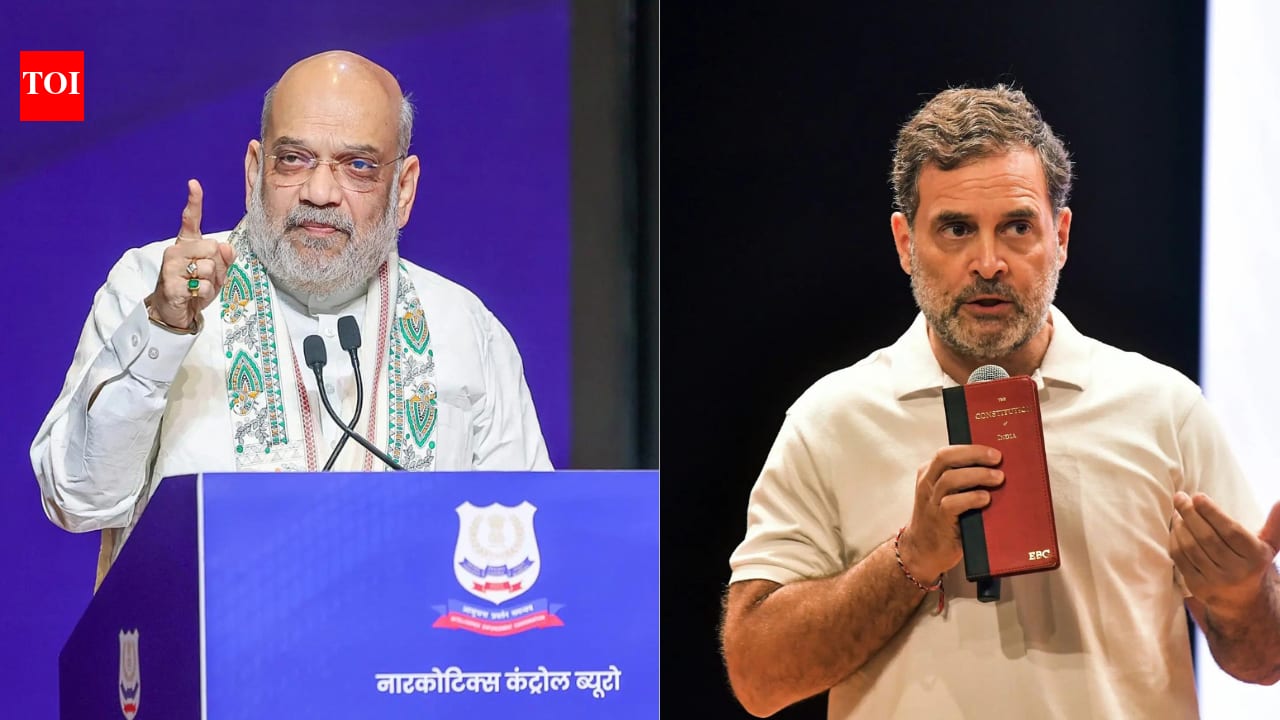
Union Home Minister Amit Shah has strongly rebutted Rahul Gandhi's 'dead economy' criticism by labeling the remark as a sign of a 'dead mindset.' This exchange marks a continuation of the ongoing ideological and economic debate between the ruling BJP and the opposition.
The Clash of Economic Narratives: An Analysis
The recent exchange between Union Home Minister Amit Shah and Congress leader Rahul Gandhi regarding the state of the Indian economy underscores the sharpening ideological divide in national politics. When Rahul Gandhi characterized the economy as 'dead,' he was echoing a frequent line of attack from the opposition, which focuses on issues like unemployment, inflation, and stagnant consumer demand. Conversely, Amit Shah’s sharp retort—that a 'dead mindset cannot see vibrancy'—reflects the government's steadfast defense of its economic policies and its focus on macroeconomic indicators.
Deconstructing the 'Dead Mindset' Rhetoric
Amit Shah’s response is not merely a political jab; it is a calculated attempt to reframe the narrative. By attributing the criticism to a 'dead mindset,' the Home Minister is signaling that the opposition's perspective is out of touch with the ground-level progress reported by government agencies. This rhetoric serves to insulate the ruling Bharatiya Janata Party (BJP) from allegations of economic mismanagement by suggesting that the 'vibrancy' is present, but obscured by a cynical political lens.
The Economic Context of the Debate
This verbal sparring occurs against a backdrop of complex economic data. While the government often points to high GDP growth rates and robust infrastructure investment as proof of success, opposition leaders consistently highlight structural challenges. The debate over whether the economy is 'vibrant' or 'dead' is largely a matter of which indicators one chooses to prioritize: national-level growth metrics versus the micro-level realities of household income and job creation.
Political Implications and Voter Perception
In the Indian political arena, economic discourse is a primary battlefield for winning voter trust. For the BJP, maintaining a narrative of growth and development is essential to their governance model. For the Congress and the broader opposition, labeling the economy as 'dead' is a strategic effort to mobilize voters who may feel alienated from the current growth cycle. This exchange highlights how both sides are attempting to define the economic reality for the Indian electorate ahead of future political cycles.
Looking Toward Future Trends
As India continues to navigate global economic headwinds, the intensity of this debate is unlikely to wane. We can expect future political discourse to remain centered on these starkly different interpretations of the economy. The government will likely continue to emphasize long-term capital expenditure and 'vibrancy,' while the opposition will continue to leverage indicators of inequality and unemployment to challenge the administration's claims.
Conclusion
The confrontation between Amit Shah and Rahul Gandhi serves as a microcosm of the broader political polarization in India. While the debate ostensibly centers on economic statistics, it is fundamentally a struggle for the narrative of India’s progress. Ultimately, the impact of these exchanges will be determined by whether the public perceives the 'vibrancy' claimed by the government or the 'dead' conditions described by the opposition in their daily lives.