Anna Hazare rejects Sonia’s claim on anti-corruption movement
Source Entity
India Latest News: Top National Headlines Today & Breaking News | The Hindu
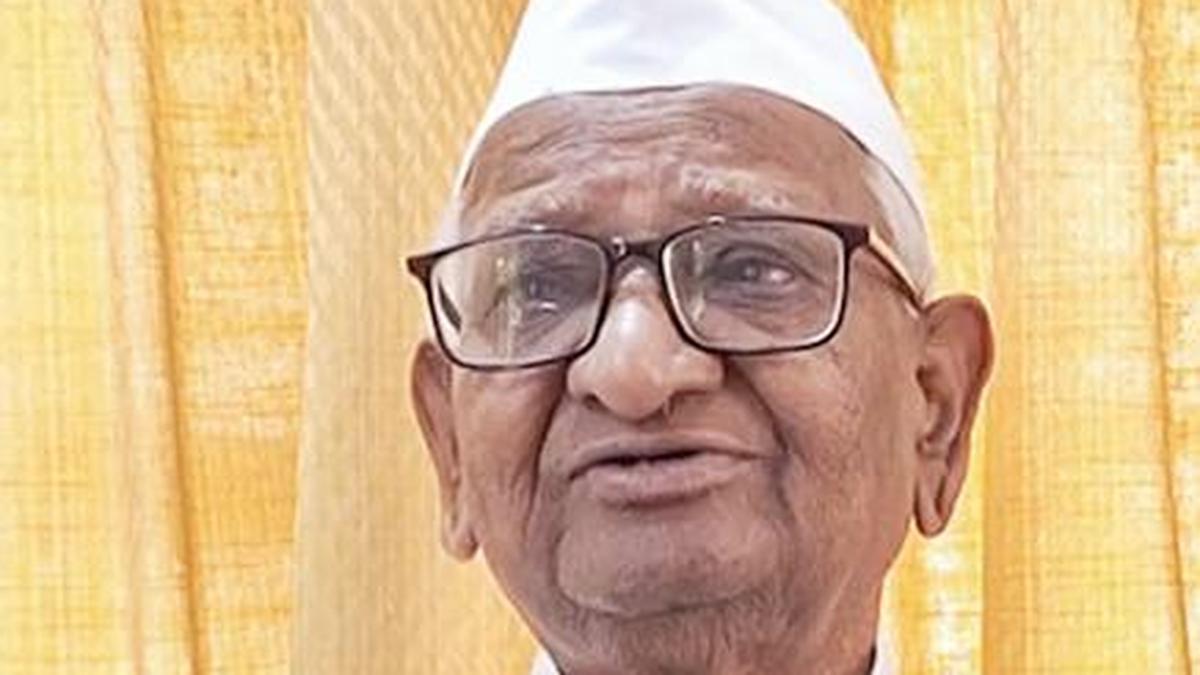
Social activist Anna Hazare has publicly refuted claims made in Sonia Gandhi's memoir regarding the 2011-2012 anti-corruption movement. Hazare maintains his movement was independent and denies any involvement or support from the BJP or RSS.
The Controversy Over the Anti-Corruption Movement
Social activist Anna Hazare has issued a stern rebuttal to claims made by senior Congress leader Sonia Gandhi in her recently released memoir, Belonging: A Journey of Love. In the book, Gandhi suggests that the 2011–2012 'India Against Corruption' movement was not a grassroots phenomenon, but rather a covertly orchestrated campaign supported by the Bharatiya Janata Party (BJP) and the Rashtriya Swayamsevak Sangh (RSS) intended to destabilize the UPA government. Hazare, who spearheaded the massive protests, has categorically rejected these assertions as baseless.
Hazare’s Defense of Non-Partisanship
Responding to the allegations on November 11, 2026, Hazare emphasized his lifelong commitment to social causes over political affiliations. He stated, “I don’t have any connection with the BJP or RSS. I don’t participate in their programmes. My country is my priority.” By framing the movement as a purely civic endeavor, Hazare is attempting to preserve the integrity of a protest that brought millions of Indians onto the streets, demanding legislative transparency and the establishment of an independent Lokpal.
Questioning the Political Narrative
Beyond simple denial, Hazare questioned the logic behind the claim that his agitation was solely responsible for the UPA’s defeat in the 2014 general elections. He challenged the premise, asking, “What is the basis to claim that the Manmohan Singh-led government lost the elections due to my agitation?” This highlights a deeper tension between historical interpretation and political accountability, as the legacy of the anti-corruption movement remains a contentious subject in modern Indian political discourse.
The Ethics of Public Discourse
In his critique of the memoir, Hazare argued that public figures have a duty to speak with precision. He noted that making vague or unsubstantiated claims against others “diminishes that person’s image.” This remark underscores a perceived lack of decorum in the current political climate, where historical events are often re-contextualized to fit modern narratives, potentially at the expense of the truth regarding past civic movements.
Lack of Personal Engagement
Adding a layer of irony to the controversy, Hazare pointed out that he and Sonia Gandhi have never actually met. By stating, “Neither has she seen Anna Hazare, nor have I seen her so far,” he highlights the disconnect between the political elite and the protest movements that defined the early 2010s. This lack of direct dialogue likely contributed to the misunderstandings that have persisted for over a decade.
Broader Implications and Future Trends
This incident signals a growing trend of political leaders revisiting the 2011-2012 era to define their historical legacies. As the political landscape in India continues to evolve, the 'India Against Corruption' movement remains a touchstone for discussions on governance and dissent. Future historical analyses will likely continue to scrutinize the interplay between grassroots activism and political opportunism, though Hazare’s forceful denial serves as a reminder that the participants of such movements remain active and capable of defending their own historical roles.
Verification Required?