Anthony Albanese says he wants to do AI 'the Australian way' – video
Source Entity
Presented and produced by Matilda Boseley
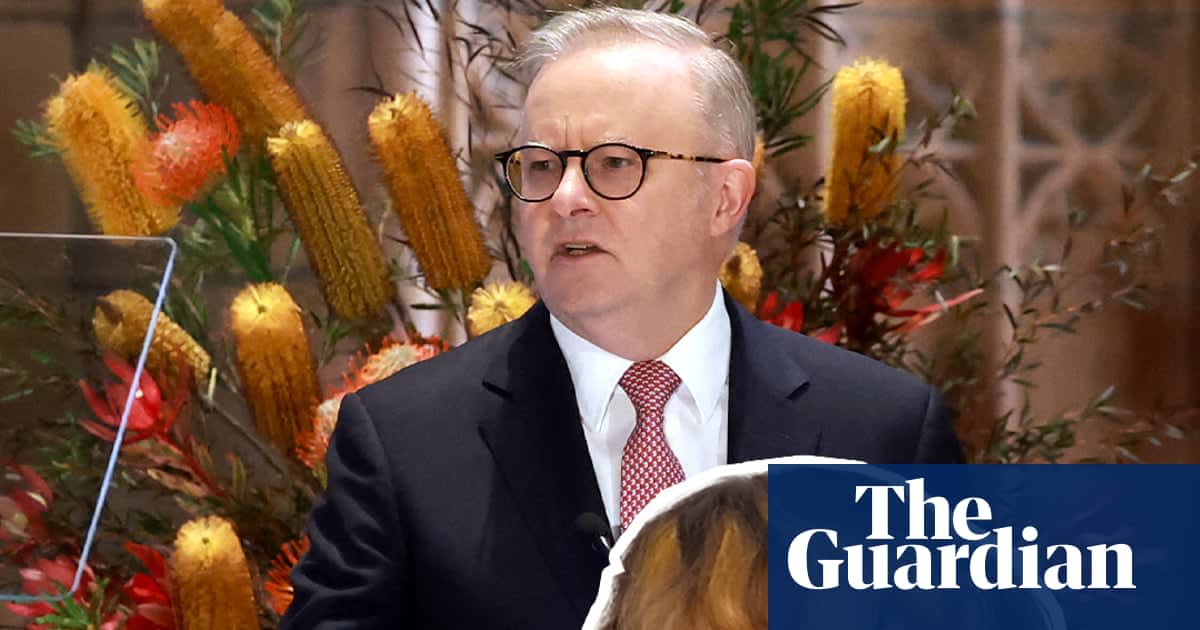
Prime Minister Anthony Albanese has announced the establishment of a dedicated AI office aimed at protecting Australian creatives from copyright infringement and regulating the rapid growth of datacentres across the country.
Safeguarding the Digital Frontier: Australia's Strategic Pivot to 'Sovereign AI'
Prime Minister Anthony Albanese's recent address at the University of Sydney marks a pivotal shift in Australia's approach to the artificial intelligence revolution. By advocating for an "Australian way" of integrating AI, the government is signaling a departure from the laissez-faire approach seen in some global markets, opting instead for a framework that balances aggressive technological adoption with stringent ethical and legal safeguards. This announcement comes at a critical juncture where the rapid proliferation of generative AI has outpaced existing legislative frameworks, leaving creators and infrastructure planners in a state of uncertainty.
Protecting the Creative Economy from 'Copyright Theft'
A central pillar of Albanese's strategy is the protection of Australian artists and writers. The Prime Minister's explicit vow to combat copyright "theft" addresses a growing grievance among the creative community regarding how Large Language Models (LLMs) are trained. For years, artists have argued that their intellectual property is being ingested by AI companies without consent, credit, or compensation. By establishing a dedicated AI office, the government aims to create a mechanism where copyright is not "up for grabs," potentially introducing new licensing models or mandatory transparency requirements for AI training sets. This move is essential for maintaining the viability of the local arts sector in an era where synthetic media can mimic human creativity with unsettling precision.
Regulating the Physical Footprint: The Datacentre Dilemma
Beyond the digital realm of copyright, the Prime Minister addressed the physical infrastructure powering the AI boom. The observation that datacentres are "popping up" across the country highlights a significant regulatory challenge. Datacentres require immense amounts of electricity and water for cooling, often straining local grids and environmental resources. By focusing on the regulation of these facilities, the Albanese government is acknowledging that AI is not just a software issue but a land-use and energy-security issue. Future regulations will likely focus on sustainable energy mandates and ensuring that the infrastructure boom does not compromise Australia's net-zero commitments or disrupt local utility stability.
The Strategic Role of the New AI Office
The creation of a specialized AI office serves as the operational heart of this new policy. This body will likely function as a multidisciplinary hub, bridging the gap between technical experts, legal scholars, and policymakers. Its primary mandate will be to translate the high-level vision of the "Australian way" into enforceable guidelines. This includes defining what constitutes fair use in AI training and setting the standards for AI safety and transparency. By centralizing these efforts, Australia avoids the fragmented regulatory approach that can often stifle innovation while failing to protect citizens, providing a single point of accountability for AI governance.
Navigating the Global AI Landscape
Australia's approach positions it as a middle-ground actor between the United States' market-led innovation and the European Union's highly prescriptive AI Act. The "Australian way" suggests a pragmatic hybrid: encouraging the economic benefits of AI—such as productivity gains in healthcare and administration—while refusing to sacrifice the rights of individual creators. This strategic positioning is vital for Australia to maintain its digital sovereignty, ensuring that the country is not merely a consumer of foreign AI technologies but a regulator that defines the terms of their operation within its borders.
Conclusion: A Blueprint for Ethical Innovation
In summary, Prime Minister Albanese's initiatives represent a comprehensive attempt to domesticate the AI boom. By linking the protection of creative intellectual property with the regulation of physical infrastructure, the government is addressing both the intangible and tangible impacts of the technology. While the success of the new AI office will depend on its ability to enforce these promises against global tech giants, the framework established at the University of Sydney provides a clear blueprint for an ethical, sustainable, and uniquely Australian digital future.