Anurag Kashyap claims CBFC chief Prasoon Joshi objected to Diljit Dosanjh's Satluj before watching it
Source Entity
Latest News: Today's Latest News Headlines from India & World | Hindustan Times | Hindustan Times
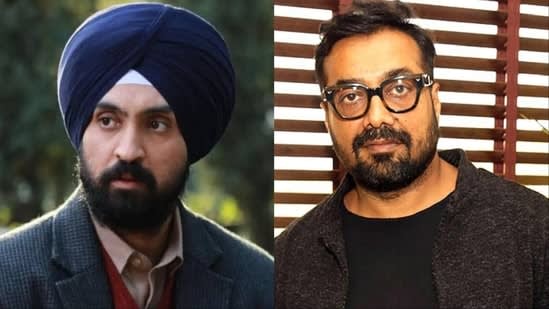
Filmmaker Anurag Kashyap has publicly criticized CBFC chief Prasoon Joshi, alleging that the board's head raised objections to Diljit Dosanjh's upcoming film 'Satluj' without actually watching the movie first.
Censorship Clash: Anurag Kashyap vs. the CBFC
The Indian film industry is once again embroiled in a heated debate over creative freedom and the role of state-mandated censorship. The latest spark in this ongoing conflict comes from acclaimed filmmaker Anurag Kashyap, who has leveled serious allegations against Prasoon Joshi, the chief of the Central Board of Film Certification (CBFC). Kashyap claims that Joshi objected to the film Satluj, starring the globally renowned Diljit Dosanjh, before the film was even viewed by the chief. This accusation strikes at the heart of the certification process, suggesting a systemic failure where ideological objections supersede the actual evaluation of content.
The Allegation of Pre-emptive Censorship
At the core of this dispute is the claim that the CBFC's leadership is operating on hearsay or preconceived notions rather than a rigorous review of the cinematic work. If Kashyap's assertions are accurate, the objection to Satluj represents a 'pre-emptive strike' against the film's narrative. For a filmmaker, there is a significant difference between a board requesting cuts based on specific scenes and a board chief expressing disapproval without having seen the footage. This perceived lack of due process suggests a culture of prejudice that can stifle artistic expression and create an environment of fear for creators who tackle sensitive or unconventional subjects.
The Role of the CBFC and Prasoon Joshi
To understand the gravity of this clash, one must look at the role of the CBFC. While officially a certification body intended to categorize films for age-appropriateness, the CBFC often functions as a censorship board with the power to demand deletions or block releases entirely. Prasoon Joshi, a veteran lyricist and advertiser, leads this body. The tension here is amplified by Anurag Kashyap's history as a provocateur and a champion of independent cinema. Kashyap has long argued that the CBFC's mandate should be limited to certification rather than censorship, and this specific incident with Satluj serves as a primary example of his argument that the board is overstepping its boundaries.
Impact on Diljit Dosanjh and 'Satluj'
Diljit Dosanjh has transitioned from a regional superstar to a global icon, bringing a massive audience to his projects. A film like Satluj likely carries significant cultural and narrative weight. When a high-profile project faces objections—especially those alleged to be made without viewing the film—it creates an immediate narrative of controversy around the movie. This can be a double-edged sword; while it may generate curiosity, it also puts the production under immense pressure to compromise its artistic vision to secure a release date, potentially diluting the impact of the story Dosanjh and his team intended to tell.
Historical Context of Cinematic Friction
This event is not an isolated incident but part of a historical pattern of friction between the Indian state's regulatory bodies and the filmmaking community. From the banning of political documentaries to the cutting of scenes in mainstream dramas, the CBFC has frequently been accused of being a tool for political or social policing. Kashyap himself has been at the center of several such battles throughout his career. By calling out Prasoon Joshi, Kashyap is not just defending a single film, but is continuing a lifelong crusade against what he perceives as the 'moral policing' of the arts in India.
Future Implications for Indian Cinema
Looking forward, this incident is likely to fuel further calls for the complete overhaul of the CBFC. As more filmmakers migrate toward Over-the-Top (OTT) platforms to avoid the rigors of theatrical certification, the CBFC risks becoming an obsolete relic of an older era of control. If the perception grows that the board operates on whim or prejudice rather than objective criteria, the exodus of bold storytelling from the big screen to digital platforms will accelerate. The resolution of the Satluj controversy will be a litmus test for whether the CBFC is willing to modernize its approach or continue its tradition of restrictive oversight.
Conclusion
The clash between Anurag Kashyap and Prasoon Joshi over Diljit Dosanjh's Satluj highlights a critical fracture in the Indian creative ecosystem. The allegation that a film was judged without being watched is a serious indictment of the CBFC's integrity. As the industry evolves, the demand for a transparent, fair, and non-prejudicial certification process becomes paramount to ensure that Indian cinema can continue to grow and compete on a global stage without the shackles of arbitrary censorship.
Verification Required?