Apple shares are doing something they haven't done in 20 years. Here’s what’s happening
Source Entity
US Top News and Analysis
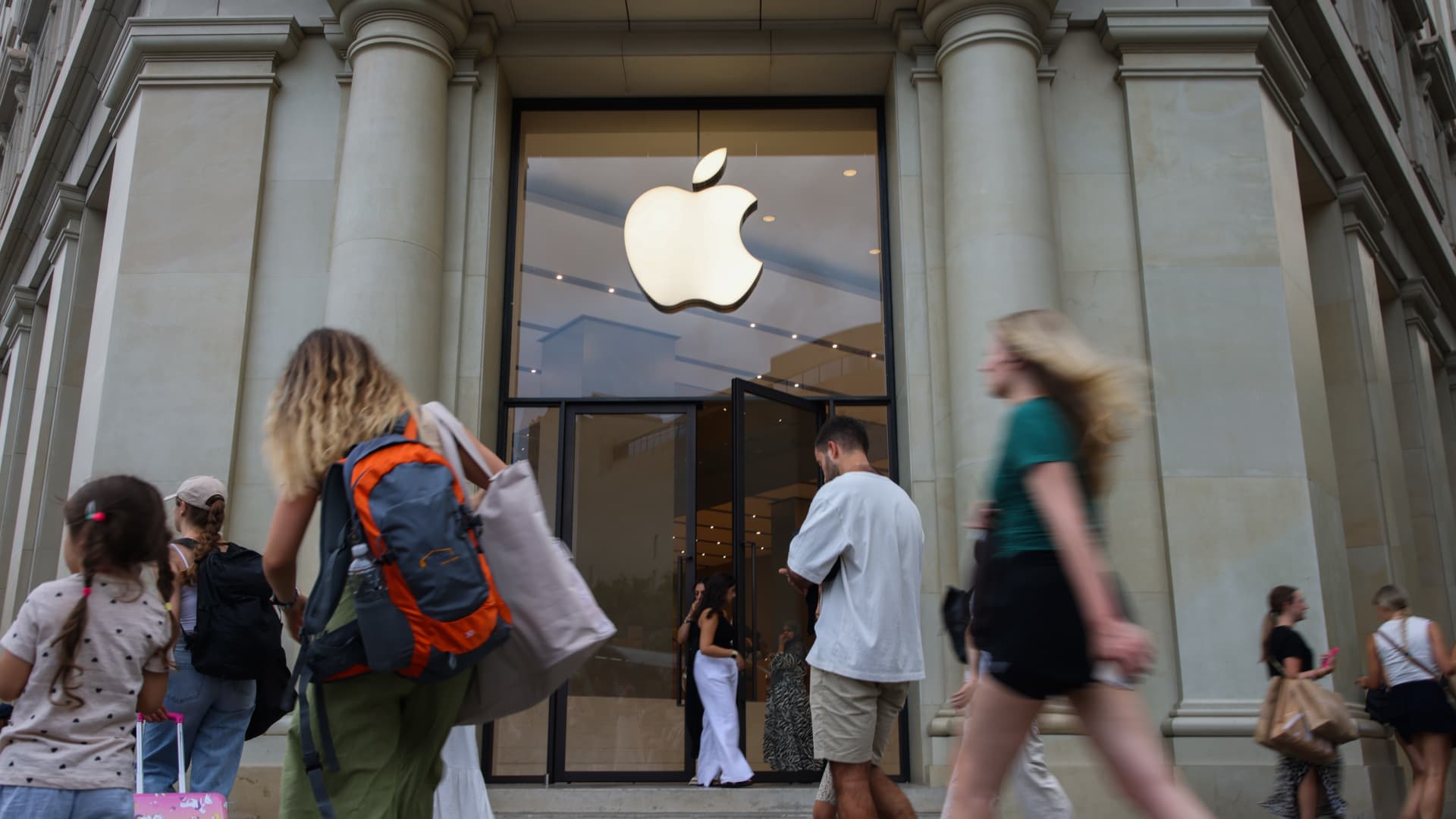
Apple stock has decoupled from its tech peers, showing a rare inverse correlation to the Nasdaq-100 amid broader market volatility. Investors are increasingly treating the tech giant as a defensive 'safety trade' despite ongoing supply chain challenges and leadership transitions.
Apple's Strategic Decoupling: A New Market Dynamic
Apple Inc. is currently navigating a unique financial phenomenon, exhibiting an inverse correlation to its tech sector peers that has not been observed since 2005. While the broader Nasdaq-100 has faced significant volatility, Apple has emerged as a preferred 'safety trade' for investors. This shift comes as market participants express growing skepticism regarding the durability of the broader artificial intelligence investment complex and respond to fears surrounding global interest rate fluctuations.
Analyzing the Inverse Correlation
Recent data indicates that the 30-day correlation between Apple and the Nasdaq-100 index—where Apple maintains a substantial 7.5% weighting—has plummeted to levels as low as -0.86. Historically, such divergence is rare, as Apple usually tracks closely with the performance of its tech counterparts. This decoupling suggests that investors are re-evaluating the company's risk profile, viewing its massive ecosystem of hardware, software, and services as a defensive hedge rather than a high-beta growth play during periods of market stress.
Performance Amidst Headwinds
Despite a 2.6% rise during a recent broader tech rout, Apple's path has not been without obstacles. The company experienced a notable post-earnings sell-off in late July, triggered by management warnings regarding supply chain constraints and revenue growth projections that failed to meet high investor expectations. Currently, the stock sits approximately 7% below its 52-week high of $344.57, reached on July 29. Nevertheless, the company maintains a robust 18% year-to-date gain and a 36.2% increase over the past year.
The Impact of Leadership and Supply Chain
Beyond macroeconomic factors, Apple is currently managing a significant internal transition as it navigates the appointment of a new CEO. This leadership change, combined with persistent supply-chain pressures, has created a complex environment for shareholders. While demand for iconic products like the iPhone, iPad, and Mac remains a core pillar of the company's valuation, investors are carefully balancing this underlying strength against the operational realities of global manufacturing bottlenecks.
Future Trends and Market Sentiment
Looking ahead, the market's perception of Apple as a 'safety trade' may persist if the broader tech sector continues to struggle with the sustainability of AI-related revenue. Investors are now looking toward key dates, such as September 1, as potential inflection points for the stock. If Apple can demonstrate resilience in its supply chain management and provide clarity on its long-term growth strategy under new leadership, it may solidify its role as a anchor for portfolios seeking stability in an otherwise turbulent equity market.
Multiple Citing Sources