Explained: What is Argentina's 'Las Malvinas' Falkland Islands controversy?
Source Entity
TOI SPORTS DESK
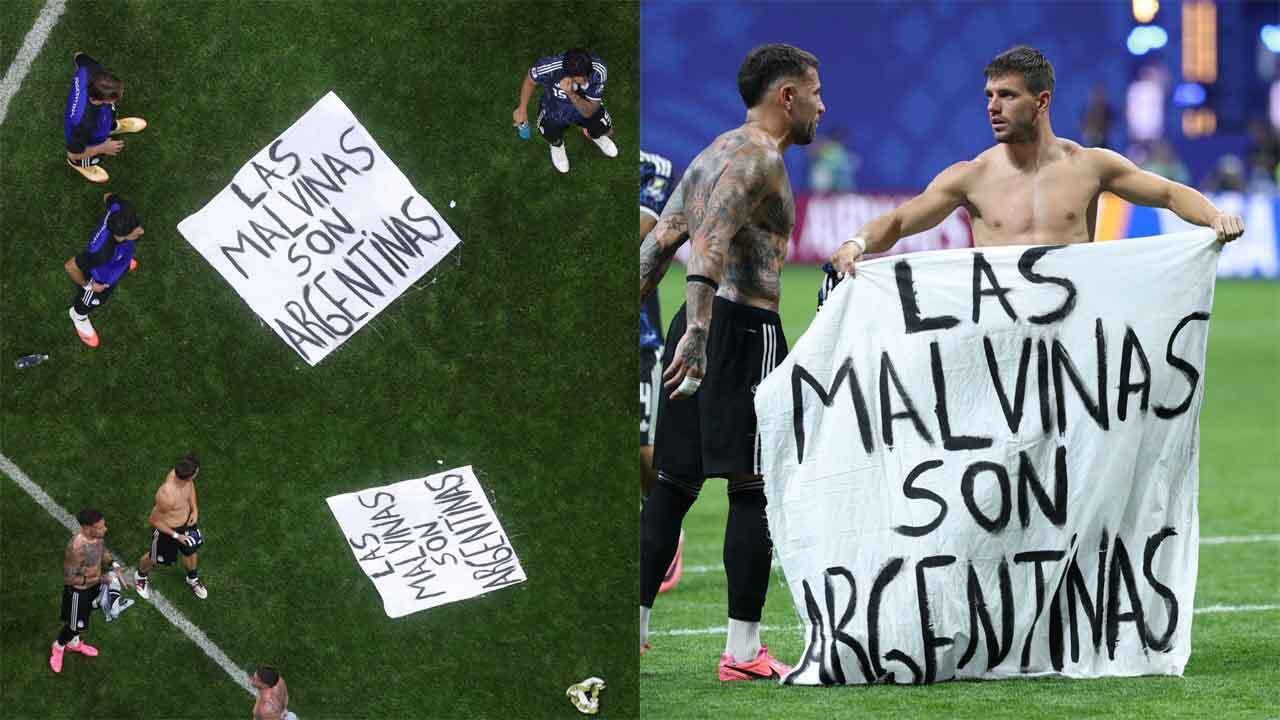
Argentine midfielder Giovani Lo Celso has sparked a geopolitical controversy after displaying a banner claiming the Falkland Islands (Las Malvinas) during a World Cup semifinal against England, potentially violating FIFA's ban on political messages.
The Intersection of Sport and Sovereignty: The Malvinas Controversy
The high-stakes environment of a World Cup semifinal between Argentina and England has once again become a flashpoint for one of the most enduring territorial disputes in modern history. The victory of the Argentine squad was momentarily overshadowed by a provocative gesture from midfielder Giovani Lo Celso, who displayed a banner asserting that the Falkland Islands—known in Argentina as Las Malvinas—belong to the Argentine state. This act transforms a sporting triumph into a diplomatic incident, highlighting how deeply the memory of territorial loss is woven into the fabric of Argentine national identity.
Historical Roots of the Conflict
To understand the gravity of Lo Celso's gesture, one must look back to the 1982 Falklands War, a ten-week conflict between Argentina and the United Kingdom over two archipelagoes in the South Atlantic. The war resulted in significant casualties on both sides and solidified the islands as a symbol of national pride and perceived colonial injustice for Argentina. For decades, Argentina has maintained that the islands were illegally seized by Britain in 1833. This historical grievance is not merely a matter of geography but is embedded in the Argentine constitution and educational system, ensuring that every generation views the recovery of the islands as a fundamental national goal.
FIFA Regulations and the Neutrality of Sport
Lo Celso's actions place him in direct conflict with FIFA's stringent regulations regarding political expression. FIFA maintains a strict policy prohibiting the display of political, religious, or personal slogans, images, or messages on kits or via banners during official matches. The governing body's goal is to maintain football as a neutral space, separate from the volatility of international diplomacy. Consequently, Lo Celso faces potential disciplinary action, which could range from heavy fines to match suspensions. This tension underscores the perennial struggle between athletes' desires to express nationalistic fervor and the institutional demand for political neutrality in global sports.
Diplomatic Escalation and State Endorsement
The controversy has escalated beyond a simple player infraction due to the immediate reaction of the Argentine government. The Foreign Ministry's decision to issue an official communiqué reaffirming its claim over the islands suggests that the state views Lo Celso's gesture not as a rogue act, but as a legitimate expression of national sovereignty. By aligning itself with the player's sentiment, Argentina is utilizing the global visibility of the World Cup to keep the Malvinas issue on the international agenda, effectively leveraging a sports victory to signal diplomatic resolve to the United Kingdom and the global community.
The Psychological Weight of the Argentina-England Rivalry
Football matches between Argentina and England are rarely just about the sport; they are often viewed as symbolic proxy wars. The rivalry is fueled by a cocktail of athletic competition and historical resentment. When a player like Lo Celso uses the pitch as a platform for territorial claims, it taps into a collective psychological yearning for vindication. For many Argentines, the football pitch is one of the few arenas where they can achieve a definitive 'victory' over the UK, making the display of the Malvinas banner a potent symbol of defiance and reclaimed honor.
Future Implications and Trends
Looking forward, this incident is likely to trigger a cycle of diplomatic protests and internal FIFA debates. We can expect the UK government to condemn the gesture as an inappropriate politicization of sport, while Argentina will likely continue to use such moments to maintain pressure on the sovereignty issue. Furthermore, this event may prompt FIFA to tighten its monitoring of player conduct during high-tension international fixtures to prevent similar outbursts. As geopolitical tensions rise globally, the trend of athletes using their platforms for political activism is increasing, suggesting that the conflict between personal conviction and institutional rules will only intensify in future tournaments.
Summary
In conclusion, Giovani Lo Celso's banner is more than a breach of FIFA rules; it is a manifestation of a deep-seated geopolitical wound. By linking a World Cup victory to the claim of the Falkland Islands, the event has bridged the gap between sport and statecraft, reminding the world that the ghosts of the 1982 conflict continue to haunt the relationship between Argentina and the United Kingdom.