'They better behave': Trump says Iran wants settlement amid fresh strikes
Source Entity
TOI WORLD DESK
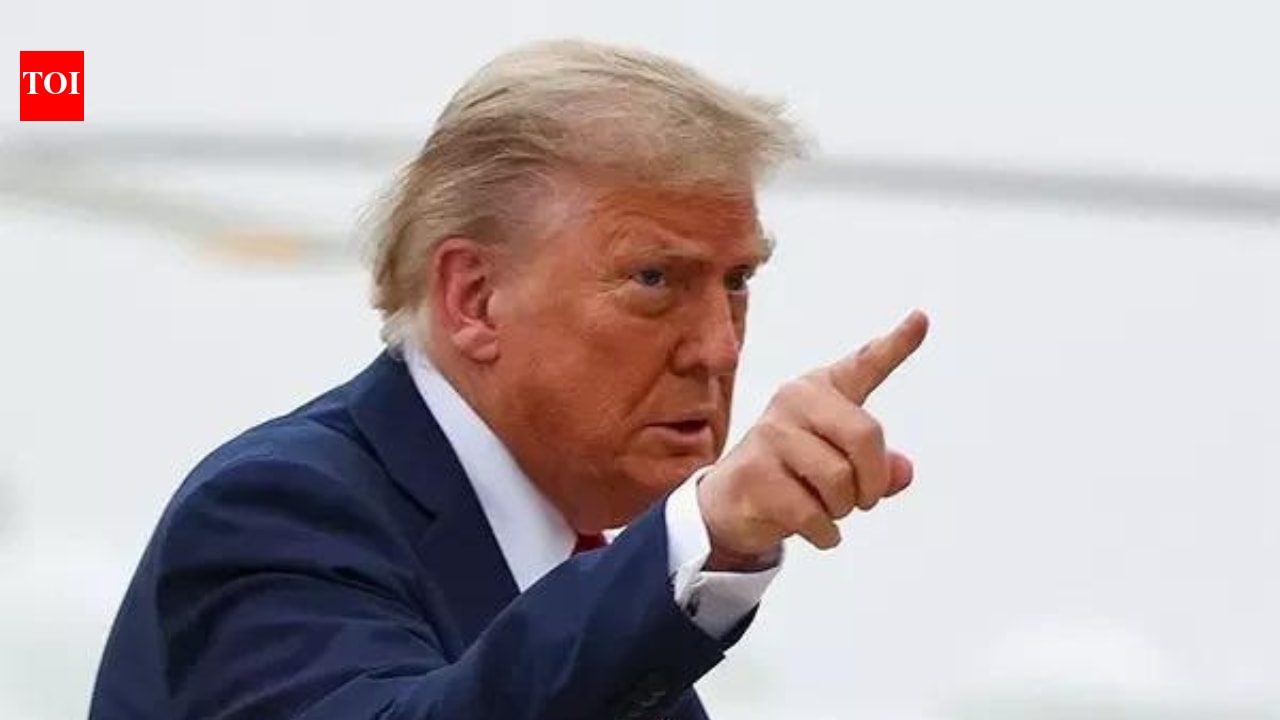
President Trump has warned Iran to 'behave' as a prerequisite for negotiations, following US military strikes on Iranian command centers and air defense systems aimed at securing commercial shipping in the Strait of Hormuz.
Escalation in the Gulf: Analyzing US Strikes and the Diplomacy of Pressure
The recent military actions taken by the United States against Iranian assets mark a significant escalation in the long-standing geopolitical rivalry between Washington and Tehran. By targeting command centers and air defense systems, the US has moved beyond mere deterrence, actively seeking to degrade Iran's operational capabilities. President Trump's accompanying rhetoric—specifically the demand that Iran "behave"—underscores a strategy of "maximum pressure," where military force is used as a primary lever to compel a diplomatic settlement on US terms.
Strategic Objectives: Securing the Strait of Hormuz
At the heart of this military intervention is the Strait of Hormuz, one of the world's most critical maritime chokepoints. A vast majority of the world's seaborne oil passes through this narrow waterway, making any threat to commercial vessels a direct threat to global energy security and economic stability. By dismantling Iranian air defense systems and command structures, the US aims to neutralize Iran's ability to project power over the strait. This tactical degradation is designed to ensure that international shipping remains uninterrupted, thereby preventing a spike in global oil prices that could destabilize Western economies.
The Psychology of 'Maximum Pressure'
President Trump's assertion that Iran "wants settlement" while simultaneously ordering strikes reflects a complex psychological approach to diplomacy. This "carrot and stick" method attempts to create a crisis environment where the cost of defiance becomes higher than the cost of concession. By demonstrating the ability to penetrate Iranian airspace and hit high-value targets, the US is signaling that no part of Iran's military infrastructure is untouchable. The goal is to force the Iranian leadership to the negotiating table from a position of weakness, potentially regarding nuclear proliferation or regional proxy activities.
Collateral Damage and the Information War
Reports from within Iran, specifically regarding a missile attack near a cancer hospital in Ahvaz and damage to an industrial facility in Qeshm, introduce a critical layer of humanitarian and political complexity. Whether these strikes were precise hits on military targets with unfortunate proximity to civilian infrastructure or a result of intelligence failures, they provide Tehran with significant propaganda leverage. The mention of a medical facility allows Iran to frame the US as an aggressor targeting non-combatants, which can galvanize domestic support and incite further regional instability.
Historical Context and Future Trajectories
This cycle of strike-and-warn is reminiscent of the volatile history of US-Iran relations, characterized by a deep lack of trust and competing visions for Middle Eastern hegemony. Historically, such escalations often lead to a period of "tit-for-tat" retaliation, where Iran might respond through asymmetric warfare or by targeting US allies in the region. Looking forward, the trajectory of this conflict will likely depend on whether Iran views these strikes as a sign of US resolve or as an invitation to escalate further to prove its own resilience.
Conclusion: A Fragile Balance of Power
In summary, the recent US strikes are a calculated attempt to secure global trade routes and force a diplomatic breakthrough through military dominance. While the degradation of Iranian air defenses achieves a short-term tactical advantage, the broader strategic outcome remains uncertain. The tension between the US demand for Iranian "behavior" and Iran's claims of civilian casualties creates a volatile environment where one miscalculation could lead to a full-scale regional conflict.