'It's about standing up to invaders': Argentina vice-prez calls England 'pirate usurpers'
Source Entity
TOI SPORTS DESK
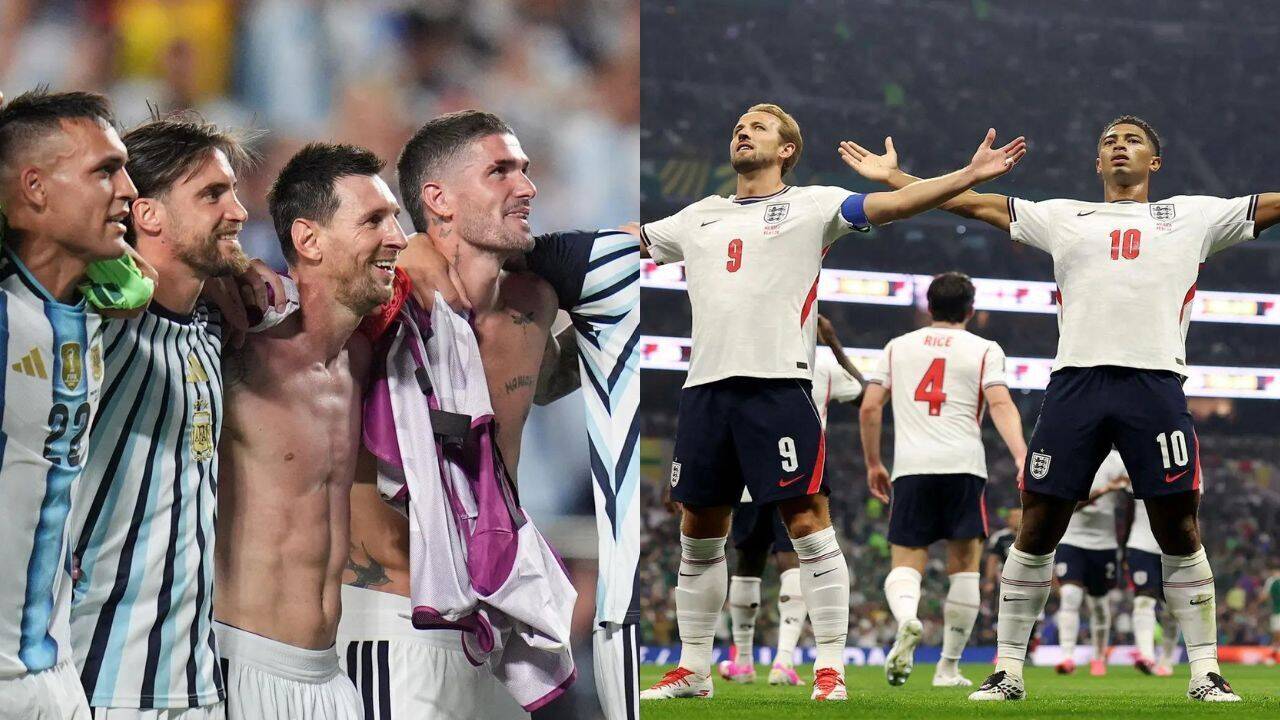
Argentina's Vice President Victoria Villarruel has sparked significant diplomatic tension by labeling England 'pirate usurpers' ahead of a 2026 FIFA World Cup semi-final, explicitly linking the sporting match to the long-standing sovereignty dispute over the Falkland Islands (Malvinas).
Geopolitics on the Pitch: The Collision of Sport and Sovereignty
The intersection of high-stakes international athletics and deep-seated geopolitical grievances has once again taken center stage. Vice President Victoria Villarruel's decision to label the England national team "pirate usurpers" ahead of the 2026 FIFA World Cup semi-final is not merely a comment on sporting rivalry, but a calculated invocation of Argentina's national identity and its enduring claim to the Falkland Islands, known in Argentina as Las Malvinas. By framing a football match as a stand against "invaders," Villarruel has effectively transformed a sporting event into a symbolic battleground for territorial sovereignty.
The Shadow of 1982: Historical Context
To understand the gravity of Villarruel's remarks, one must look back to the 1982 Falklands War, a ten-week conflict between Argentina and the United Kingdom over two archipelagoes in the South Atlantic. The conflict resulted in a British victory, but it left a permanent scar on the Argentine psyche and a lasting sense of injustice regarding the islands' administration. The term "pirate usurpers" directly references the Argentine perspective that Britain's presence in the region is an illegal colonial occupation. By utilizing this language, the Vice President is tapping into a powerful vein of nationalism that remains a cornerstone of Argentine domestic politics, regardless of the administration in power.
Football as a Proxy for Conflict
In Argentina, football is rarely just a game; it is often a mirror of the nation's social and political struggles. The historical precedent for this was most vividly seen during the 1986 World Cup, where Diego Maradona's "Hand of God" goal against England was celebrated in Argentina not just as a tactical victory, but as a poetic act of revenge for the 1982 war. Villarruel's explicit mention of Maradona alongside Lionel Messi serves to bridge the gap between historical grievance and current glory. By linking Messi's pursuit of a final against Spain to the struggle for the Malvinas, she is positioning the current squad as the latest vanguard in a broader national struggle for recognition and justice.
Political Implications and Domestic Strategy
From a strategic standpoint, Villarruel's rhetoric likely serves a dual purpose. Domestically, it reinforces her image as a staunch defender of national sovereignty and a patriot, appealing to the right-wing and nationalist sectors of the Argentine electorate. By aligning herself with the immense popularity of Lionel Messi, she leverages the emotional peak of a World Cup semi-final to solidify political support. However, this comes at a diplomatic cost. Such inflammatory language from a high-ranking government official risks alienating the United Kingdom and could potentially complicate bilateral relations or trade discussions, proving that the "Malvinas factor" continues to override diplomatic pragmatism.
The Burden on Lionel Messi
For Lionel Messi, this match represents a complex intersection of professional ambition and national burden. While Messi has typically avoided overt political commentary, the Vice President's remarks place him in the center of a geopolitical storm. As the defending champion and the face of global football, Messi's first international meeting with England in this specific context carries a weight that transcends the sport. The expectation is no longer just about winning a game to reach the final against Spain, but about fulfilling a symbolic role in a narrative of national redemption scripted by the state.
Predicting the Diplomatic Aftermath
Looking forward, the outcome of this semi-final is likely to have repercussions beyond the trophy. A victory for Argentina would almost certainly be framed by the government as a symbolic triumph over the "usurpers," potentially leading to a surge in nationalist sentiment and further diplomatic friction with London. Conversely, a loss could be framed as a tragedy, but it is unlikely to diminish the government's rhetorical stance on the islands. This event underscores a growing trend where sporting events are increasingly weaponized by political leaders to signal strength and nationalistic resolve to their domestic audiences.
Summary of the Incident
In conclusion, Vice President Victoria Villarruel's comments have successfully shifted the narrative of the 2026 World Cup semi-final from a clash of footballing titans to a proxy for a decades-old territorial dispute. By weaving together the legacy of Maradona, the stardom of Messi, and the trauma of the 1982 war, the Argentine government has ensured that the match will be viewed through a lens of historical grievance and political defiance, reminding the world that for Argentina, the issue of the Malvinas remains an open and emotional wound.