From minimalist to maximalist: Ars staffers show off their home offices
Source Entity
Ars Staff
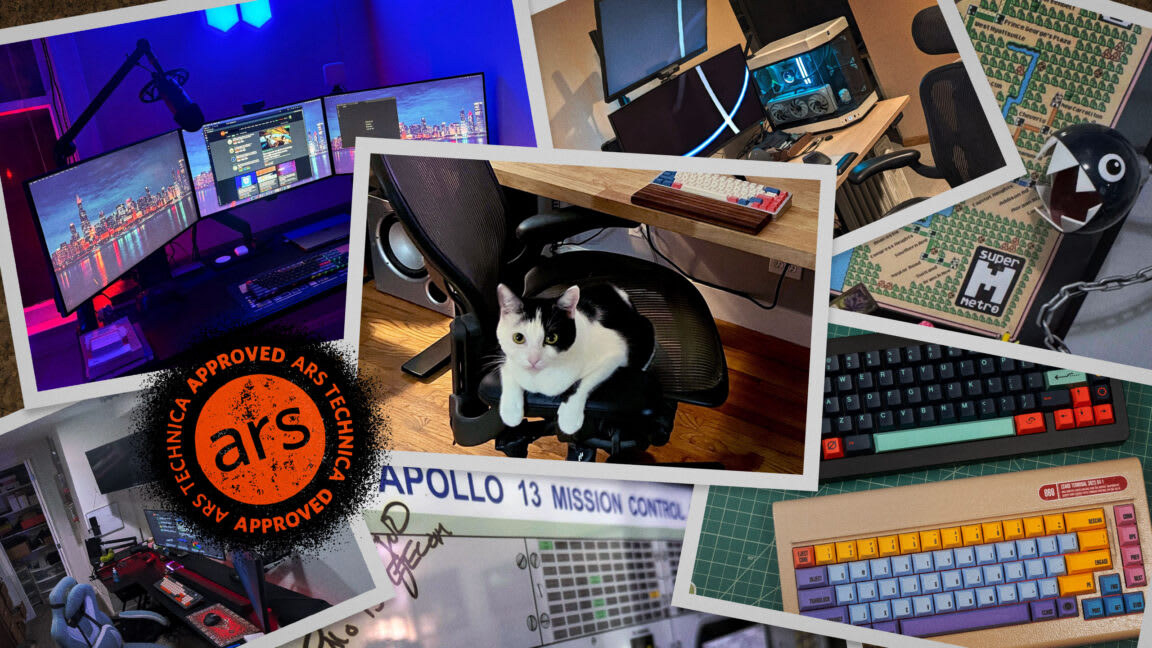
Ars Technica staffers provide a look at their diverse home office setups, ranging from minimalist to hobby-filled maximalist spaces. The feature highlights the balance between professional work environments and personal interests.
The Evolving Landscape of Remote Workspaces
The transition to remote and hybrid work models has fundamentally altered the physical environment of the professional workforce. As highlighted by the recent feature from Ars Technica, the home office has become more than just a place to process digital tasks; it is now a reflection of personal identity and the eternal struggle to balance professional productivity with individual hobbies. For staff members like Aaron Zimmerman, the desk is a contested territory where high-end hardware—such as RTX 4070-equipped PCs—competes for space with intricate personal projects like Gundam model building.
The Duality of Desk Utility
One of the most compelling insights from the report is the distinction between a 'staged' workspace and one's actual habits. While a desk may be equipped with high-performance components, including 32GB of RAM and powerful processors, the reality of modern mobility often renders these setups secondary. Many professionals, including those at Ars, find themselves gravitating toward portable solutions like the M4 MacBook Air, preferring the freedom to wander throughout their living space rather than being tethered to a static, albeit powerful, workstation.
The Shift Toward Maximalism
Historically, the 'ideal' home office was characterized by a minimalist, sterile aesthetic designed to minimize distraction. However, as the lines between personal and professional time have blurred, there is a clear trend toward maximalism. By incorporating hobbies directly into the workspace, employees are reclaiming their environment. This trend suggests that for many, a 'productive' space is not necessarily one that is empty, but one that is inspiring, allowing for a seamless transition between deep work and creative leisure.
Psychological Implications of Workspace Design
The physical configuration of a home office has significant implications for mental well-being and productivity. The report illustrates that even when workspaces are filled with 'clutter'—or, more accurately, personal artifacts—they serve as a functional hub for the occupant. The presence of hobby-related materials on a desk acts as a psychological buffer, potentially reducing the stress associated with high-pressure work environments by keeping personal passions within arm's reach.
Future Trends in Home Office Ergonomics
As we look toward the future, the 'home office' will likely continue to evolve away from traditional corporate standards. We are moving toward a modular era where the equipment—like the aforementioned high-end PC builds—remains a staple for heavy lifting, while the 'office' itself becomes a fluid concept. The shift toward lightweight, high-performance laptops indicates that flexibility is now prioritized over raw, sedentary power, setting a new benchmark for how we define the professional workspace in a post-pandemic world.