The Engineering of Smartphone Cameras
Source Entity
Hacker News
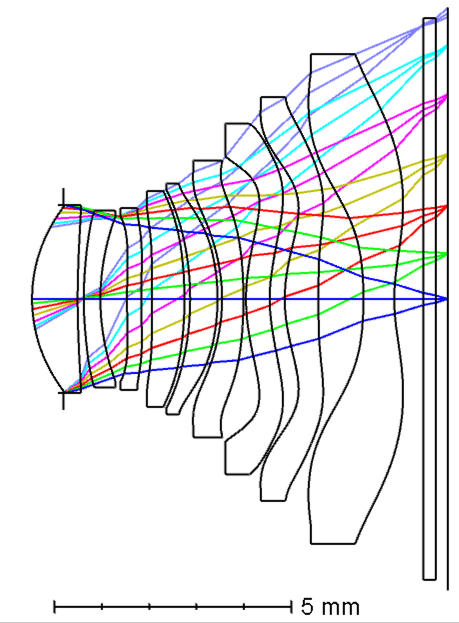
Smartphone camera engineering has evolved from simple three-element designs to complex tetraprism systems. This analysis explores the technical challenges of miniaturizing high-quality optics for mobile devices.
The Precision Engineering of Modern Smartphone Optics
Modern smartphones are marvels of integrated optical engineering, housing systems that would have been considered impossible to miniaturize just two decades ago. The transition from basic three-element camera lenses to sophisticated tetraprism systems represents a significant leap in how we capture light. At the heart of this evolution is the constant push to balance physical constraints with the demand for professional-grade imaging quality.
Decoding the Main 1x Lens
The primary 1x lens serves as the foundation for the smartphone photography experience. Unlike traditional standalone cameras, mobile lenses must be engineered to function within a chassis that is only a few millimeters thick. This requires high-precision plastic and glass elements that must be manufactured to sub-micron tolerances to prevent optical aberrations. The engineering challenge lies in the assembly process, where each element must be perfectly aligned to ensure edge-to-edge sharpness in a package that fits inside a pocketable device.
Complexity in Telephoto and Wide-Angle Systems
Comparing wide-angle lenses to early telephoto systems highlights the divergence in optical design strategies. Wide-angle lenses are tasked with minimizing distortion while maintaining a expansive field of view, whereas telephoto lenses struggle with the physics of focal length. To achieve meaningful optical zoom without increasing the thickness of the phone, engineers have turned to folded optics, such as the tetraprism system. By bouncing light through prisms, manufacturers can achieve longer effective focal lengths while keeping the camera module flush with the phone's back panel.
Beyond the Camera: The Broader Optical Ecosystem
The complexity of smartphone optics extends far beyond the rear camera array. The integration of FaceID modules, which utilize advanced Computer Generated Holography (CGH) and emerging metalens technology, demonstrates the depth of optical research involved. Furthermore, the evolution of display technology—moving from traditional LCDs to advanced OLEDs—and the implementation of multi-hue flash systems, illustrate that the smartphone is essentially a sophisticated optical workstation.
Challenges in Theory and Practice
In theory, optical design is governed by well-understood laws of physics; however, in practice, mass-producing these lenses is an immense hurdle. The sheer volume of manufacturing required for global smartphone distribution means that every lens element must be reproducible with near-zero deviation. Thermal expansion, structural rigidity, and the impact of daily handling introduce environmental variables that engineers must account for during the design phase.
Future Trends in Mobile Imaging
Looking forward, the trend is moving toward computational photography combined with advanced hardware. As we reach the limits of what can be done with physical glass, the industry is shifting toward metalenses and sensor-level innovations. The future of mobile optics will likely focus on improving light sensitivity in low-light conditions and enhancing the precision of depth-sensing modules, ensuring that the smartphone remains the primary tool for visual communication.