Arshdeep Singh equals two batting records with quickfire knock in fifth ODI
Source Entity
SHUBHANSHU DWIVEDI
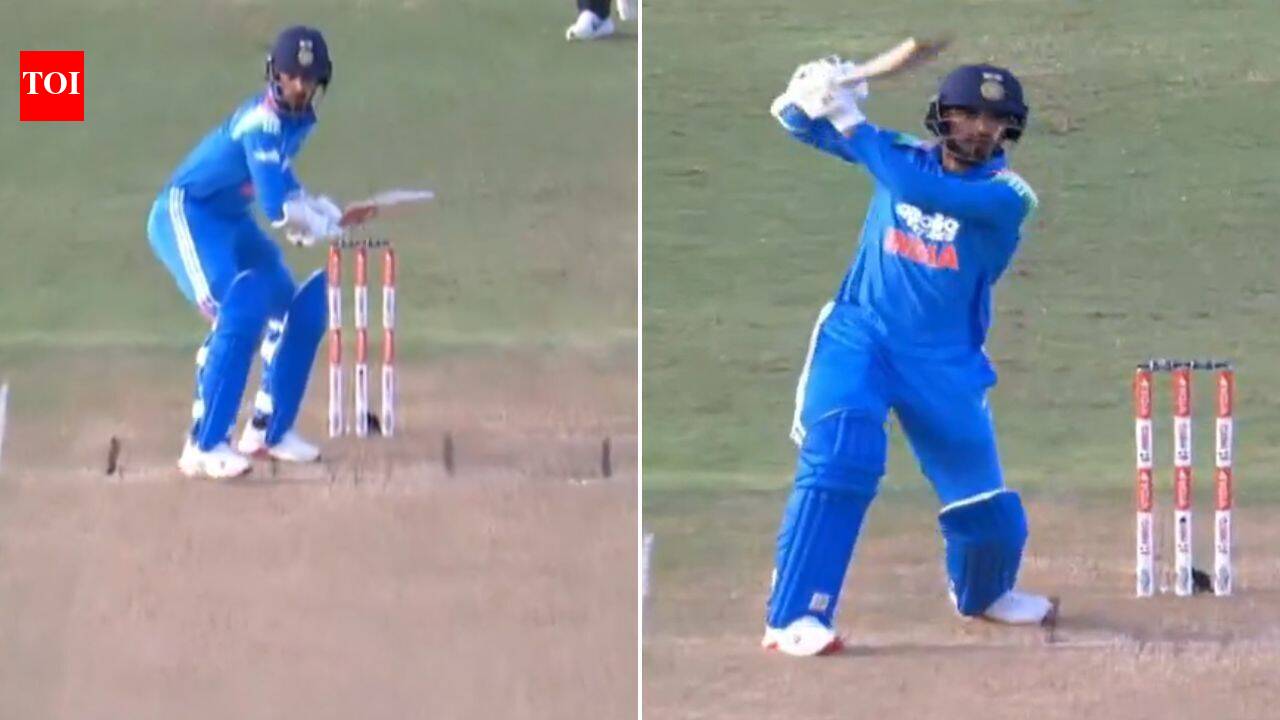
Indian cricketer Arshdeep Singh achieved a rare feat by hitting a six off his first ball as a No. 11 batter against New Zealand. This performance places him in elite company, equaling records held by bowlers like Jasprit Bumrah and Venkatesh Prasad.
Arshdeep Singh's Record-Breaking Performance in Mount Maunganui
In a display of unexpected batting prowess, Indian cricketer Arshdeep Singh delivered a remarkable performance during the fifth ODI against New Zealand at Mount Maunganui. Entering the crease as the No. 11 batter, Arshdeep immediately signaled his intent by dispatching a delivery from Jacob Duffy over the boundary for a six on the very first ball he faced. This aggressive start not only electrified the crowd but also etched his name into the annals of Indian cricket history alongside some of the game's most notable bowling figures.
Joining an Elite Group of No. 11 Batters
Arshdeep’s feat of hitting a six off the first ball of his innings is a rare occurrence in One Day International cricket, particularly for a player batting at the final position. By clearing the ropes against Duffy, he became only the third Indian No. 11 batter to achieve this milestone. The list includes veteran medium-pacer Venkatesh Prasad, who famously struck Ian Harvey in the 2000 Champions Trophy, and pace spearhead Jasprit Bumrah, who accomplished the same against Australian captain Pat Cummins in Mohali in 2019.
Matching Historical Benchmarks for Power Hitting
Beyond the first-ball heroics, Arshdeep’s innings was statistically significant for its overall impact on the team's total. By striking two sixes during his time at the crease, he equaled the record for the most sixes hit by an Indian No. 11 batter in a single ODI innings. This record was previously held solely by Venkatesh Prasad, who achieved the feat against Pakistan in 1996, and Mohammed Shami, who replicated the performance against Sri Lanka in 2014.
The Strategic Value of Lower-Order Contributions
While No. 11 batters are primarily selected for their bowling expertise, their ability to contribute with the bat has become increasingly crucial in the modern era of limited-overs cricket. These short, high-impact cameos often provide the necessary cushion to reach a competitive total or push a score beyond the reach of the opposition. Arshdeep’s ability to remain composed and aggressive under pressure highlights the growing depth of talent within the Indian squad, where even the tail-enders are expected to contribute meaningfully to the scorecard.
Broader Implications and Future Trends
As cricket continues to evolve, the distinction between specialist bowlers and batters is becoming increasingly blurred. The success of players like Arshdeep Singh in high-pressure situations suggests a trend toward more well-rounded team compositions. For the Indian team, developing bowlers who can add quick runs at the death is a strategic advantage that can prove decisive in tight matches. Arshdeep’s recent performance serves as a testament to the rigorous training and positive intent required at the international level, signaling that India’s lower order remains a formidable threat to any bowling attack.