"Very Worrying": Assam Chief Minister On New Drug Route From Myanmar
Source Entity
NDTV News Search Records Found 1000
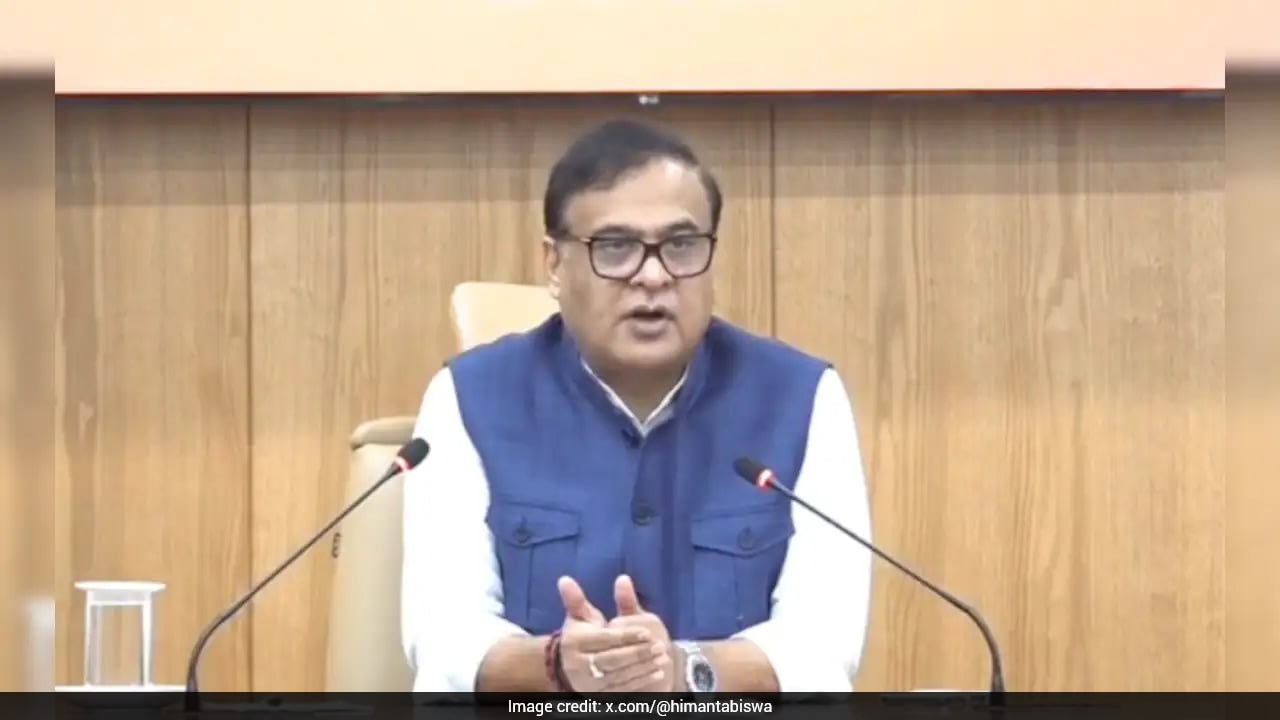
Assam Chief Minister Himanta Biswa Sarma has raised alarms over an emerging drug trafficking corridor connecting Myanmar to India via Arunachal Pradesh. This development underscores significant regional security challenges regarding border porosity and organized crime.
The Emergence of a New Narcotic Corridor
Assam Chief Minister Himanta Biswa Sarma recently issued a stern warning regarding the identification of a new drug trafficking route originating from Myanmar and traversing through the state of Arunachal Pradesh. This development represents a concerning shift in the regional security landscape, suggesting that criminal syndicates are actively seeking alternative pathways to bypass existing enforcement efforts in the Northeast.
Strategic Vulnerabilities and Border Porosity
The geography of India's Northeast, characterized by dense forests, rugged mountainous terrain, and remote international borders, has long presented challenges for border management. The reliance on routes through Arunachal Pradesh indicates that traffickers are exploiting the logistical difficulties inherent in patrolling these porous regions. By shifting operations toward these less-monitored sectors, illicit actors are attempting to circumvent the intensified scrutiny placed on traditional transit points.
The Geopolitical Context of the Golden Triangle
Myanmar’s proximity to the 'Golden Triangle'—a historical epicenter of global illicit drug production—has consistently made it a primary source for narcotics flooding into neighboring Indian states. The political instability and civil unrest within Myanmar have historically exacerbated the lack of regulatory oversight, allowing transnational criminal organizations to operate with relative impunity. The emergence of this specific route through Arunachal Pradesh is a direct consequence of these broader regional instabilities.
Socio-Economic and Security Implications
The influx of narcotics into the Northeast has profound implications for regional stability, public health, and the socio-economic fabric of the affected communities. Increased drug availability often correlates with rising crime rates, the destabilization of local governance, and the erosion of social cohesion among youth populations. Addressing this threat requires not just localized policing, but a robust, multi-state, and federal coordination strategy.
Future Trends and Policy Responses
Looking ahead, the identification of this route necessitates a recalibration of internal security protocols. It is likely that both state and central agencies will increase surveillance, intelligence sharing, and physical infrastructure along the Arunachal-Myanmar border. Future trends suggest that as law enforcement tightens its grip on one corridor, traffickers will continue to probe for new gaps, making the long-term solution dependent on sustained diplomatic engagement with neighboring nations and enhanced border technology integration.
Conclusion
In summary, Chief Minister Sarma’s warning serves as a critical call to action for regional security stakeholders. The recognition of this new trafficking route is the first step in mitigating a complex threat that bridges transnational crime, geopolitical instability, and domestic public safety. Constant vigilance and inter-agency cooperation remain the most effective tools to dismantle these evolving criminal networks.
Verification Required?