Azam Khan's 'Biryani' Jibe At Asaduddin Owaisi Amid Tussle For UP Muslim Votes
Source Entity
NDTV News Search Records Found 1000
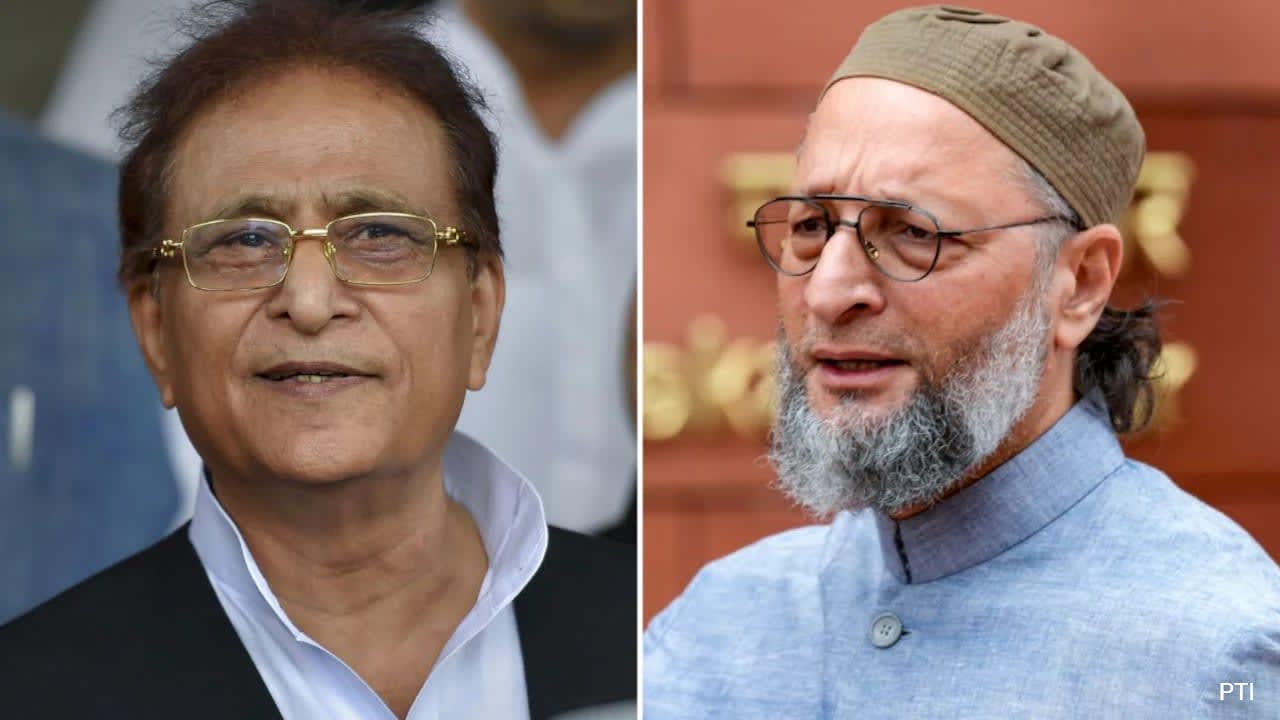
Samajwadi Party leader Azam Khan has dismissed AIMIM chief Asaduddin Owaisi's influence in Uttar Pradesh by using a culinary metaphor. Khan claims local voters prefer traditional regional dishes over 'Hyderabadi biryani,' signaling a consolidation effort for the upcoming 2027 assembly elections.
The Political Culinary Metaphor: Azam Khan’s Tactical Dismissal of Owaisi
In a pointed display of political maneuvering, senior Samajwadi Party (SP) leader Azam Khan recently utilized a culinary metaphor to dismiss the influence of All India Majlis-e-Ittehadul Muslimeen (AIMIM) chief Asaduddin Owaisi in Uttar Pradesh. Following his release from Dasna Jail on interim bail, Khan’s remarks in Rampur specifically targeted the potential inroads Owaisi seeks to make among the state's Muslim electorate. By stating that "Hyderabadi biryani is not preferred" in the region, Khan is effectively framing the AIMIM as an outsider whose political flavor does not align with the established cultural and political palate of Uttar Pradesh’s voters.
Defining the Battleground for 2027
The timing of these comments is critical as the political landscape shifts toward the 2027 Uttar Pradesh Assembly elections. For the Samajwadi Party, maintaining a monolithic hold on the Muslim vote bank is essential to mounting a viable challenge against the ruling BJP. Khan’s rhetoric serves as a defensive wall, labeling Owaisi’s outreach as an external imposition. By contrasting "Hyderabadi biryani" with the local preference for "pulao and mutton biryani," Khan is reinforcing a narrative of regional authenticity, suggesting that only the SP possesses the deep-rooted local understanding necessary to represent the community's interests.
The 'Barrister vs. Maulana' Narrative
Beyond the food-based analogy, Khan’s characterization of Owaisi as a "barrister, not a Maulana" serves a specific strategic purpose. This distinction is designed to undermine the religious legitimacy that Owaisi often leans into during his campaign speeches. By framing Owaisi as a legal professional rather than a religious scholar, Khan attempts to categorize him as an elite outsider, thereby distancing him from the grassroots concerns of the local population. This rhetoric seeks to delegitimize Owaisi’s claim to the leadership of the Muslim community in northern India.
Shifting the Discourse to Public Issues
Despite the colorful metaphors, Khan emphasized that the upcoming assembly elections should be viewed as a "revolution" focused on public issues rather than the traditional binaries of caste or religion. This marks a pivot in his public persona following his release, attempting to reframe the SP's platform as one of governance and development. However, the necessity of addressing the AIMIM threat suggests that identity politics remains a central, albeit uncomfortable, pillar of the electoral strategy in Uttar Pradesh.
Future Implications and Party Consolidation
The friction between Khan and Owaisi highlights the broader struggle for dominance within the opposition space. As the SP looks to solidify its base, it must fend off challengers who threaten to fracture the Muslim vote—a constituency that has historically been the party's backbone. Khan’s return to the political arena signals a renewed attempt to centralize power within the SP and diminish the relevance of smaller, regional players. Whether this strategy of dismissing outside influence will successfully consolidate the base remains to be seen in the lead-up to the 2027 polls.
Verification Required?