Now, NLSIU students, alumni oppose CJI, BCI chair visit
Source Entity
SRUTHY SUSAN ULLAS
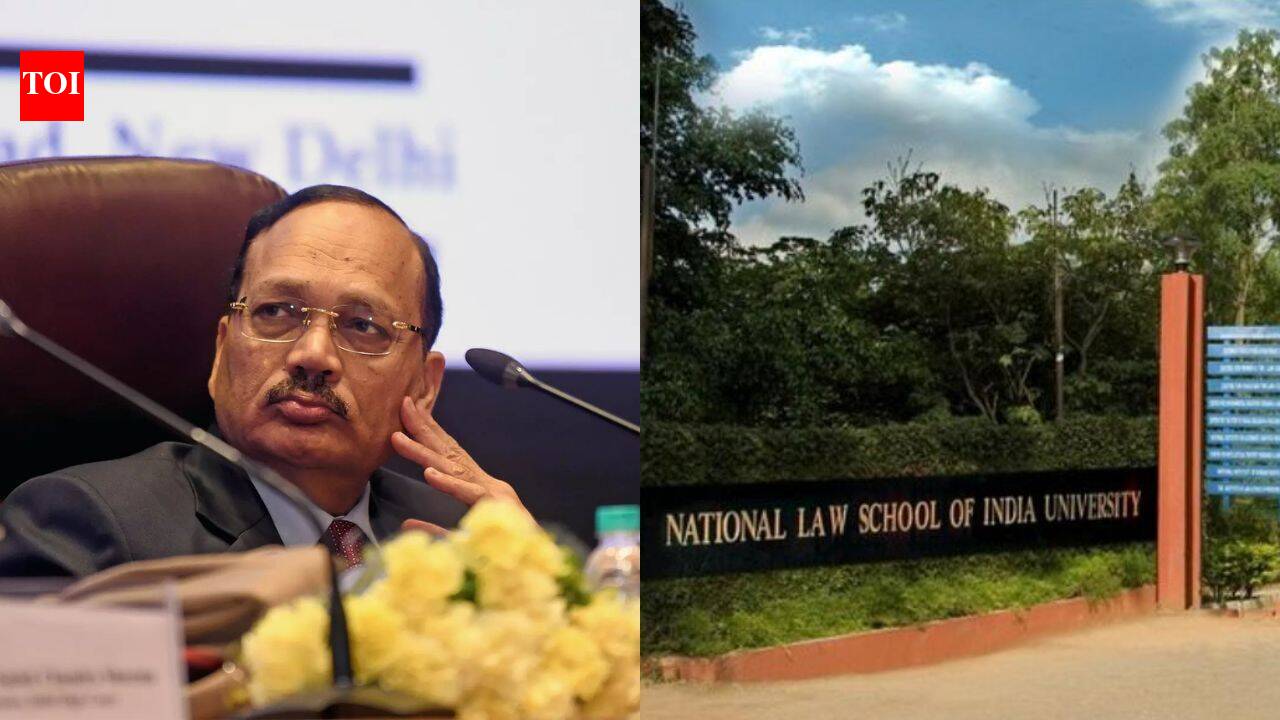
The Supreme Court has questioned the Bar Council of India's authority after its chairman attempted to unilaterally debar NALSAR students for protesting a CJI visit. The order was swiftly retracted following internal dissent and judicial scrutiny regarding the fundamental rights of students.
The BCI Overreach: A Conflict of Authority and Expression
The Incident at NALSAR
Recent events involving the Bar Council of India (BCI) and NALSAR University of Law have sparked a significant legal and constitutional debate. The controversy began on August 13 when BCI Chairman Manan Kumar Mishra issued a directive on his office's letterhead, seeking to bar the entire 2026 graduating class of NALSAR from enrolling as advocates. This extreme measure was a reaction to students expressing reservations regarding the invitation of the Chief Justice of India (CJI) to their upcoming convocation. The move was widely viewed as an attempt to stifle academic dissent and penalize students for exercising their right to voice opinions to their university administration.
Internal Dissent and Institutional Pushback
The directive was met with immediate resistance, both internally and externally. Within six hours of the order being issued, at least four of the 19 BCI office bearers formally pushed back, with three opposing the move entirely and one demanding significant revisions. Simultaneously, the Vice Chancellor of NALSAR refused to implement the order, labeling it potentially “unconstitutional.” This internal fragmentation highlights a breakdown in the BCI’s internal governance, suggesting that the Chairman’s actions were taken without the necessary collective deliberation or consensus expected of such a statutory body.
The Supreme Court's Intervention
The matter reached the Supreme Court, where the bench posed a critical question to the BCI: “Who are you?” The Court sought a detailed explanation regarding the process followed before passing such sweeping resolutions. CJI Surya Kant underscored the gravity of the situation by affirming that students possess a fundamental right to freedom of speech and expression, stating clearly that peaceful protest is a protected right that cannot be arbitrarily curtailed by professional regulatory bodies.
Implications for Legal Education and Ethics
The BCI’s attempt to debar students for expressing dissent raises profound questions about the limits of its regulatory power. Historically, the BCI is tasked with maintaining standards of legal education and professional conduct. However, using these powers to suppress student grievances against administrative decisions fundamentally threatens the spirit of academic freedom. By targeting an entire graduating batch, the BCI risked creating a dangerous precedent where professional futures are held hostage to the political or administrative preferences of regulatory leadership.
The Broader Context of Academic Freedom
This incident has catalyzed a broader conversation about the autonomy of law schools in India. The involvement of groups like the 'Cockroach Janta Party' at Jantar Mantar, who rallied in support of the students, signifies the public interest in ensuring that legal education remains a space for critical thinking rather than rigid conformity. The 'walk back' of the directive, which occurred twice within a few hours, reflects a lack of procedural rigor and a failure to consider the constitutional protections afforded to Indian citizens.
Conclusion: A Lesson in Constitutional Limits
Ultimately, the BCI’s retreat serves as a reminder that statutory bodies operate within the bounds of the Constitution. The Supreme Court's intervention serves as a necessary check, reinforcing that the right to question is essential to the legal profession. As the BCI faces further scrutiny regarding its decision-making processes, the episode stands as a cautionary tale against the exercise of unchecked authority in academic and professional spheres.
Multiple Citing Sources