AI camera mistakes guitar for pillion rider in Bengaluru, issues fine for not wearing helmet
Source Entity
India Latest News: Top National Headlines Today & Breaking News | The Hindu
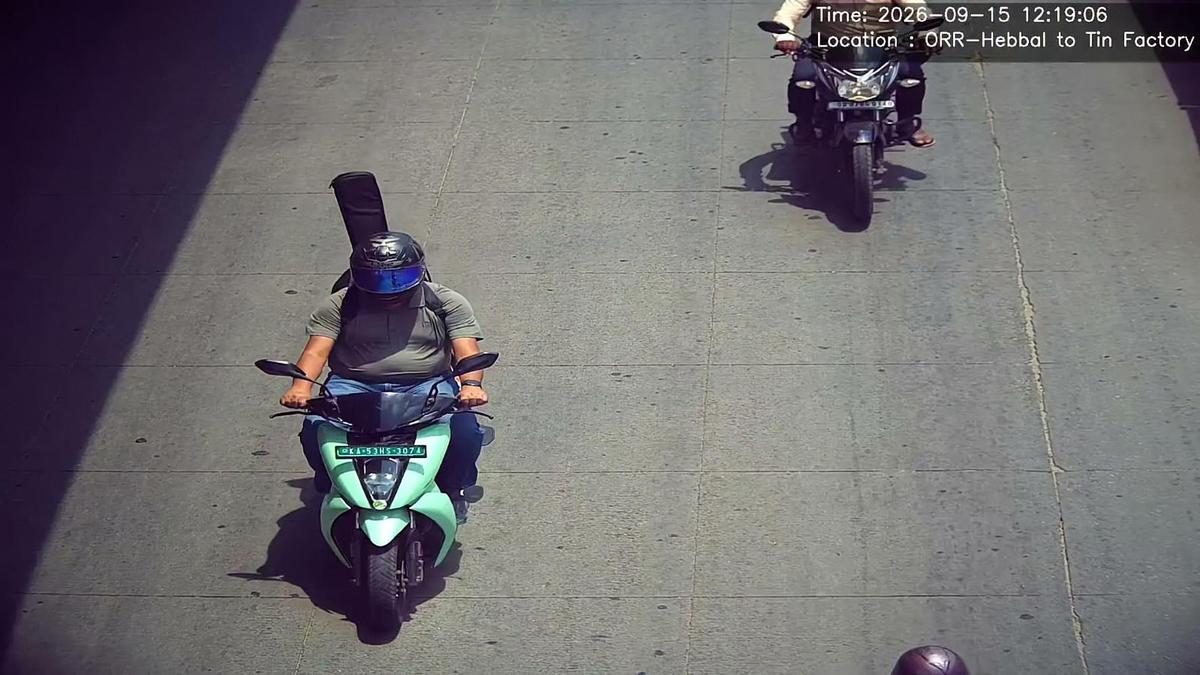
A Bengaluru motorist received a wrongful ₹500 traffic fine after an AI-enabled camera misidentified his guitar case as an unhelmeted pillion rider. The incident highlights the ongoing challenges and limitations in deploying automated traffic enforcement technologies.
The Intersection of AI and Urban Traffic Enforcement
In a recent incident in Bengaluru, the limitations of automated traffic enforcement systems were thrust into the spotlight when an AI-enabled camera issued a ₹500 challan to a motorist, Souvik Dutta. The camera mistakenly identified the guitar case strapped to Mr. Dutta’s back as a pillion rider failing to wear a helmet. This event serves as a poignant case study on the friction between rapid technological adoption and the inherent fallibility of machine learning models in unpredictable real-world scenarios.
The Mechanics of Misidentification
Modern traffic management systems rely heavily on Computer Vision (CV) to detect violations such as speeding, signal jumping, and lack of headgear. These AI models are trained on vast datasets of images to recognize patterns—in this case, the silhouette of a human head. The guitar case, with its elongated shape and position relative to the rider, likely mirrored the spatial characteristics the AI was programmed to flag as a second passenger. This highlights a classic 'false positive' scenario, where the algorithm lacks the nuance to distinguish between a passenger and an inanimate object of similar geometric profile.
Challenges in Scalable AI Deployment
While AI offers the promise of scaling traffic enforcement without needing a massive human police presence, this incident underscores the necessity of a 'human-in-the-loop' verification process. The reliance on automated systems without robust edge-case filtering can lead to public frustration and administrative burdens. When an AI makes a binary decision—fine or no fine—based on a probabilistic model, the absence of human oversight at the initial detection stage can turn a technological advancement into a source of public inconvenience.
Lessons from Bengaluru's Traffic Infrastructure
Bengaluru, a city known for its dense traffic and rapid technological integration, faces unique challenges in implementing smart city solutions. The Bengaluru Traffic Police (BTP) acknowledged the issue, with officials noting that AI systems require continuous iterative training with more diverse data to improve accuracy. This implies that the 'learning' phase of these cameras is ongoing, and incidents like the one involving Mr. Dutta are essentially data points that will eventually help the system refine its detection parameters.
Future Trends and Ethical Considerations
As cities globally move toward becoming 'smart,' the reliance on AI for law enforcement will only increase. Future trends suggest a shift toward multi-modal sensing, where cameras might be supplemented by thermal or depth-sensing technology to verify human presence more accurately. However, this raises secondary concerns regarding privacy and the ethics of algorithmic governance. As systems become more sophisticated, the balance between efficient traffic management and the right to fair, accurate adjudication of fines remains a critical policy challenge.
Conclusion
The case of the guitar-riding motorist is more than a mere curiosity; it is a reminder of the 'growing pains' associated with AI in civic life. While the BTP is working to rectify the error, the incident emphasizes that while machines can process data at scale, they lack the common sense required to understand context. Moving forward, the success of such systems will depend not just on the quality of the code, but on the transparency of the grievance redressal mechanisms available to citizens when the machine inevitably errs.
Verification Required?