Bengaluru may get phased restrictions on entry-exit timings of heavy vehicles
Source Entity
India Latest News: Top National Headlines Today & Breaking News | The Hindu
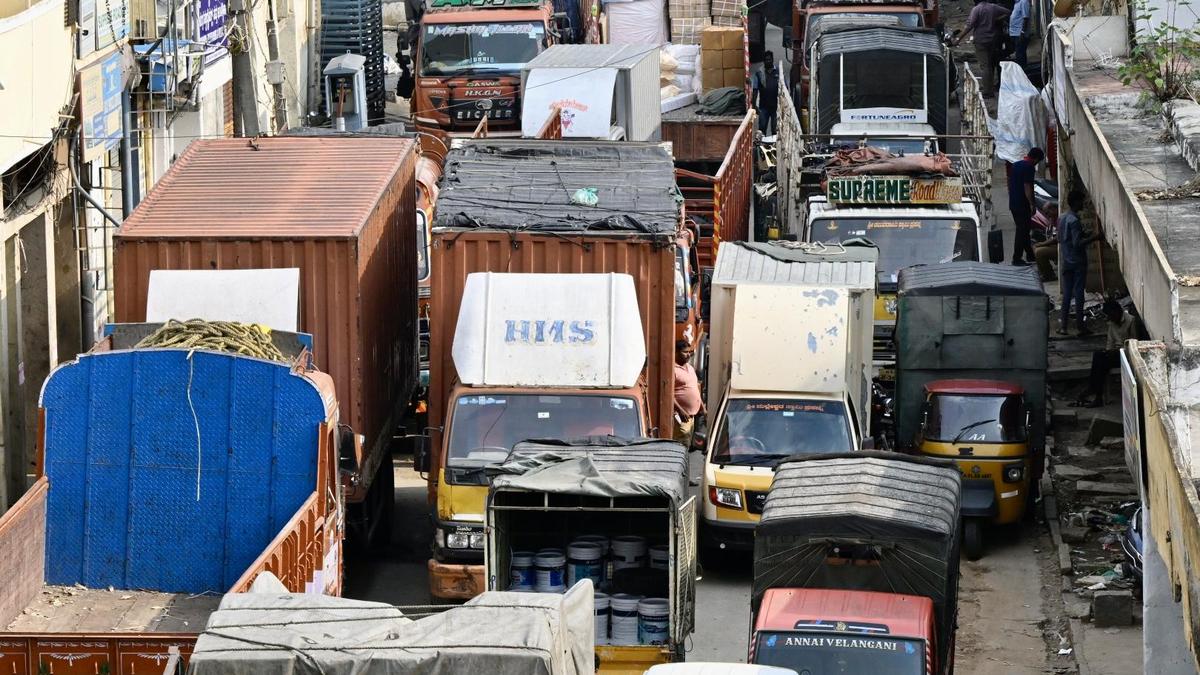
Bengaluru Traffic Police (BTP) are considering the implementation of phased entry and exit restrictions for heavy vehicles to mitigate urban congestion, with studies predicting an increase in average vehicle speeds by at least 2 kmph.
Addressing the Gridlock: Analyzing Bengaluru's Proposed Heavy Vehicle Restrictions
Bengaluru, often dubbed the 'Silicon Valley of India,' has long struggled with a transportation infrastructure that has failed to keep pace with its explosive population and economic growth. The recent proposal by the Bengaluru Traffic Police (BTP) to introduce phased restrictions on the entry and exit timings of heavy vehicles represents a strategic attempt to optimize the city's existing road network. By limiting the presence of large freight carriers during peak commuting hours, the BTP aims to reduce the friction caused by slower-moving, high-volume vehicles on arterial roads.
The Mechanics of Phased Restrictions
The core of the BTP's strategy lies in 'phased restrictions,' which typically involve designating specific time windows—often late at night or early morning—during which heavy vehicles are permitted to enter or leave the city limits. Heavy vehicles, such as multi-axle trucks and lorries, occupy significantly more road space and have slower acceleration and braking patterns compared to passenger cars and two-wheelers. When these vehicles merge into dense traffic, they create 'bottlenecks' and 'shockwaves' that ripple backward through the traffic stream. By segregating heavy freight movement from the peak-hour rush of office-goers, the city can effectively increase the throughput of its primary corridors.
Deconstructing the '2 kmph' Speed Increase
At first glance, a projected increase in average vehicle speed of 'at least 2 kmph' might seem negligible. However, in the context of urban traffic engineering, this is a significant metric. In a city where average speeds during peak hours can drop to as low as 10-15 kmph, a 2 kmph increase represents a substantial percentage improvement in overall mobility. When scaled across millions of commuters and thousands of vehicles daily, this incremental gain translates into thousands of man-hours saved and a reduction in fuel consumption and vehicle emissions. This suggests that the BTP is focusing on marginal gains that, in aggregate, lead to a noticeable decrease in total travel time.
Logistics and Economic Trade-offs
While the move is a victory for the average commuter, it introduces complexities for the city's logistics and supply chain sectors. Heavy vehicles are the lifeblood of commerce, transporting raw materials and finished goods. Restricting their movement may force logistics companies to shift toward 'hub-and-spoke' models, where larger trucks offload goods at peripheral warehouses, and smaller, more agile electric vehicles (EVs) or light commercial vehicles (LCVs) handle the 'last-mile' delivery into the city. This transition could potentially increase operational costs for businesses in the short term but may accelerate the adoption of sustainable urban logistics in the long run.
Historical Context and Implementation Challenges
Bengaluru's struggle with traffic is not new; the city has previously attempted various measures, including one-way systems and the expansion of the Namma Metro. However, the challenge with timing restrictions is enforcement. For such a policy to be effective, the BTP must ensure strict compliance at all entry and exit points of the city. This will likely require the integration of technology, such as Automated Number Plate Recognition (ANPR) cameras and RFID tags, to monitor vehicle movements in real-time and issue automated fines to violators. Without a robust enforcement mechanism, the restrictions risk becoming mere suggestions that fail to impact the average speed.
Future Trends in Urban Mobility
This move signals a broader trend toward 'Demand Management' in urban planning. Rather than simply building more roads—which often leads to 'induced demand' where more roads simply attract more cars—cities are now looking at managing when and how certain vehicles use the infrastructure. We can expect Bengaluru to further refine these restrictions based on real-time data analytics, potentially implementing dynamic timing windows that change based on festival seasons, weather conditions, or major public events.
Conclusion
In summary, the BTP's proposal to restrict heavy vehicle timings is a pragmatic, data-driven response to Bengaluru's chronic congestion. While the projected 2 kmph increase in speed appears modest, its systemic impact on commuter productivity and environmental health is significant. The success of this initiative will ultimately depend on the balance between improving commuter flow and maintaining the efficiency of the city's commercial supply chain, supported by a high-tech enforcement framework.
Verification Required?