Bengaluru morning walker killed in wild elephant attack; social media users flag habitat loss
Source Entity
The Indian Express
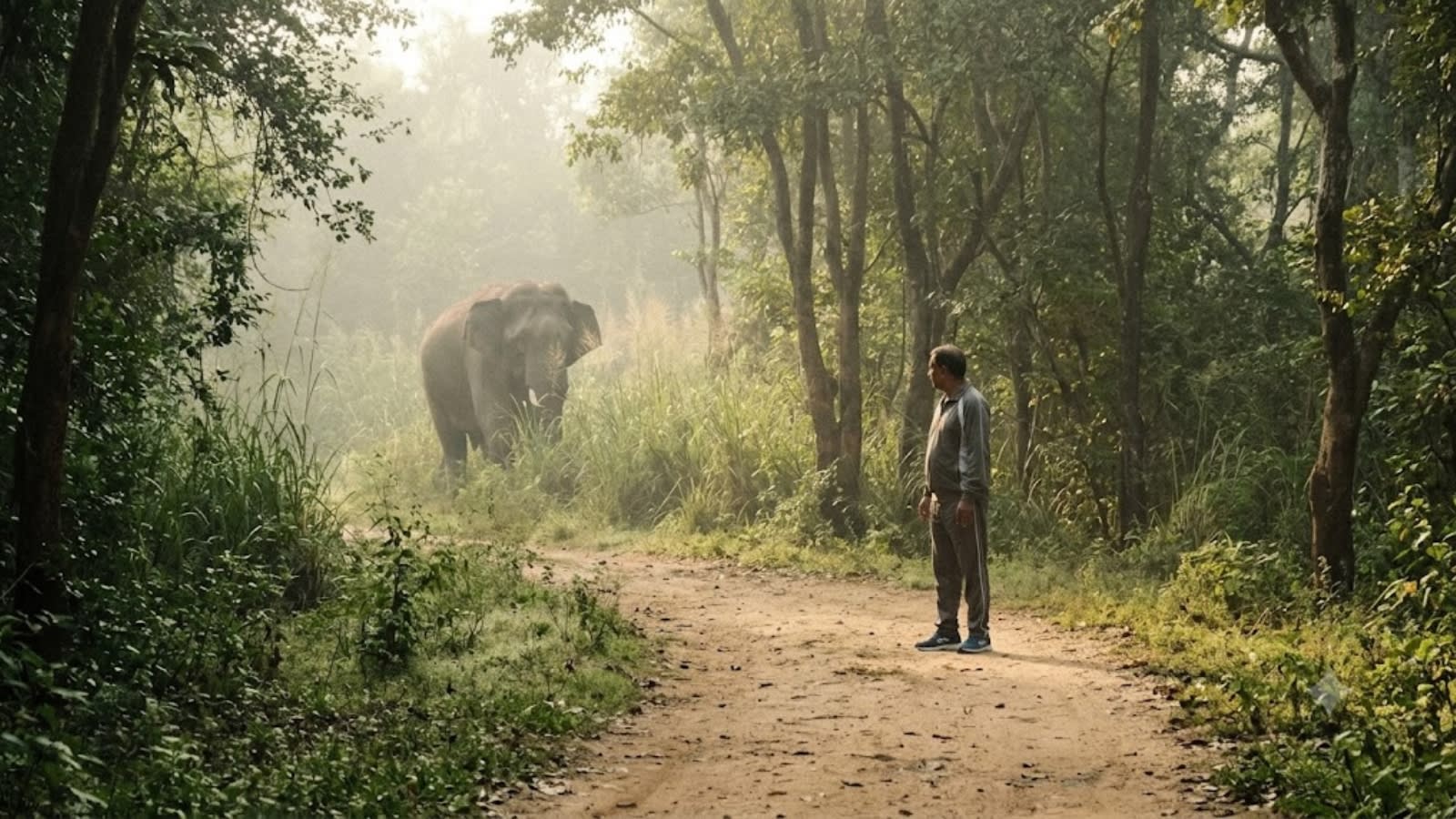
A 60-year-old man was killed in a tragic wild elephant attack in Bengaluru on Monday morning. The incident, captured on CCTV, has ignited public debate regarding urban encroachment and habitat loss.
The Tragic Incident on Mysuru Road
On the morning of Monday, a quiet routine turned into a fatal encounter when a 60-year-old man, identified as Nagaraj, was killed by a wild elephant in the Anchepalya area of Bengaluru. The incident, which occurred near the Rajarajeshwari Hospital on the busy Mysuru Road, has sent shockwaves through the local community. According to eyewitness accounts and reports, the victim was engaged in his daily morning walk when he crossed paths with the animal. The elephant reportedly lifted the man with its trunk, threw him to the ground, and subsequently stepped on him, leading to fatal injuries that resulted in his death after he was rushed to a nearby medical facility.
Digital Evidence and Public Alarm
The severity of the situation is underscored by CCTV footage that has begun circulating on social media platforms. The video captures not only the tragic encounter but also the harrowing moments preceding it, showing another jogger narrowly escaping the same elephant. This visual evidence has served as a catalyst for widespread public outcry, as it highlights the unpredictable nature of human-wildlife encounters when animals wander into densely populated urban peripheries.
The Broader Context of Habitat Loss
The discourse surrounding this incident has quickly shifted toward the systemic issue of habitat loss. As Bengaluru continues its rapid, often unplanned, urban expansion, the boundaries between human settlements and natural forests are becoming increasingly blurred. The presence of a wild elephant in a location like Anchepalya—a region integrated with major infrastructure like hospitals and highways—suggests that corridors historically used by wildlife are being encroached upon by real estate development and infrastructure projects.
Escalating Human-Wildlife Conflict
This incident is a sobering reminder of the escalating human-wildlife conflict in India. When natural habitats are fragmented, elephants often find themselves trapped in 'islands' of greenery, leading them to venture into human-dominated landscapes in search of food and water. The lack of natural barriers and the destruction of migratory routes force these animals into proximity with humans, often resulting in tragic consequences for both parties involved. Experts have long warned that without addressing the root cause—habitat fragmentation—such encounters are likely to become more frequent.
Future Implications and Urban Planning
Moving forward, this tragedy necessitates a critical review of urban planning policies in Bengaluru. It is imperative for authorities to implement better wildlife monitoring systems and establish safer buffer zones around forest fringes. Furthermore, there is an urgent need for public awareness regarding safety protocols in areas prone to wildlife movement. The death of Nagaraj is not merely an isolated tragedy but a clarion call for sustainable development that respects the ecological integrity of the regions surrounding one of India's fastest-growing metropolitan hubs.