‘Diwali & New Year meeting, nothing else’: BJP leaders on PM’s visit to Gujarat
Source Entity
Parimal A Dabhi
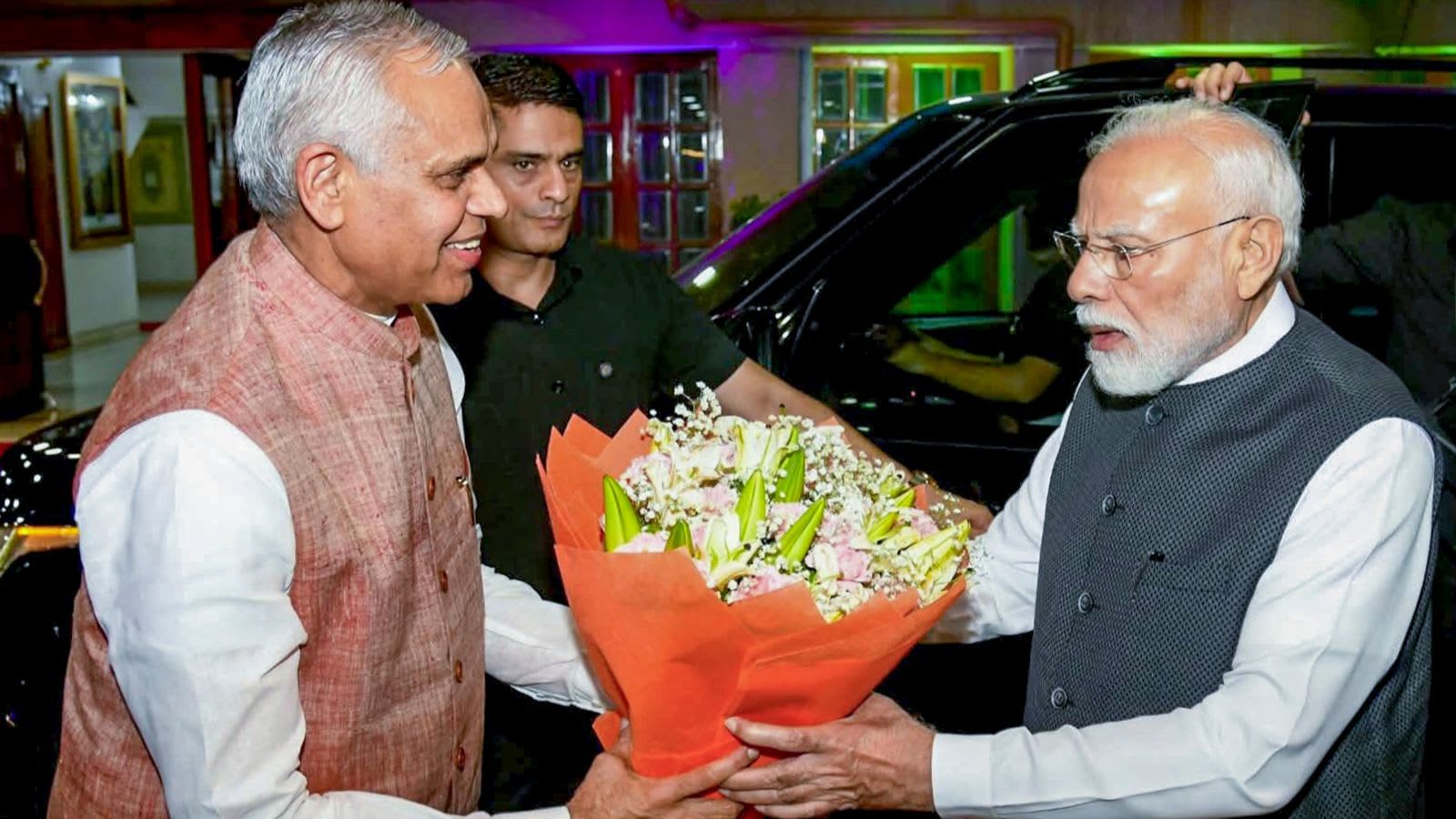
BJP leadership is balancing regional outreach in Gujarat with high-stakes election preparations in Punjab. Prime Minister Modi visited Gujarat for festive engagements, while central leaders are launching a massive outreach campaign in Punjab to coincide with Guru Ravidas Jayanti.
BJP’s Dual-Track Strategy: Bridging Tradition and Electoral Ambition
As the political landscape in India evolves, the Bharatiya Janata Party (BJP) is currently executing a two-pronged strategy that balances internal cohesion in its stronghold of Gujarat with aggressive electoral expansion in Punjab. Prime Minister Narendra Modi’s recent visit to Gujarat, framed around the auspicious period of Labh Pancham and the Gujarati New Year, underscores the party's emphasis on maintaining strong interpersonal networks with veteran leaders. By meeting with former Union minister Harin Pathak and former MLAs like Suresh Patel, the Prime Minister is reinforcing the foundational relationships that have sustained the party's long-term dominance in the state.
The Gujarat Connection: Honoring the Old Guard
Prime Minister Modi’s visit to Ahmedabad was characterized by engagement with the party's veteran leadership. The presence of figures like Harin Pathak, who served in the Atal Bihari Vajpayee government, and Suresh Patel, who held the Maninagar constituency—a seat once held by Modi himself—highlights a deliberate effort to honor the party's history. This focus on continuity and loyalty to old-timers serves to stabilize the state unit, ensuring that the transition from foundational leadership to the current administration of Bhupendra Patel remains seamless and grounded in party tradition.
Punjab Outreach: The Guru Ravidas Jayanti Campaign
In stark contrast to the consolidation seen in Gujarat, the BJP’s activities in Punjab represent a strategic push for electoral growth. The upcoming visits of Union minister CR Patil and national president Nitin Nabin are designed to inject momentum into the party’s Punjab election strategy. A centerpiece of this effort is the 'Samrasta Sankalp Yatra,' a 2,558-km outreach campaign that links the commemoration of Guru Ravidas’s 650th birth anniversary with a physical journey from Jalandhar to his birthplace in Varanasi.
Strategic Alliances and Grassroots Mobilization
Beyond symbolic gestures, the BJP is actively engaging in the mechanics of alliance politics and candidate selection. Discussions regarding potential seat-sharing arrangements with the Shiromani Akali Dal (SAD) indicate that the party is keeping its options open to maximize its electoral footprint. By focusing on the Jalandhar region and leveraging the cultural significance of the Guru Ravidas Jayanti, the BJP aims to build a deeper connection with voters, shifting from a peripheral player to a more influential force in Punjab’s competitive landscape.
Conclusion: A Calculated Political Trajectory
Ultimately, these developments illustrate a party that is adept at managing both its core ideological base and its challenging frontiers. While the Gujarat visit serves to solidify internal unity and recognize the contributions of past leaders, the Punjab campaign demonstrates a sophisticated use of cultural symbolism and strategic planning. Whether this dual approach will yield the desired results in Punjab’s upcoming assembly elections remains a key question, but the party’s commitment to both legacy-building and aggressive expansion is clear.