SpaceX Catches the Starship to end Flight 15
Source Entity
Hacker News
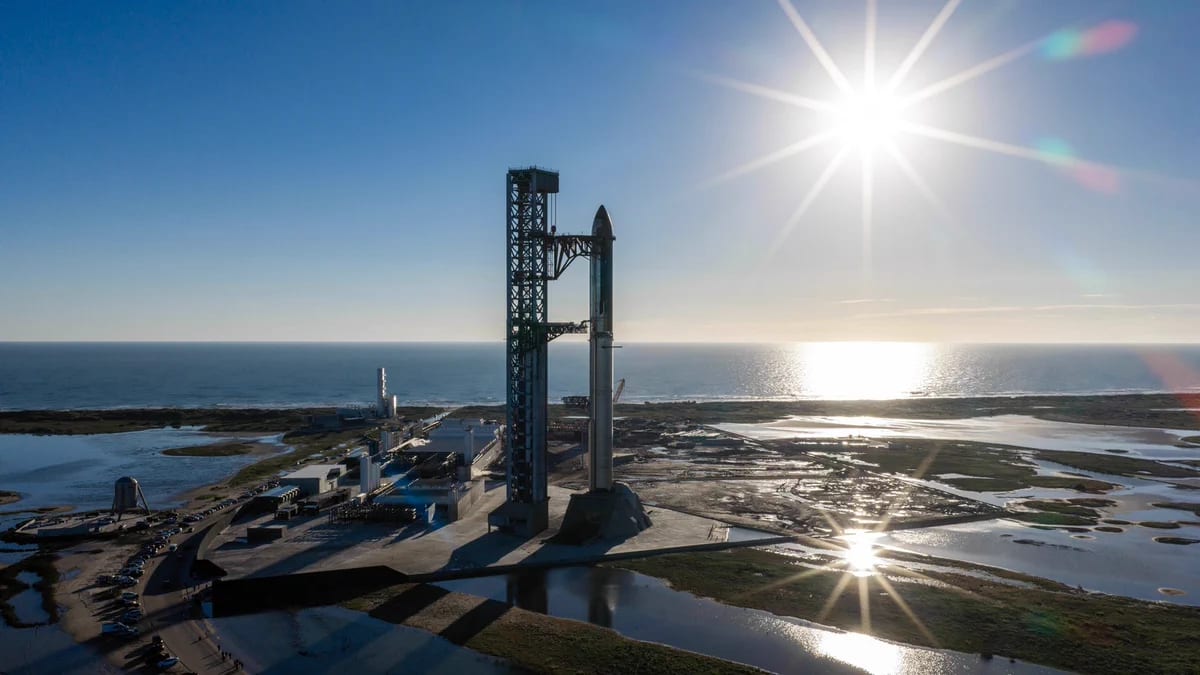
SpaceX achieved a historic milestone during Test Flight 15 by successfully capturing the Starship upper stage with mechanical arms. Despite the loss of the Super Heavy booster, the mission demonstrated critical progress in heat shield performance and orbital reusability.
A New Era of Aerospace Engineering: The Starship Flight 15 Milestone
SpaceX has reached a monumental juncture in space exploration with the conclusion of Starship Test Flight 15. On November 13, 2026, the company launched its massive Starship vehicle from Orbital Launch Pad 2 at Starbase, Texas, attempting the most complex recovery mission in the program’s history. The primary highlight was the successful midair recovery of the spacecraft’s upper stage using the facility’s specialized mechanical arms, colloquially known as "chopsticks."
The Mechanics of the Catch
The recovery of the upper stage from orbit signifies a major leap toward the company's ultimate goal of full and rapid reusability. By executing a controlled descent and firing its engines to initiate atmospheric entry, the spacecraft demonstrated precise guidance and control capabilities. The successful capture by the tower-mounted arms proves that the infrastructure at Starbase is capable of handling the return of massive payloads, a prerequisite for future missions that aim to reduce the cost of orbital transport significantly.
Challenges in Booster Recovery
While the upper stage recovery was a triumph, the mission underscored the inherent volatility of experimental aerospace development. The Super Heavy booster, tasked with the initial ascent, faced a failure during its attempted recovery. Unlike previous successes, this booster was diverted to an offshore splashdown in the Gulf of Mexico, where it subsequently exploded. This serves as a stark reminder that even as SpaceX refines its "catch" technology, the performance of the first-stage booster remains a dynamic engineering hurdle.
Advancements in Thermal Protection
A critical factor in the success of this mission was the performance of the spacecraft's heat shield. As the vessel transitioned from the vacuum of space back into Earth's atmosphere, the thermal protection system was subjected to extreme conditions. The successful outcome indicates that SpaceX has made significant strides in heat shield durability, a component that has historically been a point of failure or concern in earlier iterations of the Starship program.
Operational Scope and Future Implications
Beyond the recovery maneuvers, Flight 15 was a high-capacity mission that saw the deployment of 26 satellites over the course of 14 orbits. This deployment proves that Starship is not merely a prototype but is evolving into a functional workhorse for orbital logistics. By balancing experimental recovery techniques with active satellite deployment, SpaceX is rapidly iterating on its operational capabilities, setting the stage for more frequent and complex missions.
Conclusion: The Path Toward Full Reusability
The events of Flight 15 represent a bittersweet but overwhelmingly positive step for SpaceX. While the loss of the Super Heavy booster highlights that the mission profile is not yet perfected, the successful midair retrieval of the upper stage is a historic "first" that validates the core architecture of the Starship system. As the company continues to refine its launch tower operations and thermal protection designs, the dream of rapid, affordable access to space becomes increasingly tangible.
Multiple Citing Sources