Video: Elon Musk's SpaceX Pulls Off First-Ever Spaceship 'Catch'
Source Entity
NDTV News Search Records Found 1000
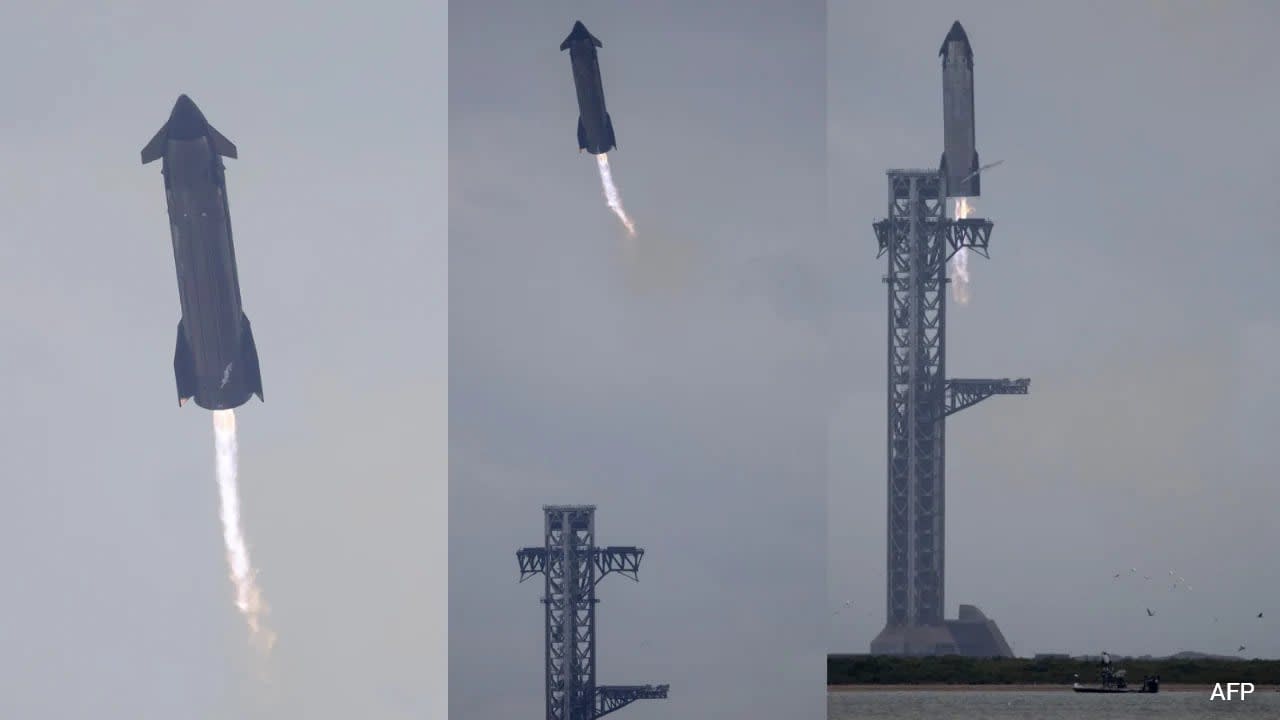
SpaceX successfully executed a landmark midair recovery of the Starship spacecraft using mechanical arms during its latest flight test. While the Super Heavy booster was lost, the mission demonstrated significant progress toward full rocket reusability.
A New Era for Orbital Recovery
SpaceX has achieved a monumental milestone in aerospace engineering by successfully executing a midair 'catch' of its Starship spacecraft. This feat, performed by massive mechanical arms at the launch site, represents the culmination of decades of industry efforts to master fully reusable rocket systems. By moving beyond traditional splashdowns or landing pads, this recovery method signifies a shift in how humanity manages the logistics of space exploration.
Mission Objectives and Technical Performance
The mission demonstrated remarkable operational capacity, with the spacecraft completing 14 orbits and successfully deploying 26 satellites before initiating its return sequence. The critical phase began when the spacecraft fired its engine to shed orbital velocity, facilitating a controlled descent into the atmosphere. The successful performance of the heat shield during this re-entry process is a vital indicator that SpaceX is effectively overcoming the thermal challenges associated with high-speed atmospheric transit.
The Cost of Innovation: The Super Heavy Booster
While the recovery of the spacecraft was a triumph, the mission was not without significant setbacks. The Super Heavy booster, which provides the initial thrust to escape Earth's gravity, failed its recovery attempt shortly after launch. The subsequent destruction of the booster serves as a stark reminder of the extreme volatility inherent in rocket science. In the context of iterative development, however, these losses are often viewed as necessary data collection points that inform future design refinements.
Historical Context of Reusability
For generations, the space industry relied on expendable rockets where components were discarded after a single use, leading to exorbitant mission costs. SpaceX’s pursuit of full reusability is intended to fundamentally alter the economics of space travel. By recovering and quickly refurbishing both the booster and the spacecraft, the company aims to reduce the barrier to entry for orbital missions, potentially enabling more frequent launches for scientific, commercial, and research purposes.
Future Implications and Trends
The success of the mechanical arm retrieval system suggests a future where launch sites function more like traditional airports, with rapid turnaround times for vehicles. As SpaceX continues to refine the Starship architecture, the industry will likely see a transition toward larger payloads and more ambitious interplanetary missions. The ability to reliably land and reuse these massive vehicles will remain the primary benchmark for the next decade of space exploration, influencing both government space agencies and private aerospace competitors globally.
Multiple Citing Sources
Verification Required?