From PM Modi-Putin car ride to Pezeshkian hug: 5 unmissable moments of Brics 2026
Source Entity
PRIYANKA JAISWAL
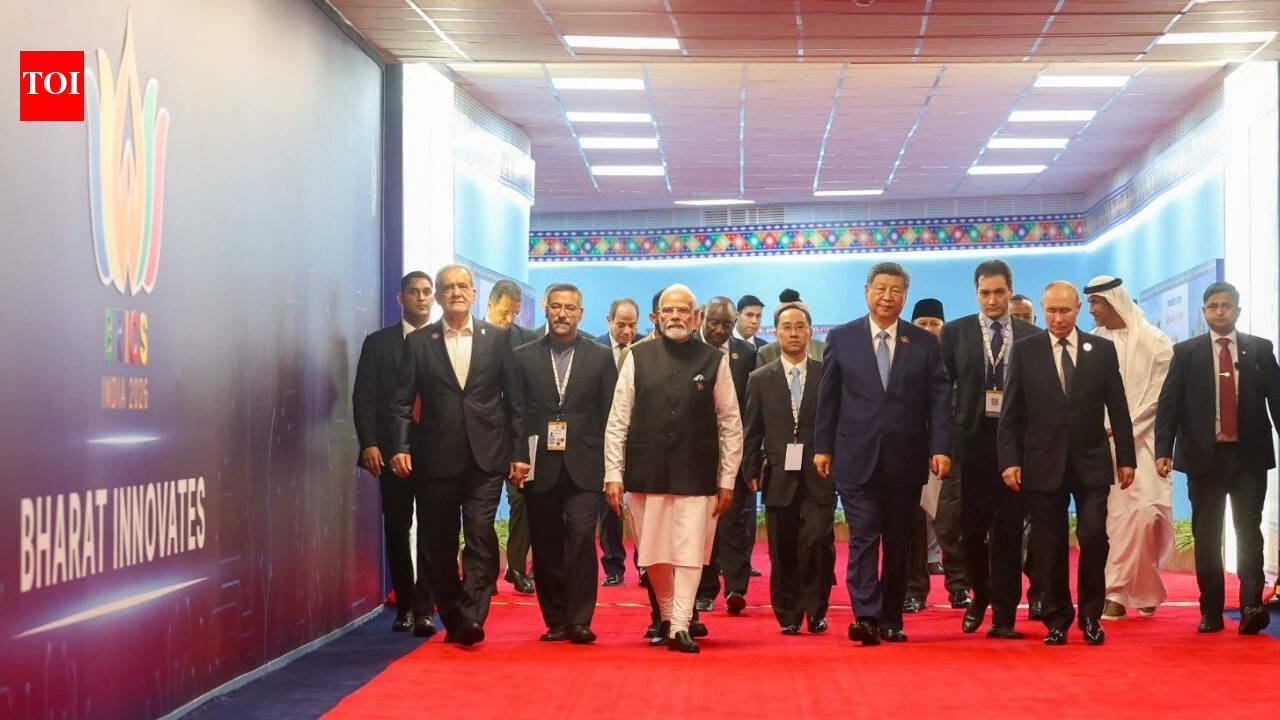
At the 18th BRICS summit in New Delhi, PM Modi and President Pezeshkian discussed strengthening regional connectivity and energy infrastructure. The summit highlighted rising Middle East tensions, with Iran criticizing US sanctions while India emphasized the necessity of secure maritime trade routes.
Strengthening Ties Amidst Global Volatility: The 18th BRICS Summit
The 18th BRICS summit, hosted in New Delhi this September, has served as a critical platform for navigating the complex intersection of economic cooperation and geopolitical instability. As leaders gathered, the dialogue focused heavily on the India-UAE partnership, specifically regarding the India-Middle East-Europe Economic Corridor (IMEC) and energy infrastructure, signaling a move toward deeper integration despite the volatile global climate.
India-UAE Strategic Ambitions
Prime Minister Narendra Modi’s assessment that India-UAE relations have undergone a transformative shift over recent years underscores a deliberate pivot toward long-term strategic and economic synergy. By elevating their ambitions, both nations are positioning themselves as central pillars for regional stability. The focus on IMEC is particularly noteworthy, as this corridor represents a multi-modal transit route designed to bolster trade connectivity between South Asia and Europe, effectively bypassing traditional bottlenecks and securing energy supply chains.
Iran’s Economic Security Concerns
Contrasting the optimism of the India-UAE partnership, Iranian President Masoud Pezeshkian’s presence brought the harsh realities of Middle Eastern instability to the forefront. Addressing the BRICS Business Forum, Pezeshkian articulated that economic security is inextricably linked to national and regional stability. He characterized the current economic landscape for Iran as entering a 'far more dangerous phase,' directly citing the intensity of US sanctions and the impact of ongoing military tensions involving Israel.
The Nexus of Security and Trade
President Pezeshkian’s critique of 'active aggression' highlights the deep divide between the perspectives of BRICS nations regarding Western-led sanctions. His assertion that these pressures have reached a critical threshold highlights the urgency with which Iran is seeking to engage with the BRICS bloc to mitigate the impact of isolation. The summit has provided a rare diplomatic stage for these grievances to be aired in a multilateral setting, reflecting the bloc's growing role as an alternative forum for nations under economic duress.
Modi’s Advocacy for Maritime Safety
In response to the heightened regional tensions, Prime Minister Modi utilized the summit to emphasize the importance of secure sea lanes and the protection of seafarers. This message is not merely a diplomatic platitude; it is a direct response to the increasing disruption of commercial shipping in the Middle East. By calling for dialogue and open routes, India is positioning itself as a mediator capable of balancing its strategic partnerships with the need for global maritime stability.
Future Outlook for BRICS Cooperation
As the summit concludes, the path forward for BRICS appears to be one of cautious expansion and pragmatic economic diplomacy. The intersection of infrastructure projects like IMEC and the urgent need for conflict mitigation in the Middle East will likely define the bloc’s agenda for the coming year. India's ability to maintain constructive dialogue with both regional powers like the UAE and sanctioned nations like Iran demonstrates a nuanced approach to foreign policy, aimed at preserving economic interests while advocating for global peace.
Multiple Citing Sources