Brics diplomacy: Iran president says Tehran, UAE want to 'turn the page' on war
Source Entity
AYUSH PANDEY
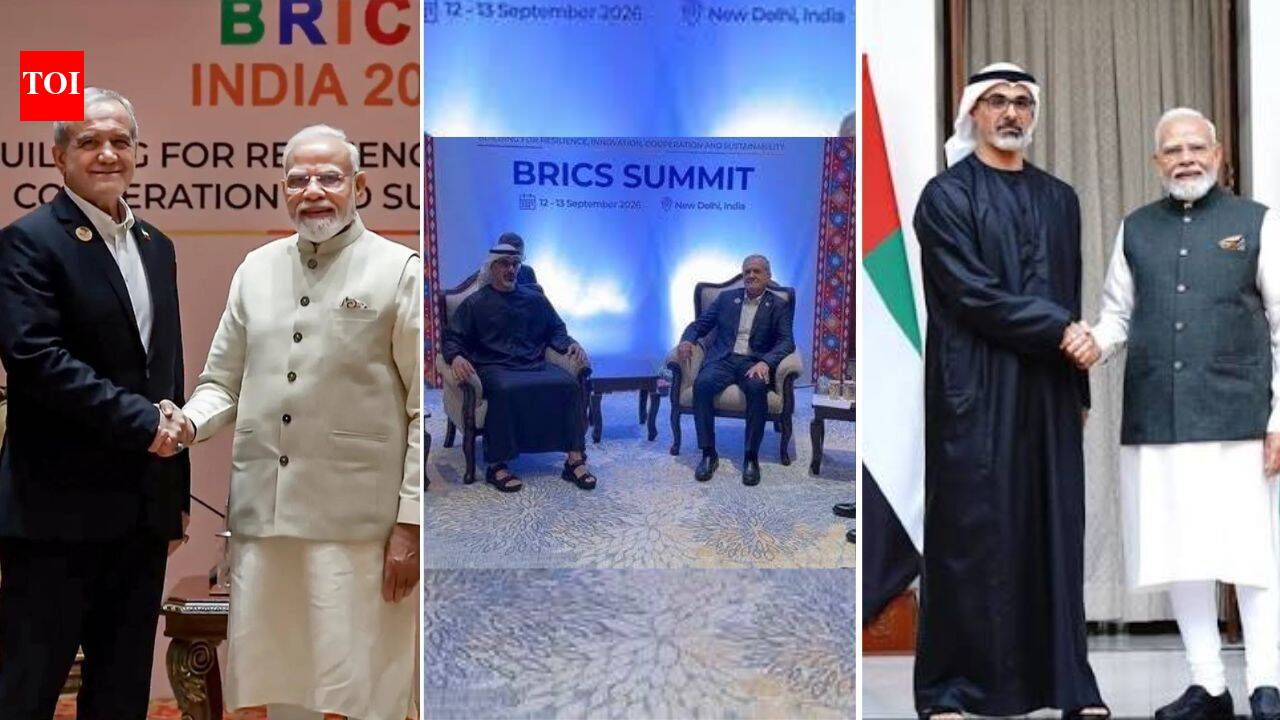
At the 18th BRICS summit in New Delhi, PM Modi and President Pezeshkian discussed strengthening India-UAE ties and the IMEC corridor. Amidst rising Middle East tensions, Pezeshkian highlighted the severe impact of US sanctions on Iran's economic and national security.
Strategic Engagements at the 18th BRICS Summit
The 18th BRICS summit, hosted in New Delhi this September, has served as a critical diplomatic theater for navigating complex geopolitical and economic landscapes. The event brought together key global leaders, including Indian Prime Minister Narendra Modi and Iranian President Masoud Pezeshkian, to address the intersection of infrastructure development and regional stability.
Advancing the India-UAE Partnership
During the summit, Prime Minister Modi highlighted the transformative trajectory of India-UAE relations. By focusing on the India-Middle East-Europe Economic Corridor (IMEC) and energy infrastructure, both nations are signaling a shift toward deeper integration. This collaboration represents a strategic pivot aimed at bypassing traditional logistical bottlenecks and fostering a more resilient economic framework that connects South Asia to the Mediterranean.
Iran’s Economic Security and Regional Tensions
In stark contrast to the optimistic discourse on regional infrastructure, Iranian President Masoud Pezeshkian utilized the BRICS Business Forum to bring attention to the precarious state of Iran’s economy. Pezeshkian argued that economic security is inextricably linked to national and regional stability, noting that the country is currently enduring a 'far more dangerous phase' of economic pressure. He explicitly characterized the recent intensification of US sanctions and the actions of Israel as a form of 'active aggression.'
The Security-Economy Nexus
President Pezeshkian’s address emphasized that the mounting pressures against Iran are not merely domestic economic issues but are symptoms of broader regional instability. By linking his country's economic plight to the military tensions currently spiking across the Middle East, he sought to galvanize support from fellow BRICS members, positioning Iran as a nation navigating externally imposed crises that threaten regional trade and security.
Maritime Safety and Diplomatic Dialogue
Reflecting the global concerns regarding trade routes, Prime Minister Modi used the platform to reiterate the importance of secure sea lanes and the safety of seafarers. This message, delivered to the collective BRICS leadership, underscores the volatility of maritime transit in the region, which is essential for the success of projects like the IMEC. The dual focus on economic corridors and maritime security suggests that India is prioritizing a stable environment for trade despite the prevailing geopolitical friction.
Conclusion: A Balancing Act for BRICS
The 2026 BRICS summit in New Delhi highlights the bloc's role as a forum for balancing competing interests. While member states are eager to pursue ambitious infrastructure projects like the IMEC to stimulate growth, they remain constrained by the escalating hostilities in the Middle East. Moving forward, the effectiveness of BRICS will depend on its ability to foster dialogue and maintain secure transit routes while members continue to navigate the divergent economic and political pressures exerted by global powers.
Multiple Citing Sources