'Put past behind us': Iran, UAE's bonhomie ahead of key meeting with Gulf states over Hormuz
Source Entity
Latest News: Todays Latest News Headlines from India & World | Hindustan Times | Hindustan Times
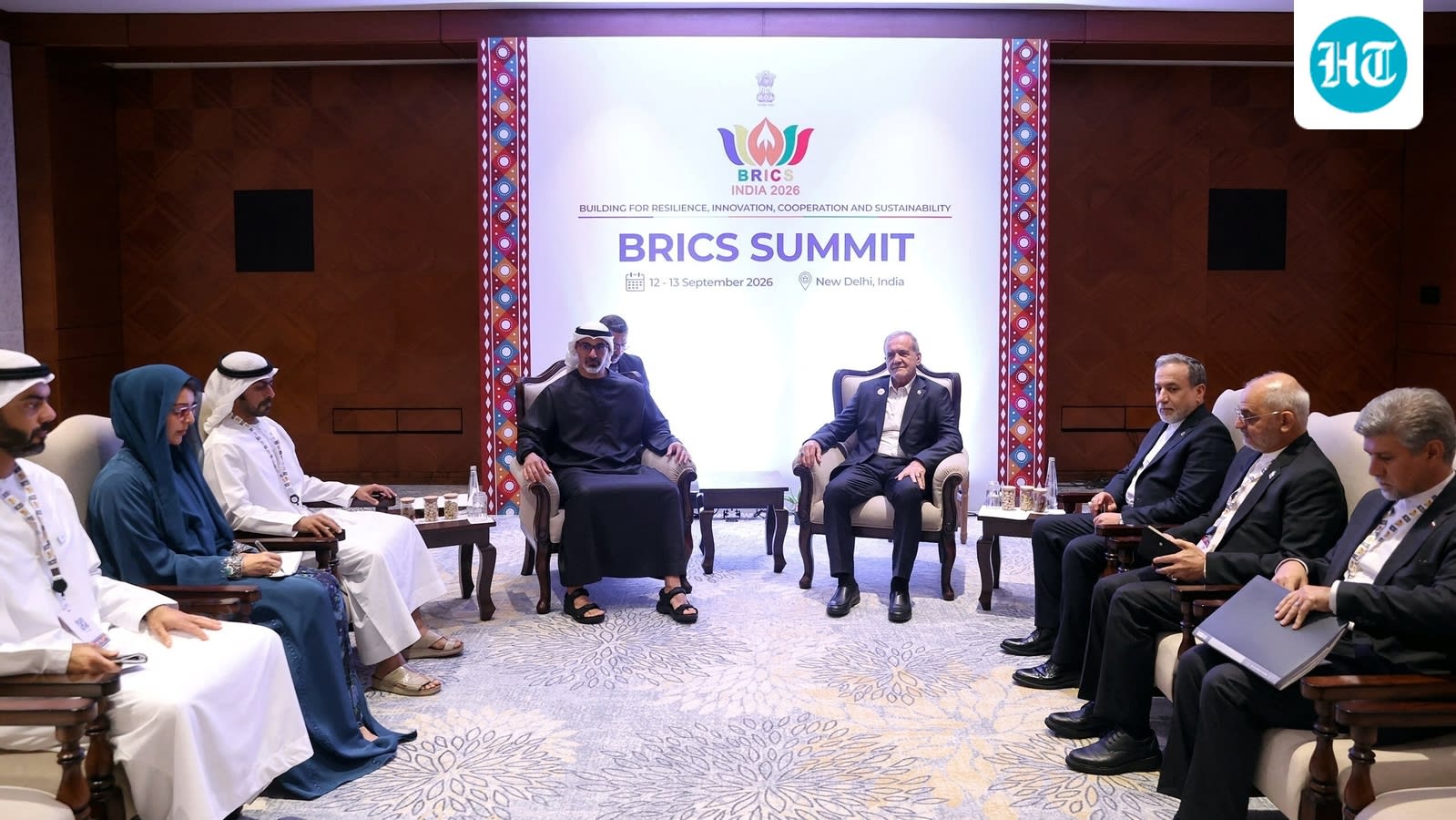
At the 18th BRICS summit in New Delhi, PM Modi and President Pezeshkian discussed strengthening India-UAE ties and the IMEC corridor. President Pezeshkian emphasized the critical link between economic and national security while condemning rising regional tensions.
BRICS 2026: Navigating Geopolitical and Economic Shifts in New Delhi
The 18th BRICS summit, hosted in New Delhi, has emerged as a pivotal platform for addressing the intersection of regional security and global economic integration. As leaders converge, the discussions have moved beyond traditional trade talks to focus on the volatile interplay between international sanctions, maritime safety, and infrastructure ambition.
Expanding the India-UAE Strategic Partnership
Prime Minister Narendra Modi’s meeting with UAE representatives highlighted a significant transformation in bilateral relations over the past few years. Central to these discussions is the India-Middle East-Europe Economic Corridor (IMEC), an infrastructure project designed to enhance connectivity and trade efficiency. By raising their mutual ambitions, India and the UAE are positioning themselves as key anchors for regional stability and economic growth, leveraging their geographic advantages to streamline energy and logistics networks.
The Security-Economy Nexus in Iran
Iranian President Masoud Pezeshkian’s presence at the summit brought the current Middle Eastern tensions to the forefront of the BRICS agenda. In his address to the Business Forum, Pezeshkian articulated a clear stance: economic security is inseparable from national and regional security. He characterized the current state of sanctions and military aggression against Iran as entering a 'far more dangerous phase,' citing the active involvement of the US and Israel as primary drivers of this instability.
Maritime Security and Global Trade
Reflecting the broader concerns of the summit, PM Modi utilized the platform to emphasize the necessity of secure sea lanes and the protection of seafarers. This call for navigation safety is directly linked to the broader goal of regional stability, particularly given the spike in Middle Eastern tensions that threatens to disrupt critical supply chains. Ensuring that maritime routes remain open is a prerequisite for the success of projects like the IMEC.
Geopolitical Implications and Future Trends
The dialogue between India and Iran suggests a proactive diplomatic effort to manage regional fallout. PM Modi’s emphasis on the need for dialogue serves as a counterbalance to the escalating rhetoric surrounding the conflict. As BRICS continues to expand its influence, the ability of member nations to mediate these tensions while fostering economic corridors will determine the bloc's efficacy as a stabilizing force in global affairs.
Conclusion
The New Delhi summit underscores a critical juncture where economic aspirations are being tested by geopolitical realities. Whether through the development of the IMEC or the push for safer maritime corridors, the focus remains on insulating developmental goals from regional volatility. The success of these initiatives will depend heavily on the sustained commitment of member nations to prioritize diplomatic communication over isolationist policies.
Multiple Citing Sources
Verification Required?