Opinion: Opinion | Building BRICS In New Delhi
Source Entity
NDTV News Search Records Found 1000
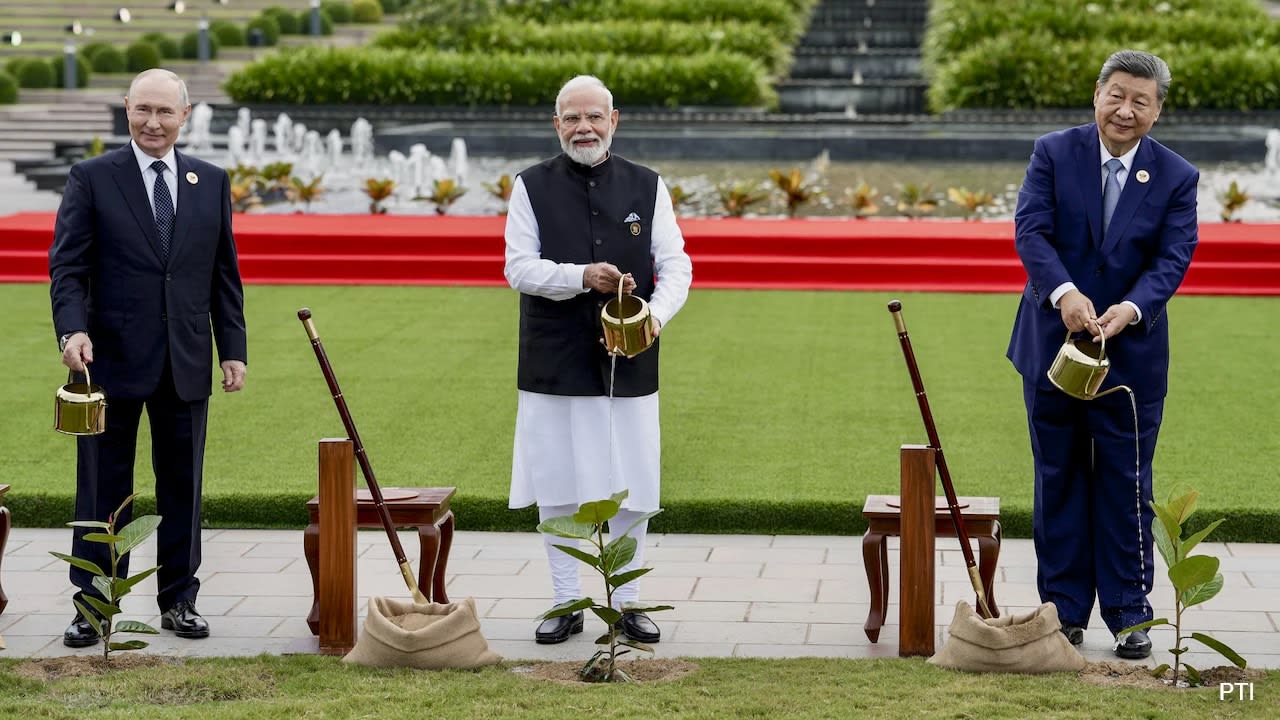
Iranian President Masoud Pezeshkian attended the 18th BRICS summit in New Delhi, highlighting the intersection of economic sanctions and regional security. PM Modi used the platform to emphasize the necessity of dialogue and the protection of global maritime trade routes amidst rising Middle East tensions.
The New Delhi BRICS Summit: Navigating Multipolarity and Geopolitical Tension
The 18th BRICS summit, hosted in New Delhi, has served as a critical theater for addressing the complexities of an evolving multipolar world. As global powers and emerging economies gather, the event has highlighted the undeniable link between economic stability and regional security, particularly as nations navigate the pressures of international sanctions and localized conflicts.
Iran’s Stance on Economic and Regional Security
Iranian President Masoud Pezeshkian’s arrival in New Delhi signaled a significant push to elevate Iran’s concerns regarding international isolation. Speaking at the Leaders' Session of the BRICS Business Forum, Pezeshkian asserted that Iran is facing a 'far more dangerous phase' of economic pressure. By explicitly linking 'extensive' US sanctions to what he described as 'active aggression' from the US and Israel, Pezeshkian underscored the Iranian government's view that economic security is inextricably tied to national and regional sovereignty.
The Geopolitical Stakes of the Middle East
This summit occurs at a time when tensions in the Middle East have spiked, placing immense pressure on the diplomatic agendas of participating nations. The presence of President Pezeshkian in New Delhi provided a high-profile platform for Iran to characterize its ongoing economic struggles as a byproduct of military and political hostility. This rhetoric highlights the friction points that continue to challenge the internal cohesion of emerging economic blocs like BRICS, which seek to promote cooperation amidst divergent geopolitical interests.
India’s Diplomatic Balancing Act
Prime Minister Narendra Modi’s engagement with President Pezeshkian underscores India’s strategic approach to its neighborhood and the broader international community. By reiterating the need for dialogue and focusing on the security of sea lanes and seafarers, India is positioning itself as a stabilizing force. The focus on 'secure sea lanes' is not merely an economic concern but a vital geopolitical necessity, as the safety of maritime trade routes remains paramount to the economic health of the BRICS member nations.
Multipolarity and Future Trends
Ultimately, the New Delhi summit reflects the reality of a world shifting away from traditional power structures. As BRICS expands its influence, the ability of its members to manage conflicting narratives—such as Iran’s accusations of aggression against the West versus India’s focus on collaborative maritime security—will define the group's future effectiveness. The summit demonstrates that while economic cooperation is the primary goal, the geopolitical realities of individual member states remain the primary drivers of diplomatic discourse.
Conclusion
The 18th BRICS summit has successfully underscored that in an era of multipolarity, economic forums are increasingly used as arenas for addressing deep-seated political grievances. As the summit concludes, the emphasis on dialogue and maritime safety suggests a collective desire to prevent regional tensions from destabilizing the global economic order, even as individual nations continue to pursue their distinct national security agendas.
Verification Required?