Burning Man Death Rates – A Short Lesson in Statistics
Source Entity
Hacker News
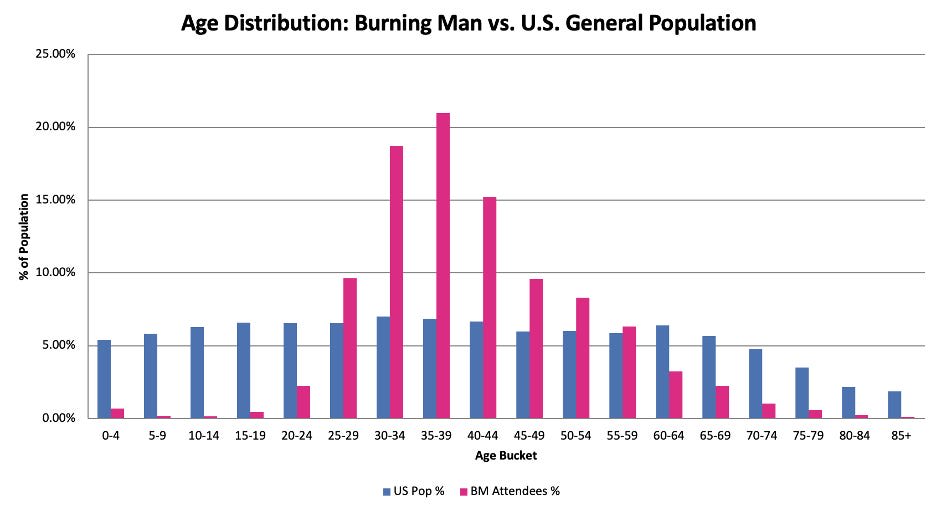
Despite recent headlines regarding three deaths at the 2026 Burning Man festival, statistical analysis suggests this figure is well within expected norms. The event's historical near-zero mortality rate is likely an anomaly driven by demographic selection bias rather than the event itself being inherently dangerous.
Statistical Context: Analyzing the 2026 Burning Man Mortality
Recent reports concerning the 2026 Burning Man festival have highlighted the occurrence of three confirmed deaths among attendees. While this figure represents the highest recorded mortality count in the event's three-decade history, a rigorous statistical examination suggests that characterizing these events as an outlier requires careful nuance. When viewed through the lens of public health data, the raw numbers tell a story that deviates significantly from public perception.
Comparing Against National Averages
To understand the gravity of these events, one must compare the festival's mortality rate against the crude national death rate. If the population at Burning Man were representative of the general population, mathematical modeling suggests we would expect approximately 12 deaths during the event period. The actual count of three is significantly lower than this baseline, indicating that the festival environment does not inherently present a higher risk of mortality than daily life in the broader population.
The Role of Age-Standardization
Raw numbers, however, can be misleading. By applying an age-standardized death rate—which accounts for the specific demographic makeup of the attendees—the expected number of deaths drops to 4.9. In this context, observing three deaths is statistically unremarkable. It falls well within the range of expected outcomes for a gathering of such size and duration, suggesting that the event's safety metrics remain consistent with broader population health trends.
Understanding the Historical Anomaly
The perception of danger surrounding the 2026 event is largely a byproduct of Burning Man's unique history. Having maintained a near-zero mortality rate for over 30 years, any deviation from this baseline appears jarring to the public and media alike. However, this historical absence of deaths is the true anomaly, rather than the three deaths recorded in 2026. Experts point to "selection bias" as the primary driver for this long-term trend.
Demographic Confounding Factors
The demographic profile of Burning Man attendees—typically younger, more affluent, and physically mobile—acts as a significant confounding factor. These individuals generally possess better health outcomes than the national average. When these demographic advantages are removed, the event's mortality rate aligns much more closely with standard public health projections. The "near-zero" myth is therefore a result of the specific population that chooses to attend, rather than an indication of an uniquely safe environment.
Concluding Perspectives
Ultimately, the 2026 Burning Man deaths serve as a reminder of the importance of statistical literacy when interpreting news. While three deaths are a tragic reality for the families involved, they do not represent a statistical crisis or a failure of event safety protocols. Instead, they reflect a return to expected mortality norms for a large-scale human gathering, correcting for the demographic selection bias that has historically obscured the true nature of risk at the event.