Distraction-free writing gadget BYOK is adding custom extensions
Source Entity
Terrence O’Brien
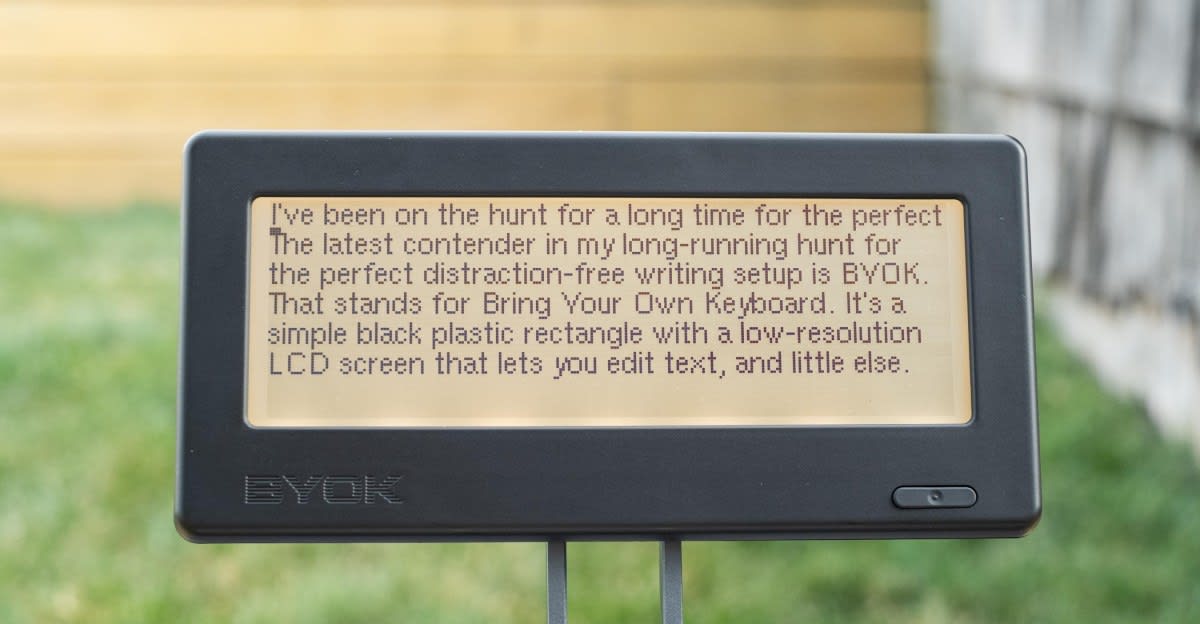
The minimalist writing gadget BYOK is evolving to support custom extensions to meet the needs of advanced users. Founder Nick Sjolinder is navigating the balance between maintaining a distraction-free experience and providing necessary features for complex projects.
The Evolution of Minimalist Hardware: BYOK's Strategic Shift
Embracing Complexity in a Minimalist Space
The BYOK gadget represents a growing trend in the consumer technology landscape: the rise of single-purpose, "distraction-free" devices. Designed for writers who find the perpetual connectivity of laptops and tablets detrimental to their workflow, the device prioritizes text drafting above all else. However, as the user base expands, founder Nick Sjolinder is encountering the classic product development dilemma: how to satisfy power users without diluting the core value proposition of simplicity.
The Allure of the No-Frills Experience
For many, the appeal of BYOK lies in its inherent limitations. In an era of digital saturation, the deliberate choice to remove browser access, social media notifications, and multitasking capabilities is a feature, not a bug. By forcing the user to focus solely on the act of writing, the device serves as a sanctuary for deep work. However, the limitation of this minimalist approach becomes apparent when users transition from short-form drafting to long-form projects, such as screenplays or novels, which require structural organization and reference material.
Bridging the Gap with Custom Extensions
The introduction of custom extensions marks a significant pivot for the BYOK ecosystem. By allowing users to add functionality—such as specialized note-taking or project management tools—Sjolinder is effectively creating a modular platform. This approach acknowledges that while the "bare minimum" is sufficient for some, a significant subset of the professional writing community requires tools that adapt to their specific creative processes. This strategy aims to keep the interface clean for purists while enabling advanced capabilities for those who need them.
The Founder's Challenge
Nick Sjolinder’s efforts reflect a broader challenge in hardware design: maintaining a brand identity built on simplicity while scaling functionality. If the device becomes too complex, it risks becoming just another laptop. If it remains too rigid, it risks alienating the very demographic—screenwriters, novelists, and journalists—that it was built to serve. The successful implementation of custom extensions will likely depend on how well the company manages the user experience to ensure that these new features do not clutter the distraction-free environment.
Future Trends in Dedicated Writing Tools
The BYOK development cycle provides a snapshot of the future of niche hardware. As software becomes increasingly bloated, there is a clear market demand for hardware that restores focus. Moving forward, we can expect to see more "single-purpose" gadgets adopt this open-platform model, where the hardware remains simple, but the software ecosystem allows for user-defined complexity. This shift represents a maturation of the minimalist hardware market, moving from curiosity-driven products to professional-grade tools.