What California is learning from solar panels built over irrigation canals
Source Entity
Hacker News
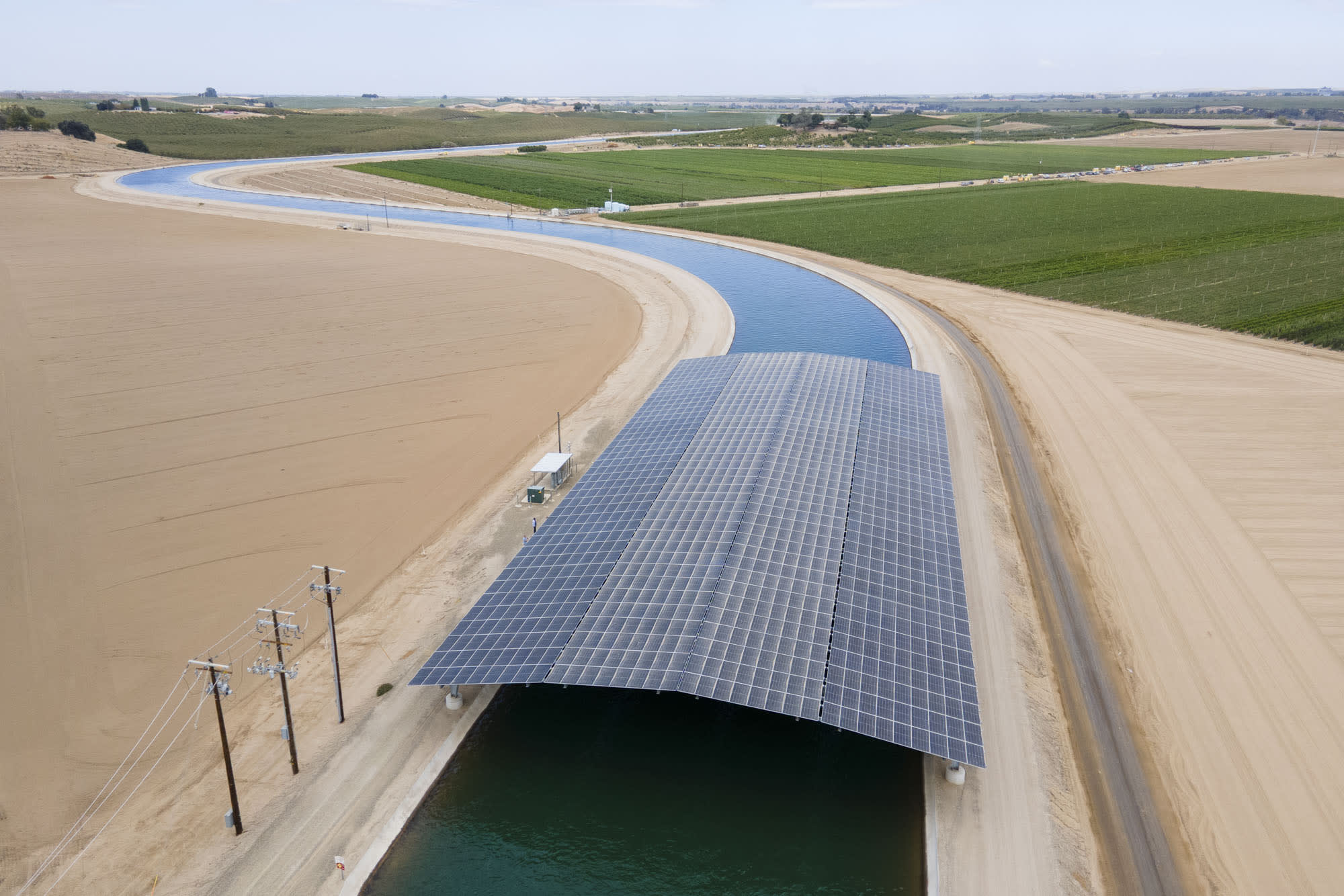
California and India are both leveraging canal-top solar technology to generate renewable energy while conserving water and land. These projects demonstrate a dual-use infrastructure strategy that addresses land scarcity and evaporation challenges.
The Rise of Canal-Top Solar Infrastructure
As the global transition to renewable energy accelerates, the challenge of land availability has become a primary bottleneck for large-scale solar deployment. Innovative solutions are now emerging, specifically the utilization of existing water infrastructure for energy production. Both California’s Project Nexus and India’s burgeoning canal-top photovoltaic (CTPV) initiatives represent a shift toward 'dual-use' infrastructure, where irrigation canals serve the dual purpose of water transport and energy generation.
The California Experience: Project Nexus
In Hickman, California, the Turlock Irrigation District is spearheading Project Nexus, a pilot program investigating the efficacy of covering working irrigation canals with solar panels. This project is a critical component of broader efforts to understand how renewable energy can be integrated into existing water management systems. By shielding canals from direct sunlight, the panels offer a potential secondary benefit: the reduction of water loss through evaporation, a vital consideration in drought-prone regions.
India’s Strategy: Scaling Land-Free Energy
Similarly, India is looking toward its vast canal network to address the dual pressures of rising energy demand and land scarcity. Unlike ground-mounted solar arrays that require extensive land acquisition—often at high costs—canal-top systems utilize existing footprints. In states like Punjab, the installation of 20 MW of canal-top systems has already demonstrated the ability to save nearly 100 acres of land. This efficiency is driving government initiatives such as the PM Surya Sarovar Yojana (PM-SSY), which seeks to expand floating and water-based solar capacity.
Overcoming the Land Acquisition Barrier
One of the most significant advantages of canal-top photovoltaics is the mitigation of land-use conflicts. As the cost of land acquisition for massive solar farms increases, the ability to generate power on infrastructure that is already developed becomes economically and environmentally attractive. By mounting panels on specialized structures over canals, developers can bypass the complex permitting and acquisition processes associated with traditional solar parks.
Broader Implications and Future Trends
These projects highlight a growing trend in sustainable engineering: the optimization of existing civil infrastructure. Beyond energy generation, the shading effect provided by these panels may help maintain water quality by reducing algae blooms and lowering water temperatures. As more data is gathered from pilot projects like Project Nexus, we can expect to see a more standardized approach to CTPV deployment globally.
Conclusion
The convergence of water management and solar energy generation marks a sophisticated evolution in renewable energy strategy. By transforming irrigation canals into power stations, regions like California and India are proving that energy transition does not have to come at the expense of land conservation. These initiatives serve as a blueprint for future infrastructure projects that prioritize resource efficiency and environmental sustainability.