Punjab, Haryana fall short on farm fire management; Delhi also misses many targets: CAQM report on pollution action
Source Entity
Latest News: Todays Latest News Headlines from India & World | Hindustan Times
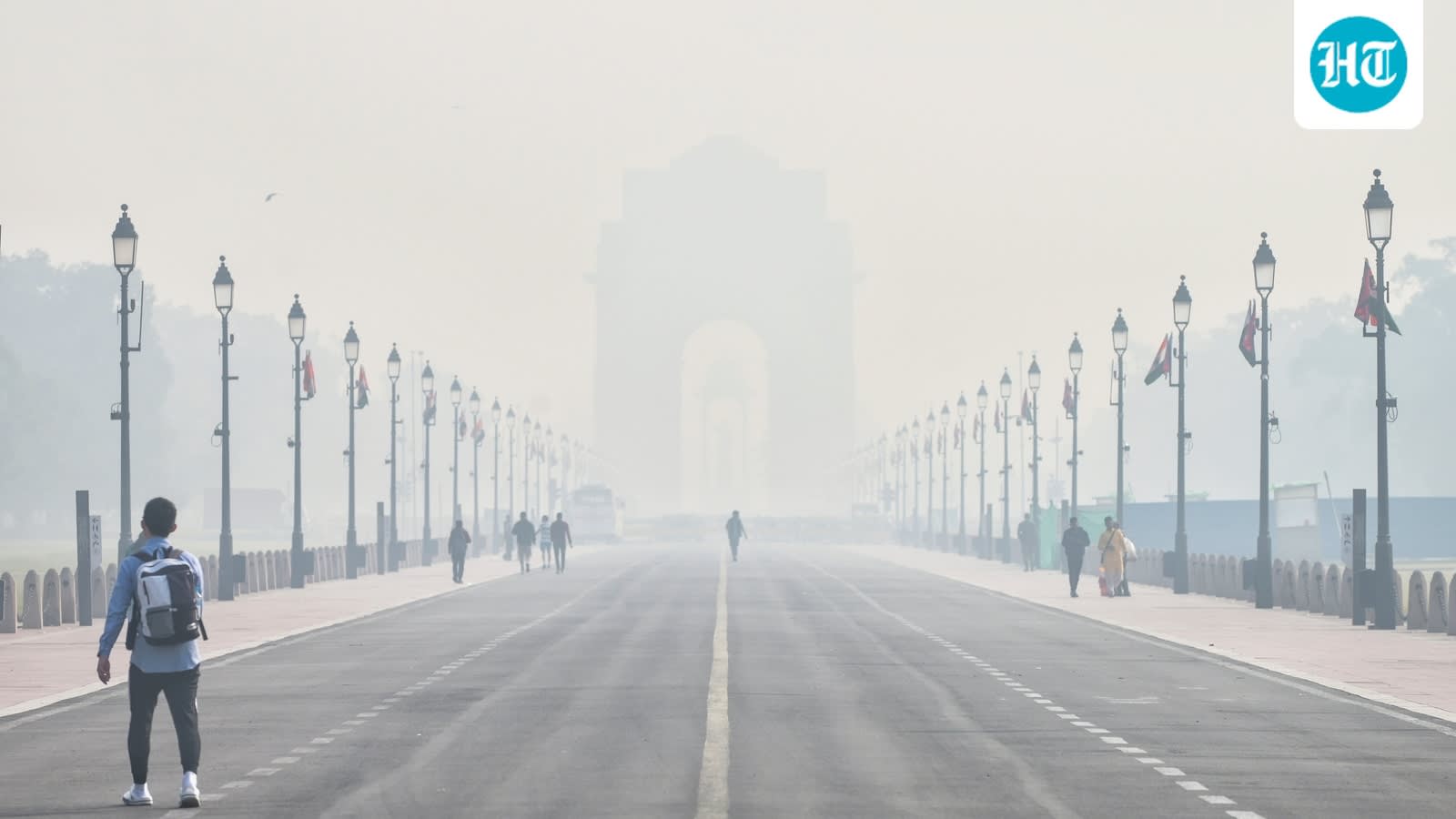
The CAQM has ordered Delhi-NCR states to draft district-level pollution plans after finding nearly half of current action points unsatisfactory. While the Delhi government claims record-clean air, official data reveals high pollution spikes during Diwali and persistent failures in stubble management.
Addressing the NCR Pollution Crisis: A Shift to Localized Accountability
For the first time, the Commission for Air Quality Management (CAQM) has mandated that Delhi and its neighboring National Capital Region (NCR) states transition from broad, state-level strategies to specific district-level action plans. This directive follows a sobering performance review, where nearly half of the established pollution-control action points were classified as "unsatisfactory." By setting a concrete target to reduce annual average pollution levels by 15-20% by 2027 compared to 2026, the CAQM is signaling a move toward more granular, localized accountability to combat the region's perennial smog crisis.
The Performance Gap: Data vs. Rhetoric
A significant tension has emerged between official government claims and the empirical reality of the Air Quality Index (AQI). While the Delhi government recently touted October and November as having the cleanest air in a decade, data analysis suggests a more complex narrative. Although October did see improvements, the period surrounding Diwali saw some of the highest pollution levels in ten years. The seven days preceding the festival averaged an AQI of 347.4, marking the third-highest intensity in a decade, highlighting that short-term improvements are often masked by severe, event-driven spikes.
Evaluating Institutional Compliance
The CAQM’s report card, which tracks progress up to October 31, paints a critical picture of state performance. Out of 165 total action points across the NCR, only 22.42% were deemed satisfactory, while over 46% were flagged as unsatisfactory. Delhi itself struggled, with 56.25% of its 32 designated action points failing to meet expectations. These metrics encompass essential infrastructure, such as construction and demolition waste processing capacity and the expansion of Continuous Ambient Air Quality Monitoring Stations (CAAQMS), which are vital for real-time data accuracy.
The Stubble Burning Challenge
Agricultural emissions, specifically stubble burning in Punjab and Haryana, remain a primary point of friction. The CAQM report explicitly identifies these states as falling short of their management targets, with Haryana achieving 35% and Punjab 53% of their respective goals. This failure to adequately manage biomass utilization continues to exacerbate regional air quality, particularly in the critical weeks of October and November when weather conditions often trap pollutants within the Indo-Gangetic plain.
Future Trends and Strategic Implications
The push for district-level planning represents a structural shift in environmental governance. By forcing districts to own their pollution reduction targets, the CAQM aims to eliminate the diffusion of responsibility that has historically hampered state-level efforts. Moving forward, the success of this strategy will depend on the enforcement of these localized plans and the ability of state governments to scale up infrastructure—ranging from waste management to monitoring networks—before the final 2026 report card is released in January.
Conclusion
The divergence between political messaging and the raw AQI data underscores the necessity for the CAQM’s new, more rigorous monitoring framework. As the region faces the dual pressures of seasonal agricultural practices and urban industrial growth, the transition to district-specific action plans is a critical, albeit overdue, step toward achieving sustainable air quality improvements in the National Capital Region.
Verification Required?