Chemistry Nobel goes to reactions like those that gave life a hand
Source Entity
John Timmer
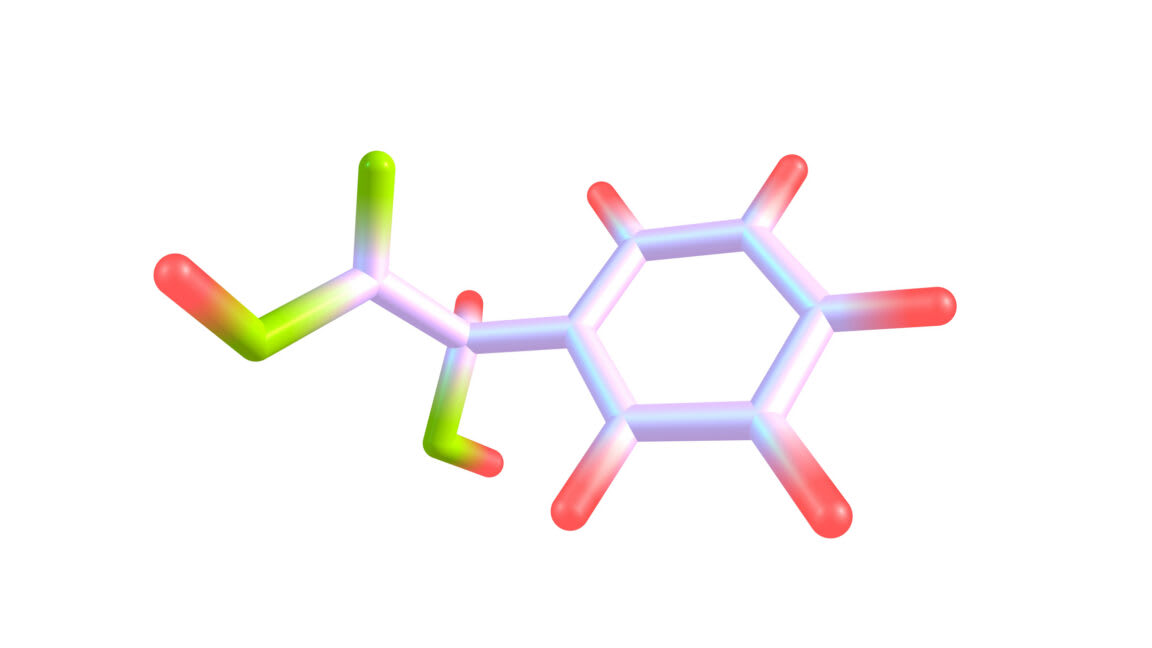
The Nobel Prize in Chemistry has been awarded to Henri B. Kagan and Kenso Soai for their groundbreaking research into molecular chirality. Their work explains why biological life exclusively utilizes one 'handed' version of molecules, solving a fundamental mystery regarding the origins of life.
Unlocking the Asymmetry of Life: The 2026 Nobel Prize in Chemistry
The 2026 Nobel Prize in Chemistry has been awarded to French scientist Henri B. Kagan and Japanese researcher Kenso Soai, marking a monumental achievement in the field of molecular biology and organic chemistry. Their collaborative, yet independent, contributions have provided a definitive answer to one of science's most enduring enigmas: why life on Earth exhibits a profound preference for specific mirror-image molecular structures, a phenomenon known as homochirality.
The Concept of Chirality
At the heart of this discovery is the concept of chirality, derived from the Greek word for 'hand.' Much like a human's left and right hands, certain molecules exist as non-superimposable mirror images of one another. Despite being chemically identical in terms of atomic composition and connectivity, these two forms—often referred to as enantiomers—possess distinct three-dimensional arrangements. This structural nuance is not merely academic; it is a fundamental requirement for the machinery of life.
The Biological Selective Process
In standard chemical reactions, nature typically produces a racemic mixture—a 50-50 split between left- and right-handed molecules. However, biological systems are remarkably selective. The fundamental building blocks of life, such as the amino acids that construct proteins and the sugars that form the backbone of DNA, exist almost exclusively in one specific handedness. If an organism were presented with the 'wrong' mirror image of these building blocks, the enzymatic processes required for survival would fail, as biological catalysts are evolved to interact only with specific structural configurations.
Solving the Origin-of-Life Puzzle
For decades, origin-of-life researchers have grappled with the question of how a prebiotic world, which likely contained a chaotic mixture of both mirror-image forms, transitioned into the highly organized, homochiral systems we observe today. Kagan and Soai’s research has illuminated the mechanisms that allowed life to break this symmetry. By identifying how specific chemical reactions could favor one form over the other, they have provided the missing link in our understanding of how complex biological systems emerged from the primordial soup.
Broader Implications and Future Trends
The implications of this breakthrough extend far beyond theoretical chemistry. Understanding how to manipulate and synthesize specific chiral molecules is essential for the pharmaceutical industry, where the wrong 'handed' version of a drug can be ineffective or even toxic. By mastering the principles of molecular asymmetry, scientists are now better equipped to design more precise medications and advanced materials. Furthermore, this research refines our search for extraterrestrial life, as scientists can now better define the chemical signatures that indicate a biological origin.
Conclusion
In summary, the recognition of Henri B. Kagan and Kenso Soai by the Nobel Committee underscores the critical importance of structural symmetry in the evolution of life. Their work not only resolves a long-standing mystery regarding why life 'favors' one side of the mirror but also sets a new foundation for future innovations in synthetic chemistry and our ongoing quest to understand the origins of existence.