China's courts rule workers can't be fired just because AI replaced them — and the US has no such protections
Source Entity
Yahoo Finance
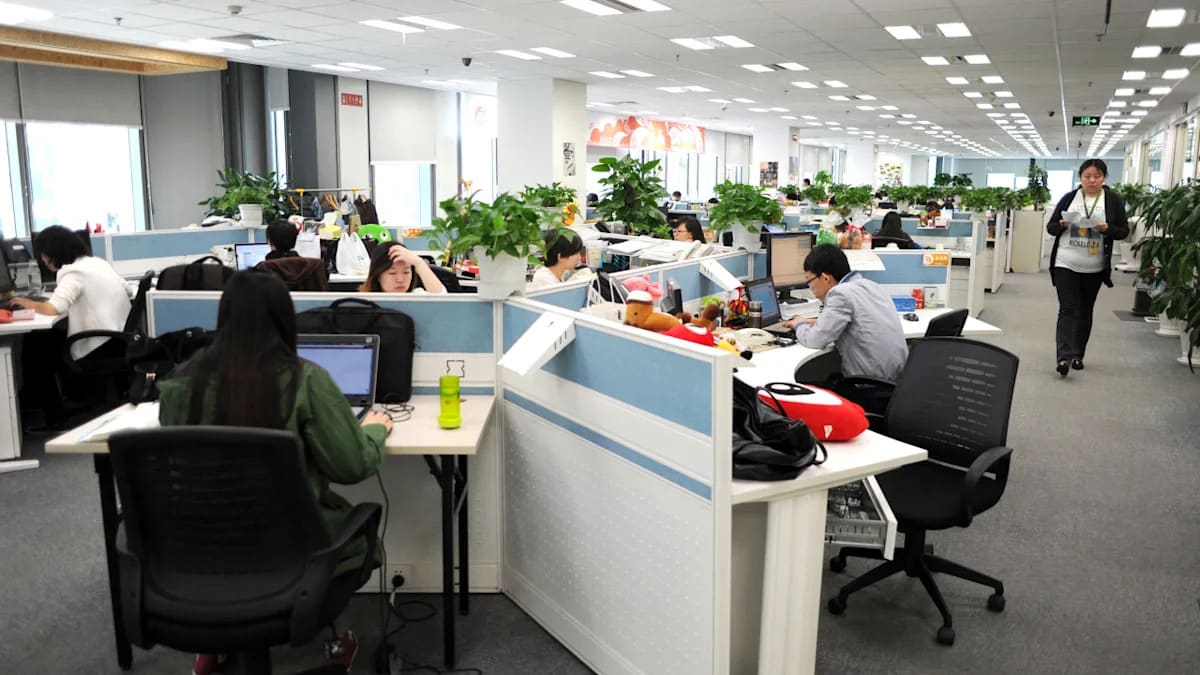
A Hangzhou court ruled that a tech worker cannot be fired simply because their role was replaced by AI. This landmark decision highlights a growing divide in labor protections between China and the US regarding AI-driven displacement.
The Landmark Ruling: AI Displacement and Labor Rights
In a significant legal precedent emerging from Hangzhou, China, a district court has ruled that a tech worker, identified as Zhou, was unlawfully dismissed after his responsibilities were subsumed by artificial intelligence. Zhou, who was tasked with verifying the accuracy of large language models, faced termination after refusing a 40% salary reduction for a demoted position. This case serves as a critical litmus test for how judicial systems will handle the intersection of rapid technological deployment and fundamental labor protections.
The Legal Battle in Hangzhou
The dispute began when Zhou’s employer attempted to force a transition to a lower-level role following the automation of his primary duties. When Zhou declined the significant pay cut—dropping from 25,000 yuan to 15,000 yuan monthly—the firm terminated his contract. An initial arbitration panel sided with the worker, a decision subsequently upheld by a Hangzhou district court in August 2025 and reaffirmed in an April 2026 appeal. The courts determined that mere displacement by AI does not constitute a valid legal basis for unilateral dismissal without appropriate compensation and adherence to labor laws.
China’s Strategic AI Ambitions
This legal development is occurring against the backdrop of China’s massive investment in the artificial intelligence sector, with the nation committing $295 billion over the next five years to achieve global dominance. Hangzhou, as a primary hub for this technological expansion, represents the front line of this transition. By protecting workers from the immediate economic fallout of AI adoption, the Chinese judiciary is signaling that the state’s drive for technological superiority will not be permitted to bypass the legal rights of its workforce.
Comparative Labor Protections: The US vs. China
The contrast between this ruling and the current regulatory climate in the United States is stark. While China is establishing clear, enforceable precedents that prioritize job security and fair severance in the face of automation, the US currently lacks federal protections specifically tailored to AI-driven displacement. In many American jurisdictions, the 'at-will' employment doctrine allows firms to terminate staff for almost any reason, including technological restructuring, often leaving workers with little recourse beyond standard severance packages.
Broader Implications for the Global Workforce
As AI continues to integrate into the global economy, the Hangzhou ruling may serve as a blueprint for other nations grappling with the social costs of efficiency-driven layoffs. The decision suggests a future where corporations must internalize the costs of technological transition rather than offloading them entirely onto employees. If businesses are legally required to provide enhanced severance or retraining as a condition of replacing human labor with algorithms, the economic calculus for AI implementation may shift significantly.
Future Trends in Labor Regulation
Looking forward, we can expect a surge in litigation surrounding the 'reassignment' tactics used by tech firms to avoid traditional layoff protocols. The Hangzhou court’s refusal to accept a massive pay cut as a reasonable alternative to termination sets a high bar for employers. As AI capabilities evolve, the definition of 'just cause' for termination will likely be rewritten in courts worldwide, placing the burden of proof on corporations to demonstrate that they have made genuine efforts to retain human talent before opting for complete automation.