No Guns, No Arrest Powers: Meet China's New Traffic Robocops
Source Entity
NDTV News Search Records Found 1000
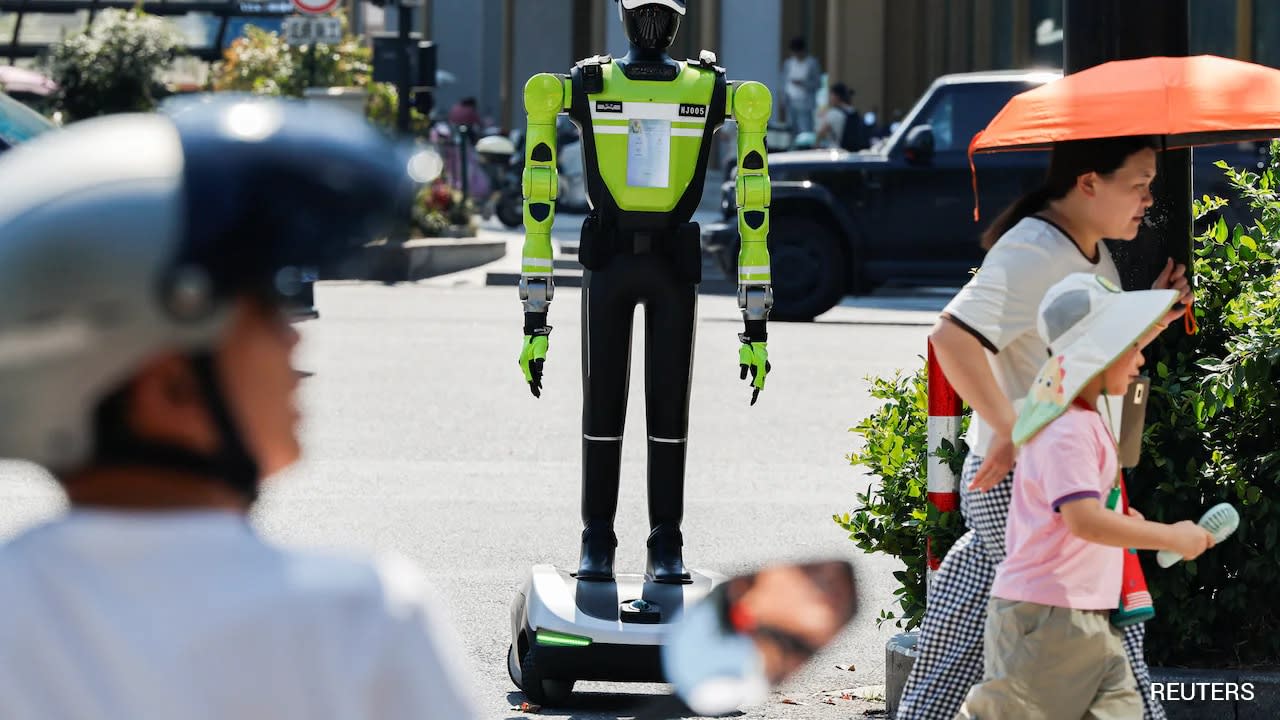
China has deployed humanoid robots in Hangzhou to assist with traffic enforcement by monitoring compliance and issuing warnings. These non-lethal machines, alongside new high-speed robotics developments, signal a shift toward integrating AI and automation into public safety infrastructure.
The Rise of Automated Policing in China
China’s recent deployment of the T2 humanoid robot in Hangzhou marks a significant milestone in the integration of robotics into urban public safety. Developed by SUPCON Information, the 1.88-metre, 98-kg machine serves as a physical manifestation of smart city initiatives. By patrolling busy intersections, the robot acts as an automated monitoring station, utilizing sophisticated onboard computing, radar, and cameras to detect traffic infractions such as helmetless e-bike riding, illegal vehicle positioning, and pedestrian signal violations.
Operational Capabilities and Limitations
It is crucial to note that the T2 robot is currently restricted to monitoring and advisory roles. The device possesses no capacity for physical intervention, carries no weaponry, and lacks the authority to make arrests. Its primary function is to serve as a deterrent and an educational tool, issuing verbal warnings to citizens in real-time. This approach highlights a 'soft' implementation of AI in law enforcement, where the goal is to improve compliance through constant surveillance and automated feedback rather than direct physical confrontation.
The Intersection of Speed and Public Utility
Beyond the traffic-duty T2, the broader Chinese robotics sector is pushing the boundaries of human performance. The viral emergence of a 'Superman' robot—claimed to possess a top speed exceeding Usain Bolt’s world-record 100-metre pace—underscores a rapid advancement in mechanical agility and motor control. While the T2 focuses on static traffic management, these high-speed humanoid developments suggest a future where robots could potentially be deployed for rapid response or rescue scenarios where human speed is a limiting factor.
Implications for Urban Infrastructure
Integrating these machines into public spaces suggests a long-term strategy for managing China's massive urban populations. By automating the identification of minor traffic violations, local authorities can reallocate human police resources to more complex investigations. This move reflects a broader trend in global smart city development, where data-driven infrastructure is increasingly relied upon to maintain social order and public safety in high-density environments.
Future Trends and Ethical Considerations
The deployment of non-lethal traffic robocops provides a glimpse into the future of urban automation. As robotics technology becomes more sophisticated, we can expect to see increased deployment of these machines in roles that require high-consistency, low-risk monitoring. However, the presence of such machines will inevitably invite ongoing discussions regarding public surveillance, data privacy, and the long-term societal impact of substituting human authority with algorithmic enforcement.
Verification Required?