China cries foul after 14 nations reject Beijing's South China Sea claims
Source Entity
TOI WORLD DESK
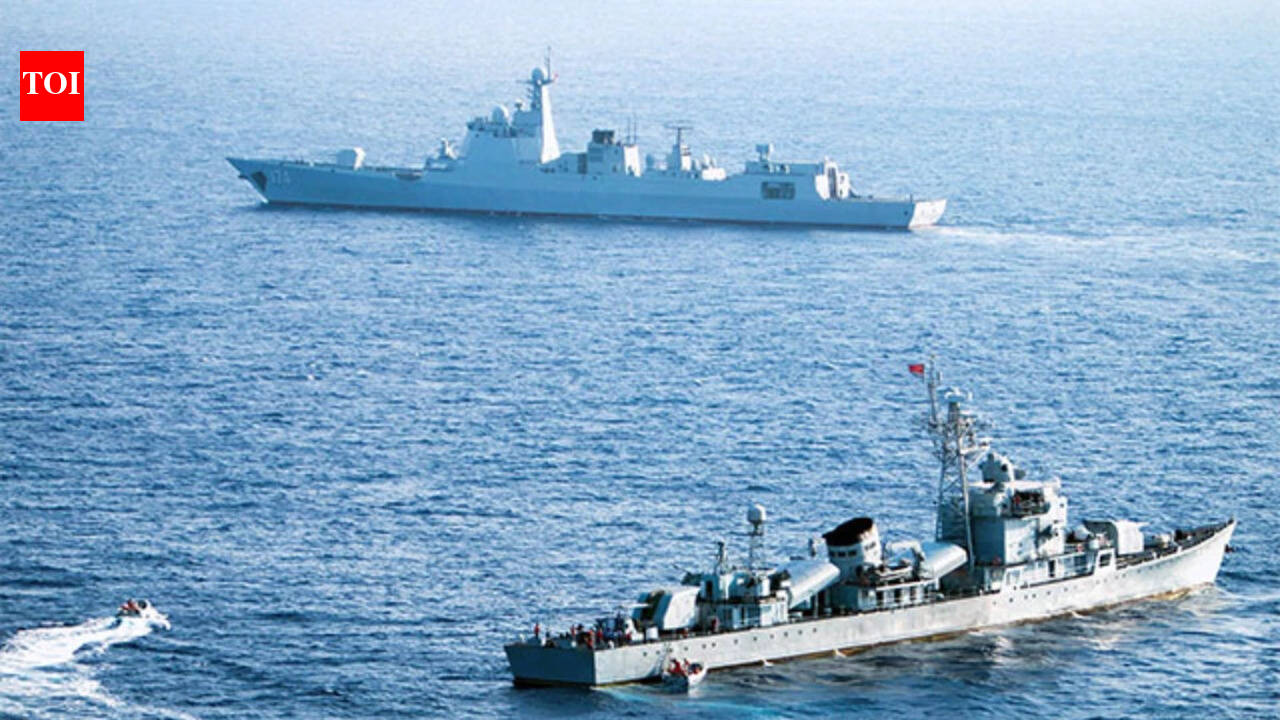
Accusing Japan of interfering in regional affairs and undermining peace and stability, China insisted that its sovereignty over the disputed waters has "never changed" despite the 2016 tribunal ruling. The diplomatic row erupted after Japan, along with the United States, Australia, the United Kingdom, the Philippines and nine other countries, marked the 10th anniversary of the Permanent Court of Arbitration's ruling by reiterating that China's expansive maritime claims have "no legal basis" under international law.
Diplomatic Collision in the South China Sea
China has once again found itself at the center of a major diplomatic row after 14 nations—including global powers like the United States, the United Kingdom, and Japan—collectively rejected Beijing's expansive claims over the South China Sea. This latest escalation is not a random occurrence but is specifically timed to coincide with the 10th anniversary of the landmark 2016 ruling by the Permanent Court of Arbitration (PCA). The incident underscores a deepening rift between China's vision of regional hegemony and the international community's insistence on a rules-based maritime order.
The Shadow of the 2016 Tribunal Ruling
To understand the current tension, one must look back at the 2016 PCA ruling, which serves as the catalyst for this anniversary protest. The tribunal originally determined that China's "nine-dash line," which claims nearly 80% of the South China Sea, has no legal basis under the United Nations Convention on the Law of the Sea (UNCLOS). Despite this definitive legal blow, China has consistently refused to recognize the court's jurisdiction or abide by its verdict. By reiterating that these claims are invalid a decade later, the coalition of 14 nations is signaling that the international community has not forgotten the ruling and will not accept a fait accompli regarding China's territorial expansions.
China's Strategic Defiance and Rhetoric
Beijing's response—accusing Japan of "interfering" and undermining regional stability—reflects a long-standing strategic narrative. China views the South China Sea not merely as a set of economic zones, but as a core interest tied to national sovereignty and historical legacy. By insisting that its sovereignty has "never changed," China is communicating that it views international legal rulings as subordinate to its historical claims. The specific targeting of Japan in its rhetoric suggests that Beijing is particularly sensitive to the growing security alignment between Tokyo, Washington, and Manila, which it perceives as a containment strategy led by Western interests.
The Coalition: Beyond Local Disputes
What makes this specific event significant is the breadth of the opposition. The rejection is not limited to the immediate claimants like the Philippines; it includes the UK, Australia, and other non-regional actors. This indicates that the South China Sea is no longer viewed as a localized territorial dispute over fishing rights or oil reserves, but as a global litmus test for the "freedom of navigation." For the US and its allies, allowing China to unilaterally redefine maritime borders would set a dangerous precedent for international law, potentially threatening critical trade routes that sustain the global economy.
Regional Stability and Future Implications
Looking forward, this diplomatic clash suggests that the South China Sea will remain a volatile flashpoint. The involvement of Japan is especially noteworthy, as Tokyo increasingly sees the stability of the South China Sea as inextricably linked to its own security in the East China Sea. As these 14 nations harden their diplomatic stance, we can expect an increase in joint naval patrols and expanded military cooperation among the allies. China, conversely, is likely to continue its militarization of artificial islands to enforce its claims on the ground, regardless of the legal void identified by the PCA.
Summary
The current standoff represents a fundamental clash between international law and nationalistic territorial ambition. While the 14 nations seek to uphold the 2016 PCA ruling as the gold standard for maritime conduct, China's refusal to yield highlights a systemic challenge to the global legal order. The transition from a legal dispute to a broad diplomatic confrontation indicates that the South China Sea will remain a primary theater of geopolitical competition for the foreseeable future.