China’s trade gap is narrowing. And other surprises
Source Entity
Latest News: Today's Latest News Headlines from India & World | Hindustan Times | Hindustan Times
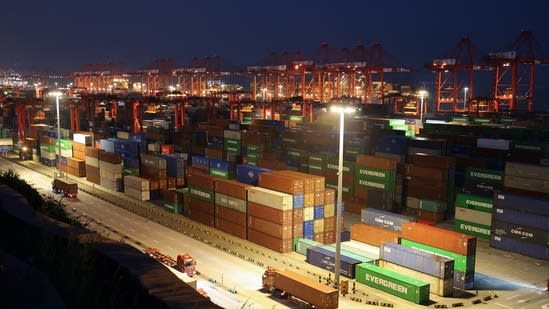
China is facing a significant economic transition characterized by a narrowing trade gap and a shift toward fiscal austerity, signaling a move away from its traditional growth models amidst internal financial pressures.
Analysis of China's Economic Pivot: Trade Dynamics and Fiscal Restraint
China, the world's second-largest economy, is currently navigating a complex macroeconomic transition. The recent observation that China's trade gap is narrowing, coupled with a discernible shift toward fiscal austerity, suggests a fundamental realignment of how the nation manages its growth and internal stability. This shift occurs at a critical juncture where the traditional drivers of Chinese economic expansion—massive infrastructure investment and export-led growth—are meeting significant headwinds.
The Implications of a Narrowing Trade Gap
A narrowing trade gap typically indicates that the difference between the value of a country's exports and its imports is shrinking. In the context of China, this could be driven by two primary factors: a slowdown in global demand for Chinese manufactured goods or an increase in domestic consumption of foreign imports. For decades, China's massive trade surpluses have provided a cushion of foreign exchange reserves and fueled its rise as a global industrial powerhouse. A narrowing gap suggests that the "export engine" may be losing some of its potency, potentially due to geopolitical tensions, tariffs, and a global shift toward diversifying supply chains away from China.
The Shift Toward Fiscal Austerity
Perhaps more surprising is the move toward fiscal austerity. Historically, the Chinese government has utilized aggressive fiscal stimulus to combat economic downturns, often pouring billions into state-led infrastructure projects. However, the current move toward austerity indicates a growing concern over debt sustainability. Local government financing vehicles (LGFVs) have accumulated staggering levels of debt, and the prolonged crisis in the real estate sector—highlighted by the struggles of giants like Evergrande—has limited the government's ability to rely on land sales for revenue. By adopting a more austere fiscal stance, Beijing is likely attempting to deleverage the economy and prevent a systemic financial collapse, even at the cost of slower short-term GDP growth.
Historical Context: From Quantitative to Qualitative Growth
To understand this shift, one must look at the historical trajectory of the "China Miracle." For nearly four decades, China prioritized quantitative growth—building cities, roads, and factories at an unprecedented scale. However, this model led to overcapacity and inefficient capital allocation. The current trend toward austerity and a recalibrated trade balance is part of a broader strategic pivot toward "high-quality development." This means shifting the economy from being an investment-heavy industrial hub to a consumption-driven economy focused on high-tech innovation and sustainable growth.
Global Economic Ripples and Future Trends
The broader implications of these trends are global. As China narrows its trade gap and tightens its belt, the world may see a decrease in demand for raw materials from commodity-exporting nations. Furthermore, if China successfully transitions to a consumption-based model, it could open new markets for global luxury goods and services. However, the transition period is fraught with risk; the combination of fiscal austerity and slowing exports could lead to deflationary pressures within China, which would further dampen domestic consumption in a vicious cycle.
Conclusion
In summary, the narrowing trade gap and the stumble into fiscal austerity are not isolated events but are symptomatic of a structural evolution within the Chinese economy. While these moves are necessary to address the long-term risks of debt and over-reliance on exports, they signal the end of an era of effortless growth. The success of this transition will depend on whether the Chinese government can stimulate domestic demand sufficiently to offset the decline in state-led investment and export dominance.
Verification Required?