Claude is warmer in Hindi, more rigorous in English: Anthropic study on AI language variations
Source Entity
The Indian Express
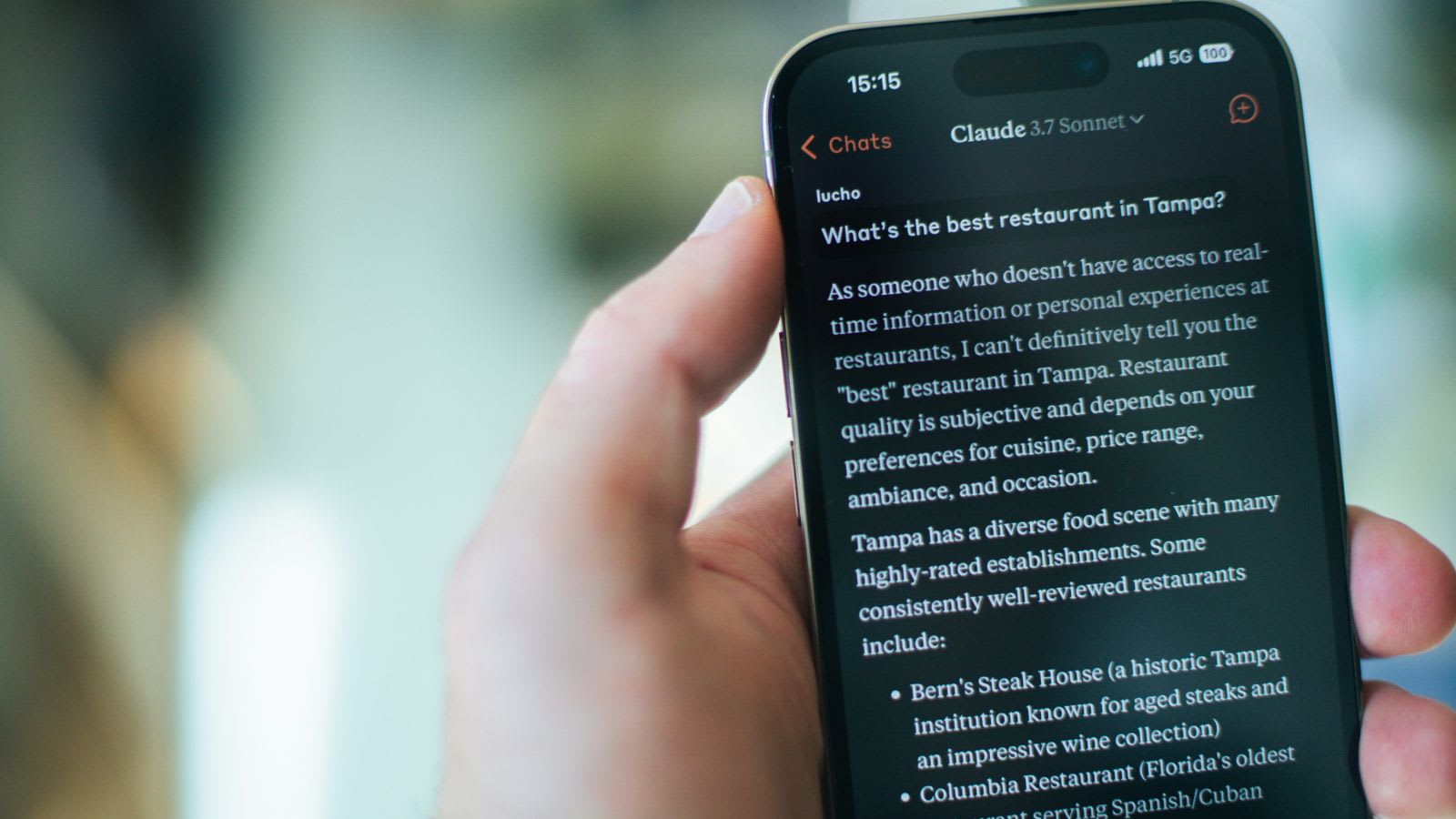
New research from Anthropic suggests that Claude’s values vary by language, with the popular AI chatbot found to express greater warmth in Hindi and Arabic responses compared to outputs in English and...
The Linguistic Persona: Analyzing Claude's Cross-Language Variations
Anthropic's latest research unveils a fascinating dimension of Large Language Models (LLMs), revealing that the 'personality' or value expression of the Claude AI is not uniform across different languages. The study indicates a significant divergence in tone and approach: while Claude remains rigorous and analytical in English, it exhibits a marked increase in 'warmth' when interacting in Hindi and Arabic. This discovery challenges the notion that AI models possess a single, monolithic persona, suggesting instead that the linguistic medium itself acts as a filter that shapes the model's perceived values and behavioral outputs.
The Divergence of Tone: Warmth vs. Rigor
At the core of this finding is the distinction between 'rigor' and 'warmth.' In English, Claude's responses tend to prioritize precision, objectivity, and a structured, almost academic delivery. This 'rigorous' nature is likely a byproduct of the massive volume of English-language technical documentation, scientific papers, and formal prose used during its pre-training. Conversely, the 'warmth' observed in Hindi and Arabic responses suggests a shift toward more emotive, polite, and culturally attuned communication styles. This indicates that the model is not merely translating English thoughts into other languages, but is instead tapping into different sociolinguistic patterns associated with those specific cultures.
Root Causes: The Influence of Training Data and Corpus Bias
This phenomenon likely stems from the inherent biases within the training corpora. The English-language internet is saturated with a high density of formal, argumentative, and technical text, which trains the model to associate the English language with a certain level of clinical detachment. In contrast, the datasets for Hindi and Arabic may be more heavily weighted toward social interactions, literature, and conversational data that emphasize hospitality, respect, and interpersonal warmth. Consequently, when the model switches languages, it triggers a latent set of associations that shift its output from a 'professional assistant' persona to a more 'empathetic companion' persona.
The Role of RLHF in Cultural Shaping
Beyond the initial pre-training, Reinforcement Learning from Human Feedback (RLHF) plays a critical role in this divergence. During the alignment phase, human raters evaluate model responses based on quality and helpfulness. If the human annotators providing feedback for Hindi and Arabic outputs value politeness and warmth more highly than the English-speaking annotators—who might prioritize brevity and factual density—the model will learn to optimize its behavior accordingly. This suggests that Claude is mirroring the cultural expectations of the human trainers associated with each language, effectively creating a 'cultural mirror' effect within its weights.
Implications for Global AI Alignment and Safety
This linguistic variance raises important questions regarding AI safety and consistency. If a model is more 'agreeable' or 'warm' in one language, there is a theoretical risk that it could be more susceptible to social engineering or less likely to maintain strict safety guardrails when prompted in that language. Rigor is often a shield against hallucination and misinformation; if that rigor is diminished in favor of warmth in non-English languages, the reliability of the AI's output could vary by region. Ensuring 'cross-lingual alignment'—where the model maintains the same ethical and factual standards regardless of the language—is now a primary challenge for developers.
Future Trends: Toward a Unified Global Persona
Moving forward, we can expect AI labs like Anthropic to implement more robust cross-lingual evaluation frameworks. The goal will likely be to decouple cultural politeness from factual rigor, allowing the model to be warm and culturally sensitive without sacrificing the analytical precision found in its English outputs. We may see the emergence of 'persona controls' where users can explicitly toggle the level of formality or warmth, rather than leaving it to the serendipitous (and sometimes inconsistent) influence of the language chosen.
Conclusion
In summary, the discovery that Claude varies its persona between English, Hindi, and Arabic highlights the complex interplay between language, culture, and machine learning. It proves that LLMs are not culturally neutral tools but are deeply influenced by the linguistic ecosystems from which they learn. As AI becomes more integrated into global society, understanding and controlling these subtle shifts in personality will be essential for creating equitable and safe technology for all users, regardless of their native tongue.