Confessions of a Long-Distance Sailor
Source Entity
Hacker News
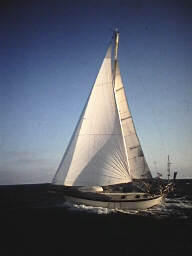
This content chronicles the long-term sailing experiences of an individual navigating Alaskan waters over nearly two decades. It highlights technical interests in celestial navigation and the practical challenges inherent in maritime travel.
The Odyssey of a Long-Distance Sailor: An Analysis of Alaskan Maritime Exploration
Decades of Nautical Endurance
The provided records delineate a consistent, multi-year commitment to sailing in Alaskan waters, spanning from 2002 to 2018. This sustained engagement represents a significant commitment to long-distance maritime exploration in one of the world's most challenging environments. By documenting annual voyages over nearly two decades, the sailor provides a rare longitudinal look at the consistency required for such an endeavor, reflecting both the personal dedication and the logistical planning necessary to navigate the Alaskan coastline repeatedly.
The Art of Celestial Navigation
A central theme in the sailor's account is the focus on "Celestial Navigation." In an era increasingly dominated by GPS and digital maritime technology, the reliance on celestial methods suggests a deep-seated appreciation for traditional sailing skills. This practice not only serves as a vital backup system in remote Alaskan waters where electronic signals may be unreliable but also highlights a philosophical dedication to the craft of sailing that prioritizes human skill and historical accuracy over modern automation.
Navigating the 'Boat-on-a-rock' Challenge
The inclusion of "The Boat-on-a-rock Problem" as a specific topic of reflection acknowledges the inherent dangers of coastal navigation. Alaska’s complex geography, characterized by extreme tidal ranges, uncharted shoals, and unpredictable weather, makes grounding a constant risk for any mariner. By documenting these challenges, the sailor offers a candid look at the realities of long-distance sailing, where technical competence is constantly tested against the unforgiving nature of the environment.
Geographical and Environmental Context
Sailing in Alaska is fundamentally different from cruising in temperate climates. The region demands specialized knowledge of cold-water survival, glacier-induced currents, and the extreme isolation of the northern Pacific. The chronological data provided—covering 2002 through 2018—implies that the sailor has navigated through various environmental shifts, developing a nuanced understanding of how these waters change over time. This long-term perspective is invaluable for understanding the logistical demands placed on small-vessel operators in high-latitude regions.
Conclusion: A Legacy of Maritime Documentation
Ultimately, these confessions serve as a case study in specialized maritime endurance. By synthesizing personal anecdotes, technical discussions on navigation, and the pragmatic lessons learned from accidents like grounding, the sailor contributes to a broader body of nautical knowledge. The collection stands as a testament to the perseverance required to sustain a passion for sailing in one of the most rugged and demanding maritime theaters on the planet.