40 years ago September 26, 1986: CPI leader, cop shot dead
Source Entity
The Indian Express
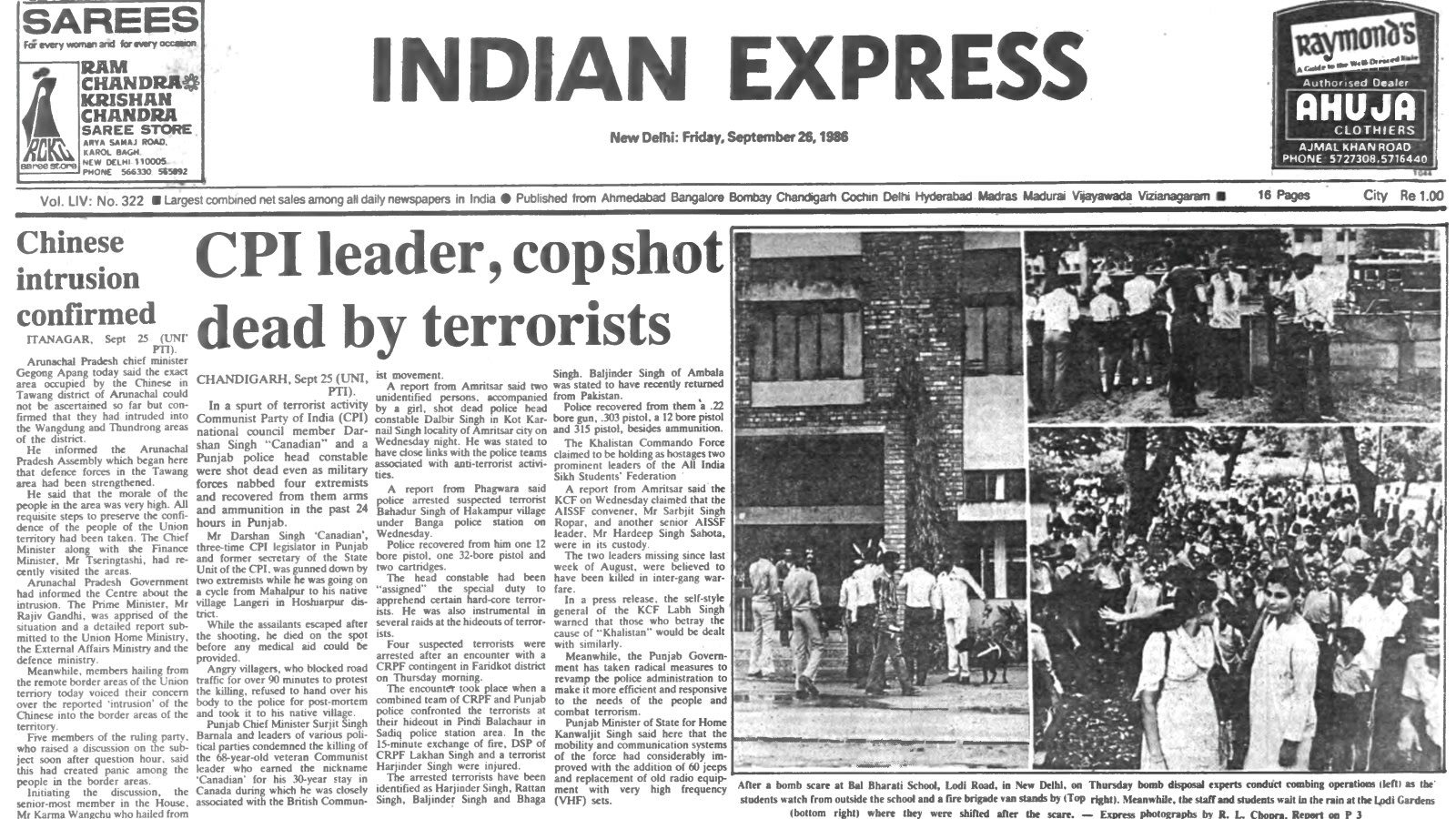
On September 26, 1986, CPI leader Darshan Singh 'Canadian' and a police constable were killed by extremists in Punjab. This event occurred during a period of heightened militancy, reflecting the severe security challenges faced by political figures in the state at the time.
The Assassination of Darshan Singh: A Historical Retrospective
On September 26, 1986, the political landscape of Punjab was rocked by the targeted assassination of Darshan Singh, a prominent three-time CPI legislator and former secretary of the state unit of the Communist Party of India (CPI). Known as 'Canadian,' Singh was traveling on a bicycle from Mahalpur to his native village of Langeri in the Hoshiarpur district when he was intercepted and gunned down by two extremists. This act of violence was not an isolated incident but part of a broader, volatile climate of militancy that plagued Punjab during the 1980s.
The Security Crisis of the 1980s
The murder of Darshan Singh occurred during a period of intense instability characterized by a 'spurt of terrorist activity.' The nature of his killing—an ambush while commuting in a rural area—highlights the extreme vulnerability of political leaders who refused to abandon their grassroots engagement despite rising threats. The synchronized nature of these attacks often targeted individuals who stood as symbols of secular political discourse, aiming to destabilize the state's social fabric.
Broader Implications for Punjab Politics
The loss of a national council member of the CPI dealt a significant blow to the party’s organizational structure in the region. By targeting a leader with both local roots in Hoshiarpur and national-level influence, the assailants sought to silence the voices of moderation and political opposition. This period saw a systematic attempt to eliminate figures who bridged the gap between national political ideologies and local community needs.
Military and Law Enforcement Response
In the immediate aftermath of the assassination, the state machinery responded with increased military intervention. Reports from the period indicate that in the same 24-hour window, security forces successfully apprehended four extremists and recovered significant quantities of arms and ammunition. This escalation in kinetic operations by the state underscored the transition from standard policing to a more militarized approach to counter-insurgency, which would define the state’s strategy for years to follow.
The Legacy of the Conflict
Reflecting on the events of 1986 provides essential context for understanding the long-term trauma and eventual stabilization of the Punjab region. The assassination of leaders like Darshan Singh remains a poignant reminder of the human cost of the militancy era. The resilience of political structures in the face of such targeted violence ultimately shaped the democratic trajectory of the state, as political parties were forced to navigate the harrowing balance between public service and personal security during one of the most turbulent decades in post-independence Indian history.