Air quality very poor in city; IIT Delhi records highest AQI of 428
Source Entity
India Latest News: Top National Headlines Today & Breaking News | The Hindu
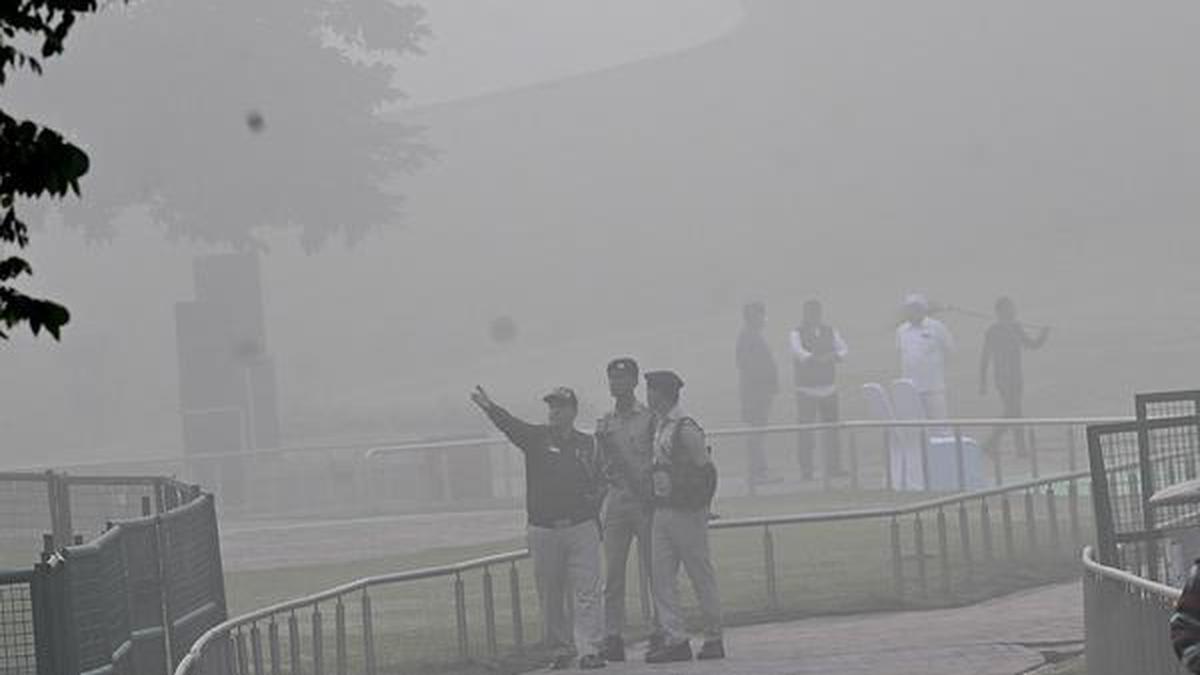
Delhi's air quality remains in the 'very poor' category with an AQI of 367, driven largely by vehicular emissions and stubble burning. While the IMD forecasts potential rain, experts remain skeptical about its ability to significantly clear the persistent smog.
Delhi's Persistent Air Quality Crisis: A Deep Dive
Delhi continues to grapple with hazardous atmospheric conditions as the Air Quality Index (AQI) remains firmly locked in the 'very poor' category. With a 24-hour average of 367, the city’s air poses significant health risks to its residents. This stagnation is not merely a seasonal nuisance but a systemic challenge involving complex meteorological and anthropogenic factors that continue to defy short-term interventions.
Dissecting the Pollution Sources
Data indicates that the pollution crisis is multifaceted. Transport emissions remain the primary culprit, contributing approximately 20.5% to the city's pollutant load. Simultaneously, biomass and stubble burning account for 13.3% of the degradation. The localized impact of these emissions is starkly visible at monitoring stations like IIT-Delhi and ITO, where localized AQI levels have spiked into the 'severe' category, reaching as high as 428 and 414 respectively, highlighting the uneven distribution of toxic air across the capital.
The Role of Meteorology
The India Meteorological Department (IMD) has noted a significant drop in temperatures, with the mercury dipping 5.1 degrees below the seasonal average to 18.6 degrees Celsius. This cooling effect, coupled with high relative humidity (recorded at 91%), creates an atmospheric trap that prevents the dispersion of particulate matter like PM2.5 and PM10. When air is cold and humid, pollutants become denser and remain trapped closer to the ground, exacerbating the 'very poor' conditions.
The Rain Paradox: Will It Help?
While the IMD and the Air Quality Early Warning System (AQEWS) have forecasted the possibility of light rain or drizzle, there is a divergence in expert opinion regarding its efficacy. While rain can theoretically 'wash' the air of particulate matter, current atmospheric conditions suggest that light precipitation may be insufficient to counteract the high volume of daily emissions. Some experts argue that without sustained, heavy rainfall, the impact on the overall AQI will be marginal at best.
Future Trends and Policy Implications
The persistent nature of this pollution necessitates a long-term shift in policy. As long as transport emissions and agricultural burning remain the dominant drivers of the city's smog, temporary weather-based relief will only provide a fleeting respite. The reliance on meteorological events to clear the air highlights the need for more aggressive structural reforms in urban planning, public transportation, and agricultural management to mitigate the root causes of the crisis.
Conclusion
In summary, Delhi remains in a state of environmental distress. With 47 of 54 monitoring stations reporting 'very poor' air and seven in the 'severe' category, the situation remains precarious. As the city waits for the forecast rain, the broader challenge remains clear: until the structural sources of pollution are curtailed, Delhi will continue to face the recurring reality of hazardous winter air.
Multiple Citing Sources
Verification Required?