Ghaziabad railway station traffic block: 18 trains cancelled, platforms changed for 45 services
Source Entity
Anish Mondal
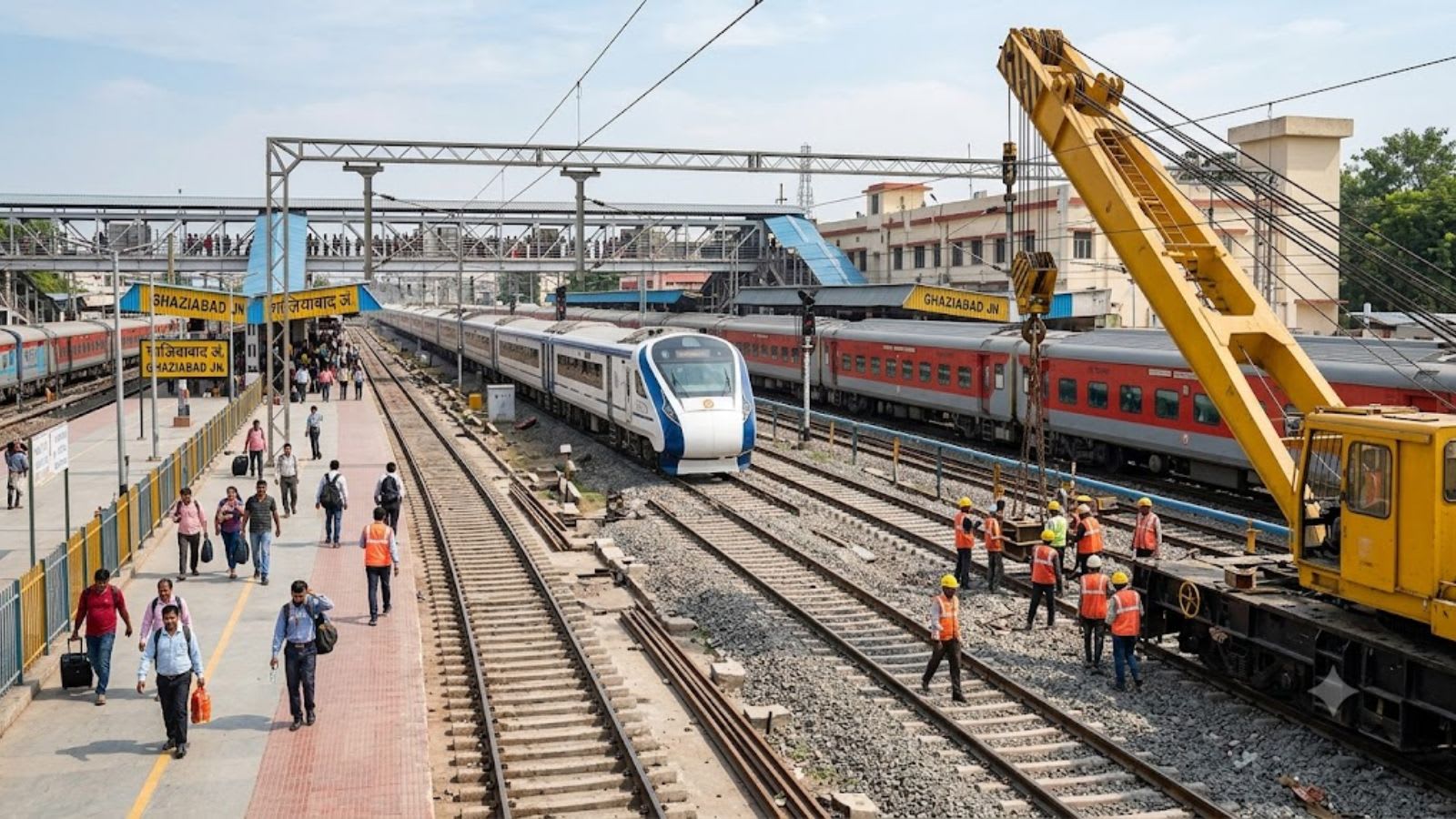
Indian Railways is advancing 'Mission Raftaar' to enable 160 kmph speeds on the Delhi-Mumbai route, targeting 12-hour travel times. Simultaneously, essential maintenance at Ghaziabad station will cause temporary service disruptions including train cancellations.
Modernizing India's Rail Arteries: Infrastructure and Efficiency
The Indian Railways is currently undertaking a dual-pronged approach to modernize its network, balancing ambitious long-term speed upgrades with necessary short-term maintenance. At the forefront of this transformation is 'Mission Raftaar,' a strategic initiative aimed at significantly increasing the average speed of passenger and freight trains. By targeting a 160 kmph operational speed on the critical Delhi-Mumbai corridor, the government is looking to reduce travel time between India's two financial and political hubs to approximately 12 hours, a move that could redefine domestic connectivity.
Technical Upgrades Under Mission Raftaar
Achieving these high-speed benchmarks requires more than just faster locomotives; it necessitates a comprehensive overhaul of existing infrastructure. Recent developments, such as the commissioning of the 2x25 kV Chhata Traction Substation in the Agra Division, highlight the granular technical work required to support higher energy demands. The project encompasses extensive upgrades to signaling systems, overhead equipment, and yard modifications to ensure safety and stability at higher velocities.
The Necessity of Maintenance Blocks
While high-speed goals dominate the headlines, the day-to-day reliability of the network depends on routine, albeit disruptive, maintenance. The planned 10-day traffic block at Ghaziabad Railway Station, scheduled from September 25 to October 4, 2026, exemplifies the trade-offs involved in maintaining aging infrastructure. The decision to replace corroded rails and damaged sleepers is a critical safety measure, even though it necessitates the cancellation of 18 trains and the rescheduling of 45 services.
Balancing Progress and Passenger Convenience
These maintenance windows, while causing short-term inconvenience to passengers, are the bedrock of the long-term safety and efficiency goals set by the Northern Railway. The need to replace infrastructure at busy hubs like Ghaziabad underscores the immense pressure on India's rail network. As the system transitions toward higher speeds, the frequency and intensity of such maintenance work may increase, requiring robust communication strategies to keep the public informed.
Future Trends and Outlook
Looking ahead, the integration of high-speed corridors with a well-maintained legacy network will be the defining challenge for Indian Railways. The successful completion of the Delhi-Mumbai upgrade will likely serve as a blueprint for other high-density routes. However, the path forward remains dependent on the ability to manage traffic disruptions effectively, ensuring that the drive toward 160 kmph does not compromise the operational integrity of the existing rail system.