Delhi pollution debate reignites for India Open
Source Entity
Latest News: Todays Latest News Headlines from India & World | Hindustan Times | Hindustan Times
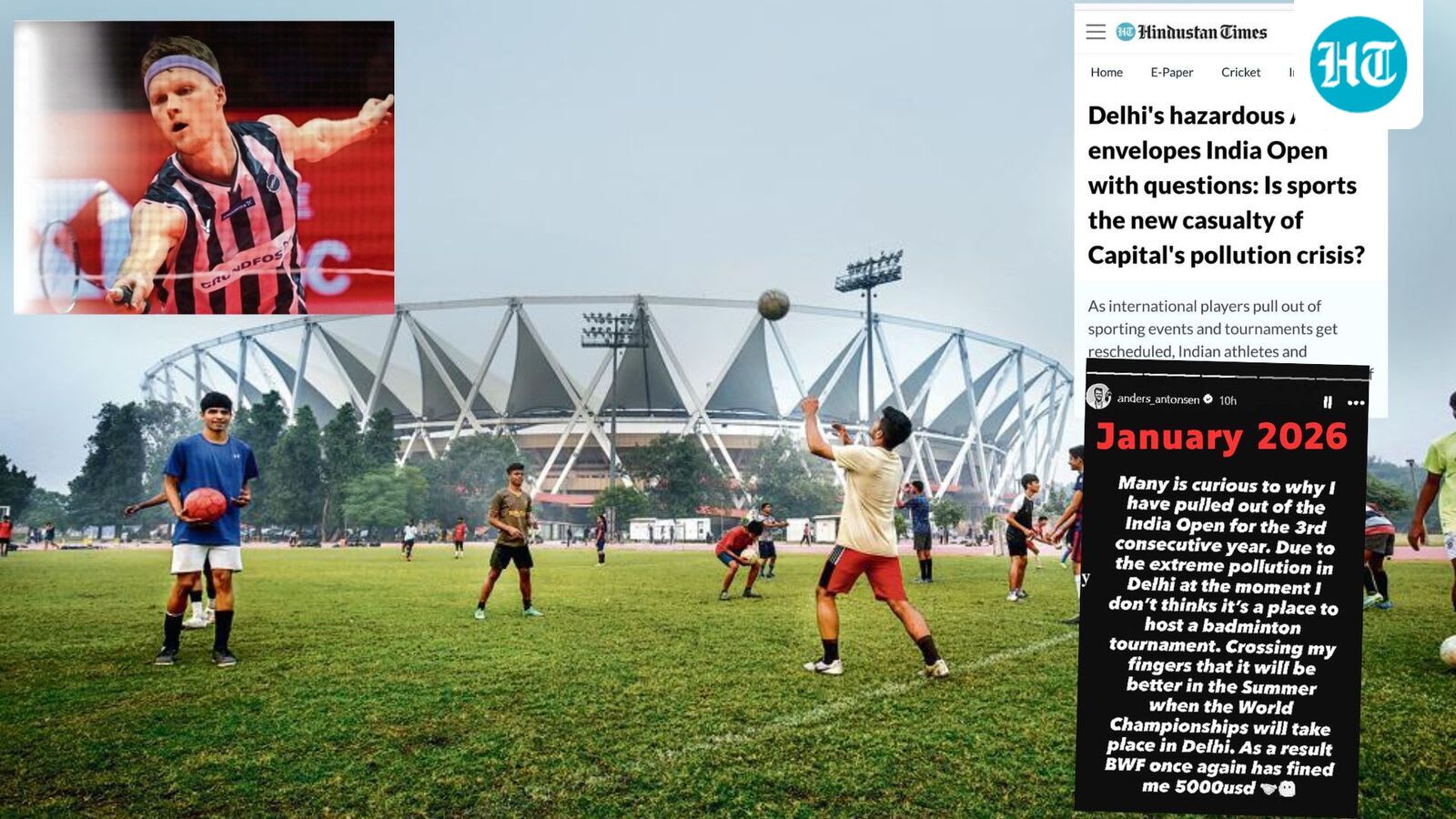
Danish shuttler Anders Antonsen has sparked a debate by refusing to play in Delhi's India Open due to the city's hazardous winter air quality. His decision to pay recurring fines highlights growing international concerns over how severe pollution impacts professional athletes in the capital.
The Intersection of Athletics and Air Quality in Delhi
The recent discourse surrounding the India Open badminton tournament has brought the chronic issue of Delhi’s winter air quality to the forefront of international sports administration. Danish shuttler Anders Antonsen, currently ranked World No. 4, has become a vocal critic of the event’s scheduling. By explicitly citing the city’s 'hazardous' air quality as his reason for skipping the tournament—an action he has taken for three consecutive years—Antonsen has forced a confrontation between global sporting calendars and local environmental realities.
The Cost of Protest: Financial and Professional Stakes
Antonsen’s protest is not merely rhetorical; it carries a significant financial burden. The player has opted to pay a $5,000 fine for each of his three consecutive withdrawals from the India Open. This demonstrates the severity of his concerns, as he is willing to sacrifice both prize money and critical ranking points to avoid competing in an environment he deems physically detrimental. This decision underscores the tension between professional obligations and personal health, particularly for athletes whose performance depends heavily on respiratory capacity.
Environmental Impact on High-Performance Training
While the India Open is an indoor event, the broader context involves the thousands of athletes who train in outdoor facilities like the JLN Stadium. Delhi’s winter months are characterized by a dangerous combination of low wind speeds, temperature inversions, and crop residue burning, which creates a toxic smog layer. For professional badminton players, the air quality inside and outside the arena remains a point of contention, as the physiological stress of high-intensity matches is exacerbated by the inhalation of particulate matter.
Challenges for the Badminton World Federation
Antonsen’s public call for the Badminton World Federation (BWF) to reconsider the timing and location of the India Open challenges the organization's current scheduling logic. Traditionally held in January or February, the tournament aligns with the peak of Delhi’s pollution crisis. His remarks have split the Indian badminton community, with some viewing his stance as a necessary wake-up call for organizers, while others remain protective of the event's stature and the logistical difficulties of moving a major international tournament.
Broader Implications and Future Trends
This debate highlights a growing trend where international athletes are increasingly factoring environmental health into their professional decisions. As air quality in major global cities becomes a more prominent topic, sports federations may face mounting pressure to adopt 'green' scheduling protocols. The precedent set by Antonsen could lead to a shift where governing bodies are forced to provide more rigorous health impact assessments before finalizing host cities for major events, potentially altering the landscape of international sports in historically polluted regions.
Verification Required?