Traffic advisory issued for Jagannath Rath Yatra in Delhi's Hauz Khas: Check routes and diversions
Source Entity
Latest News: Today's Latest News Headlines from India & World | Hindustan Times | Hindustan Times
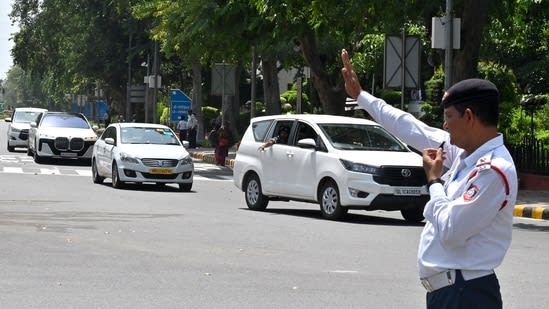
Delhi Traffic Police have issued a traffic advisory for the Jagannath Rath Yatra in Hauz Khas, implementing specific regulations and diversions on the IIT and AIIMS flyovers to manage the expected surge in crowds and ensure smooth transit.
Urban Mobility and Spiritual Tradition: Analyzing the Delhi Rath Yatra Traffic Advisory
The announcement of a traffic advisory by the Delhi Traffic Police for the Jagannath Rath Yatra in the Hauz Khas area highlights the perennial challenge of balancing large-scale religious observances with the logistical demands of one of the world's most congested cities. The Jagannath Rath Yatra, a celebration of Lord Jagannath's journey, draws thousands of devotees, necessitating a strategic overhaul of local traffic patterns to prevent total gridlock in South Delhi. This event represents a critical intersection where cultural heritage meets urban management, requiring precise coordination between law enforcement and civic authorities.
Strategic Logistical Impact: The IIT and AIIMS Arteries
The specific mention of regulations on both carriageways of the IIT Flyover and the AIIMS Flyover is highly significant from a transit perspective. These flyovers serve as primary conduits for commuters traveling between South and Central Delhi. By implementing restrictions on both carriageways, the Delhi Traffic Police are acknowledging that the volume of pedestrians and the physical presence of the chariots (Raths) will render these high-speed corridors unusable for standard vehicular traffic. The decision to regulate these specific points suggests a strategy to divert heavy traffic away from the Hauz Khas epicenter, thereby creating a safety buffer for the pilgrims while attempting to mitigate the ripple effect of congestion on adjacent roads.
Cultural Context and Communal Significance
While the Jagannath Rath Yatra finds its primary origin in Puri, Odisha, its celebration in Delhi has grown into a significant communal event. The Yatra symbolizes the journey of the deity to visit his sibling, and the act of pulling the chariot is considered a deeply meritorious deed by devotees. In a cosmopolitan hub like Delhi, such events serve as vital touchstones of cultural identity and social cohesion. However, the scale of these processions in densely populated areas like Hauz Khas necessitates the kind of rigid traffic control described in the advisory to ensure that religious fervor does not lead to public safety hazards or medical emergencies being blocked by traffic.
Urban Pressure Points in Hauz Khas
Hauz Khas is a unique geographical area characterized by a mix of upscale residential colonies, educational institutions, and commercial hubs. The introduction of traffic diversions here creates a complex puzzle for commuters. When major flyovers like those at AIIMS and IIT are regulated, the surrounding surface roads often experience a surge in volume, leading to 'bottleneck' scenarios. The Traffic Police's proactive advisory is a necessary tool to warn citizens to seek alternative routes, thereby reducing the likelihood of spontaneous congestion that could impede the movement of the Yatra procession itself.
Future Trends in Event-Based Traffic Management
Looking forward, the management of events like the Rath Yatra in Delhi is likely to evolve through the integration of real-time data and smart city technology. We are seeing a transition from static advisories to dynamic, GPS-integrated routing that can divert traffic in real-time based on the actual position of the procession. As Delhi continues to expand its infrastructure, the reliance on flyover regulations will likely be supplemented by more sophisticated pedestrian-only zones and temporary transit hubs to accommodate the massive influx of people during festive seasons.
Conclusion
In summary, the traffic advisory for the Jagannath Rath Yatra in Hauz Khas is more than a mere set of road closures; it is a necessary administrative response to the complexities of urban life in Delhi. By targeting the IIT and AIIMS flyovers, authorities are attempting to safeguard both the devotees and the daily commuters. While such diversions cause temporary inconvenience, they are essential for the safe and orderly celebration of a significant cultural tradition within a high-density metropolitan environment.
Verification Required?