Punjab police resort to lathi-charge, teargas, and water cannons to disperse protesting MGNREGA workers
Source Entity
The Indian Express
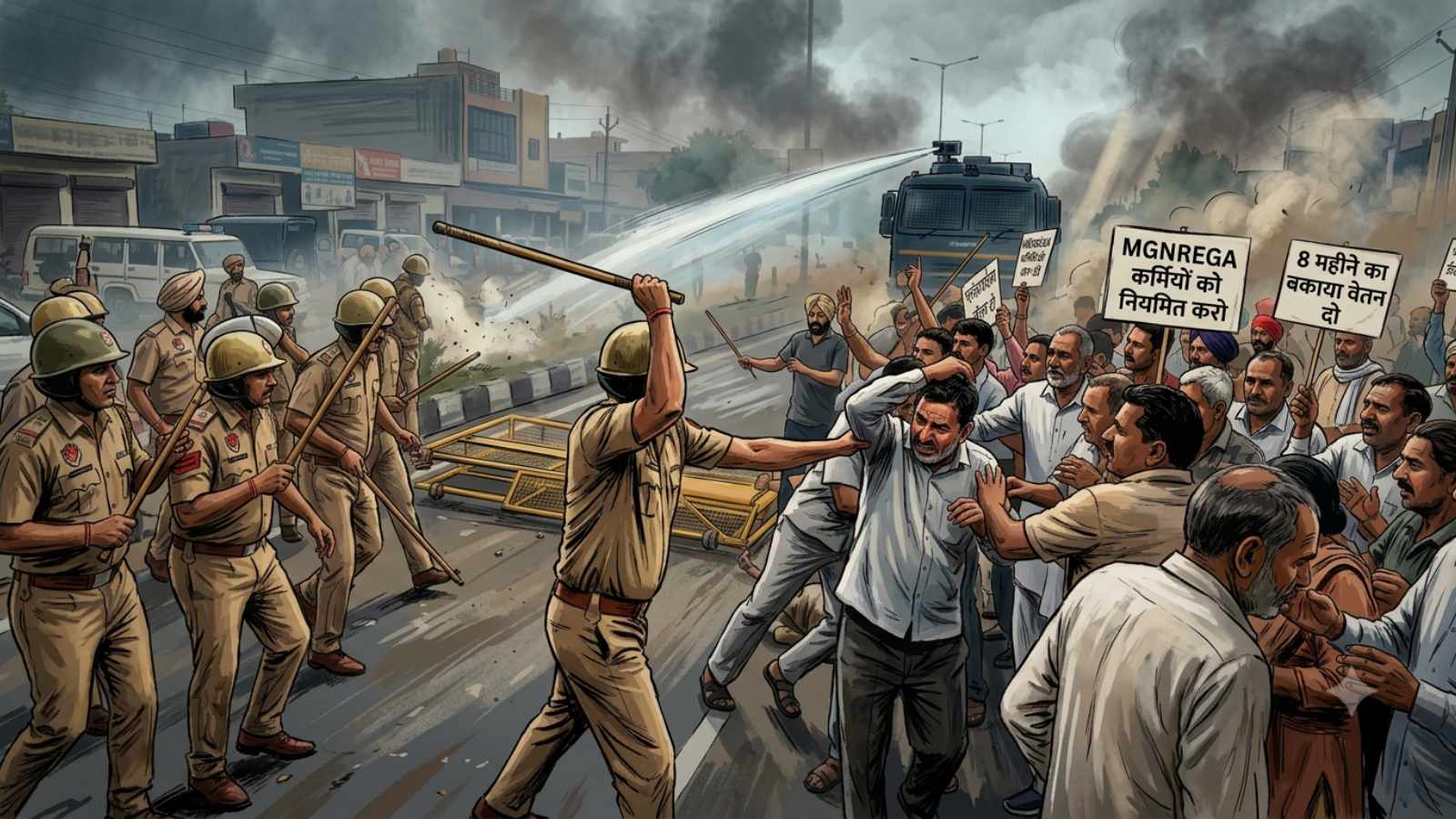
Punjab police utilized lathi-charges, tear gas, and water cannons to forcibly disperse a group of MGNREGA workers who were protesting for their rights and attempting to move past police barricades.
Escalation of Conflict: Punjab Police Clash with MGNREGA Workers
In a stark display of state authority, the Punjab police recently employed aggressive crowd-control measures—including lathi-charges, the firing of tear gas shells, and the deployment of water cannons—to disperse a gathering of MGNREGA workers. The confrontation occurred as protesters attempted to breach police lines to advance their demonstration, leading to a rapid escalation of force. This incident highlights the volatile intersection of labor unrest and law enforcement in rural India, where the struggle for basic wage security often meets with systemic resistance.
The Socio-Economic Catalyst: Understanding MGNREGA
To understand the root of this protest, one must look at the Mahatma Gandhi National Rural Employment Guarantee Act (MGNREGA). As one of the world's largest social security schemes, MGNREGA is designed to guarantee the 'right to work' by providing at least 100 days of wage employment in a financial year to every rural household. However, the scheme has been plagued by chronic issues such as delayed wage payments, bureaucratic hurdles in job card registration, and inadequate funding. For the workers in Punjab, these systemic failures are not merely administrative errors but direct threats to their survival, driving them to take to the streets in desperation.
Analysis of the Police Response and State Tactics
The use of lathi-charges and tear gas indicates a 'zero-tolerance' approach by the state administration toward public assembly in this instance. While police often cite the need to maintain public order and prevent the disruption of traffic or government installations, the deployment of water cannons suggests a calculated effort to break the momentum of the protest before it could reach key political centers. This tactical response often creates a cycle of resentment, where the perceived brutality of the police further galvanizes the protesting workforce, potentially turning a labor dispute into a broader political movement.
The Rural Crisis in Punjab
Punjnab's agricultural landscape has been under immense pressure for years, with farmers and laborers facing fluctuating crop prices and dwindling land productivity. In this environment, MGNREGA serves as a critical safety net. When this net fails—through payment delays or lack of work allocation—the socio-economic vulnerability of the rural poor is magnified. The protest is a symptom of a deeper crisis where the rural proletariat feels abandoned by the very mechanisms intended to protect them, reflecting a widening gap between policy intent and ground-level execution.
Political Implications and Human Rights
From a political perspective, the handling of these protests is a litmus test for the state government's commitment to its rural constituency. The optics of police force being used against impoverished laborers can be damaging, often providing ammunition to opposition parties and drawing the attention of human rights organizations. The right to peaceful assembly is a cornerstone of democratic expression; however, when protests are met with tear gas and lathis, it raises critical questions about the balance between maintaining law and order and respecting the fundamental rights of citizens to demand their legal dues.
Future Outlook: Potential for Increased Unrest
Looking forward, this incident is likely to serve as a catalyst for further mobilization. If the grievances of the MGNREGA workers—specifically regarding payment arrears and job security—are not addressed through meaningful dialogue and administrative reform, the frequency and intensity of such protests are expected to rise. The state may find that forceful dispersal provides only a temporary solution, while the underlying economic frustration continues to simmer. A sustainable resolution will require a transparent audit of MGNREGA funds and a streamlined payment system to restore trust between the laborers and the state.
Summary
The clash between Punjab police and MGNREGA workers is a poignant reminder of the fragility of rural livelihoods. The transition from a peaceful protest to a forced dispersal via water cannons and tear gas underscores a failure in communication and a crisis in social security implementation. Until the structural failures of the employment guarantee scheme are rectified, the potential for similar confrontations remains high.