Google’s Demis Hassabis says it’s time for a global AI watchdog — led by the US
Source Entity
Robert Hart
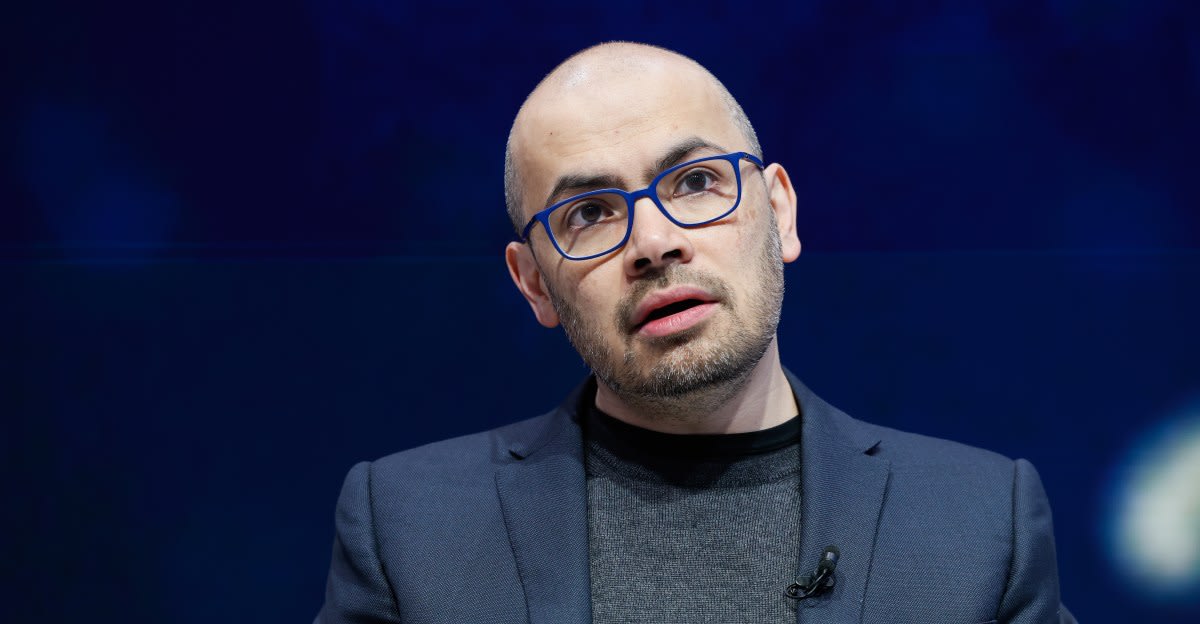
Demis Hassabis thinks the world needs an AI watchdog with the power to hit the brakes if frontier models become too dangerous. Writing in a blog post, the Google DeepMind CEO and cofounder said the US should lead the initiative, arguing that the country is the best place to set global standards "given its economic […]
The Call for Global AI Governance: Analyzing Demis Hassabis' Proposal
Google DeepMind CEO and co-founder Demis Hassabis has ignited a critical conversation regarding the trajectory of artificial intelligence by advocating for the creation of a global AI watchdog. In a recent blog post, Hassabis emphasized that the rapid acceleration of 'frontier models'—the most advanced, large-scale AI systems—necessitates a centralized oversight body with the actual power to intervene or 'hit the brakes' should these systems exhibit dangerous capabilities. This proposal comes at a pivotal moment when the gap between AI capabilities and AI safety frameworks is widening, suggesting that self-regulation by tech giants is no longer a sufficient safeguard for humanity.
The Rationale for a 'Kill Switch' and Frontier Oversight
At the heart of Hassabis' argument is the concept of frontier models. Unlike narrow AI designed for specific tasks, frontier models possess general-purpose capabilities that can evolve unpredictably. The request for a watchdog with the power to halt development indicates a shift in perspective: from viewing AI safety as a set of guidelines to viewing it as a matter of global security. By proposing a mechanism to stop dangerous deployments, Hassabis is acknowledging the potential for catastrophic risks—ranging from autonomous cyber-weaponry to the loss of human control over critical infrastructure—that could emerge from the competitive 'arms race' currently driving the industry.
Why the United States? The Logic of Economic and Tech Hegemony
Hassabis specifically posits that the United States should lead this initiative. This recommendation is rooted in the reality of current geopolitical and economic dynamics. The US currently houses the vast majority of the world's leading AI labs (such as OpenAI, Anthropic, and Google DeepMind) and controls the critical hardware supply chains, specifically the high-end GPUs necessary for training these models. By positioning the US as the leader, Hassabis suggests that the country best equipped to set global standards is the one where the innovation is actually happening, thereby ensuring that regulations are technically grounded and economically viable.
Global Coordination vs. Regional Regulation
This proposal represents a strategic alternative to the fragmented approach currently seen in global AI policy. While the European Union has taken a pioneering role with the EU AI Act, such regional laws often struggle to enforce compliance on entities based outside their borders. A global watchdog, modeled perhaps after the International Atomic Energy Agency (IAEA), would aim for a unified set of safety benchmarks. This would prevent 'regulatory arbitrage,' where AI companies move their operations to countries with laxer safety laws to bypass restrictive oversight, ensuring a baseline of safety regardless of where a model is trained.
The Tension Between Innovation and Safety
The proposal inevitably raises questions about the tension between rapid innovation and strict oversight. The power to 'hit the brakes' is a significant authority that could potentially stifle economic growth or slow the development of beneficial AI applications in medicine and science. However, Hassabis' stance suggests that the risk of an unchecked 'intelligence explosion' outweighs the cost of temporary delays. This reflects a growing consensus among AI pioneers that the 'move fast and break things' ethos of early Silicon Valley is fundamentally incompatible with the existential risks posed by Artificial General Intelligence (AGI).
Conclusion: Toward an IAEA for Artificial Intelligence
In summary, Demis Hassabis' call for a US-led global AI watchdog marks a significant admission from one of the industry's primary architects: the technology is moving faster than the law. By advocating for a centralized, powerful authority to monitor frontier models, he is pushing for a systemic shift toward global cooperation. If implemented, such a body would not only regulate the technical parameters of AI but also manage the geopolitical tensions inherent in the AI race, potentially transforming the pursuit of AGI from a winner-take-all competition into a coordinated global effort focused on human safety.