CEO fired developers to make room for AI. Developers create open source AI CEO
Source Entity
Hacker News
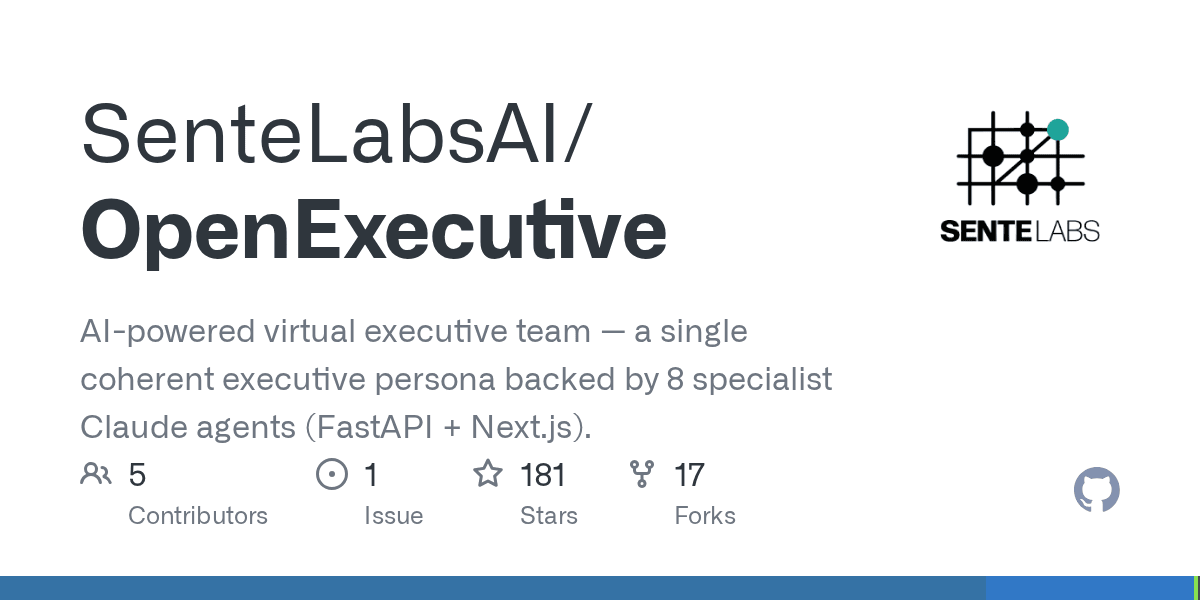
Developers have launched 'Open Executive,' an AI-driven platform featuring eight specialized agents designed to simulate a corporate executive team. This tool emerges as a provocative response to companies replacing human staff with AI, offering automated strategic, financial, and legal guidance.
The Rise of the Algorithmic C-Suite
The recent emergence of 'Open Executive,' a platform developed by sentelabs.ai, marks a significant shift in the intersection of corporate governance and artificial intelligence. By deploying eight specialized AI agents—ranging from a Chief Strategy Officer to a General Counsel—the tool aims to provide a coherent executive voice capable of handling complex business tasks like financial modeling, market positioning, and contract analysis. This development arrives at a time when the corporate world is increasingly experimenting with the replacement of human staff with automated systems, turning the narrative of AI-driven workforce displacement on its head by automating the leaders themselves.
Analyzing the 'Open Executive' Framework
The architecture of Open Executive is built upon the promise of providing Harvard MBA-level knowledge, tailored specifically to the unique needs of a business. By centralizing roles like the Chief Financial Officer and Chief HR Officer into a single, cohesive AI-driven interface, the platform attempts to bridge the gap between high-level strategic decision-making and operational execution. The inclusion of specialized roles suggests that the developers are moving beyond simple chatbots to create a comprehensive digital ecosystem that mimics the collaborative structure of a traditional executive boardroom.
The Irony of Automation: Replacing the Replacers
There is a profound irony in the release of this tool following reports of CEOs firing human developers to make room for AI. By creating an 'Open Executive' system, these developers are essentially democratizing the very C-suite roles that have been responsible for the current trend of AI-centric layoffs. This serves as a meta-commentary on the future of labor: if administrative and technical staff are susceptible to automation, then the strategic and decision-making roles within a company are arguably just as vulnerable to being superseded by sophisticated, data-driven algorithms.
Broader Implications for Corporate Governance
The shift toward using AI agents for M&A, competitive analysis, and legal oversight raises critical questions about corporate accountability. While an AI agent might offer rapid financial modeling or contract reviews, it lacks the human nuance, ethical judgment, and legal liability that a living executive provides. As businesses integrate these tools, the reliance on automated systems could potentially isolate decision-making processes from human oversight, shifting the burden of responsibility to the developers of the software rather than the managers utilizing it.
Future Trends and Market Sustainability
Looking forward, the success of platforms like Open Executive will likely depend on their ability to integrate with real-time data and maintain compliance with complex legal frameworks. While the prospect of an 'AI CEO' is currently a novelty, it signals a broader trend toward 'Agentic Workflows' where AI does not just assist, but actively directs business operations. We can expect to see more firms exploring these automated executive structures, particularly in lean startup environments where capital for a full human C-suite is limited. However, the long-term impact on corporate culture and strategic foresight remains to be seen as the industry navigates the limitations of purely algorithmic leadership.