SIA searches Poonch, Udhampur in J&K 'radicalisation' probe
Source Entity
NASEER GANAI
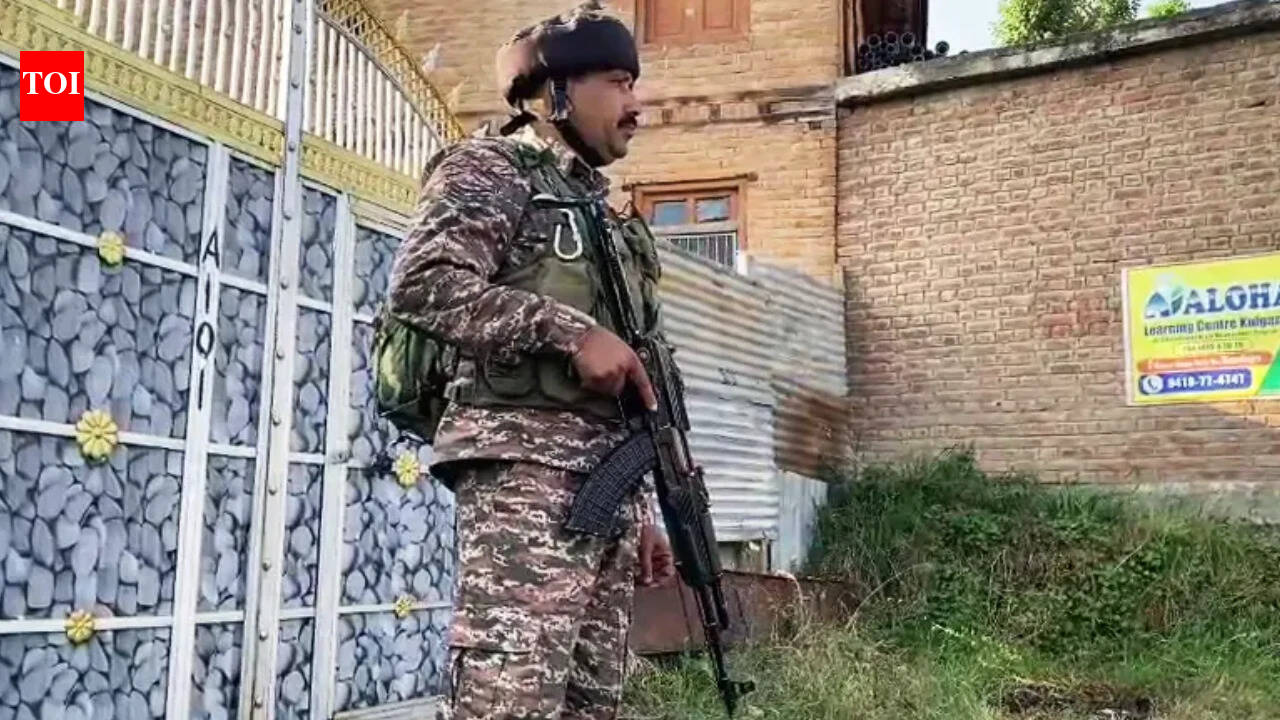
Security forces recovered the remains of a Jaish-e-Mohammed terrorist and an M4 carbine in Doda's Seoj Dhar area. Simultaneously, the SIA raided five locations in Poonch and Udhampur to investigate cross-border radicalization and secessionist activities.
Security Operations Intensify in Jammu and Kashmir
Neutralization in the High-Altitude Terrain
In a significant counter-terrorism development, joint security forces, comprising the Special Operations Group (SOG) of the J&K Police, the Rashtriya Rifles (RR), and the Central Reserve Police Force (CRPF), successfully retrieved the remains of a Pakistani Jaish-e-Mohammed (JeM) terrorist. The recovery took place in the challenging, high-altitude terrain of the Seoj Dhar forest area, near the Seoj Dhar glacier in the Doda district. The discovery of a US-made, night-vision-enabled M4 carbine alongside the remains underscores the sophisticated weaponry often utilized by infiltrating militants in the region.
Strategic Implications of Advanced Weaponry
The recovery of an M4 carbine is particularly notable, as it highlights the ongoing challenges security forces face regarding the influx of modern, high-grade weaponry across the border. These rifles, often characterized by their tactical versatility and night-vision capabilities, represent a persistent threat in the rugged, forested geography of Jammu and Kashmir. The successful retrieval of these assets not only removes a lethal threat from the field but also provides critical intelligence regarding the tactical equipment currently being funneled into the region to sustain insurgent activities.
SIA Crackdown on Radicalization Networks
While the Doda operation focused on physical neutralization, the State Investigation Agency (SIA) simultaneously launched a multi-pronged offensive against the ideological infrastructure of terrorism. Raids were conducted at five strategic locations across the Poonch and Udhampur districts, specifically targeting areas such as Mandi, Surankote, and Ramnagar. These operations are part of a broader, ongoing investigation into the propagation of secessionist narratives and the systematic radicalization of individuals through both digital and physical channels.
Digital Borders and Cross-LoC Communication
Investigative findings have revealed that the individuals targeted in these raids were allegedly maintaining active communication with suspicious entities located across the Line of Control (LoC). The use of social media and other digital platforms to disseminate extremist propaganda from across the border remains a primary concern for Indian intelligence. By targeting these communication nexuses, the SIA aims to dismantle the support structures that enable radicalization, effectively treating the digital space as an extension of the physical security frontier.
Future Trends in Counter-Insurgency
The dual approach of kinetic military operations in high-altitude zones and intelligence-led investigations into radicalization networks signals a tightening of the security apparatus in J&K. Moving forward, the focus is likely to remain on neutralizing the logistical supply chains—both in terms of weaponry and human intelligence—that sustain cross-border terror. As the state continues to combat these multi-layered threats, the integration of ground-level tactical successes with deep-dive investigative efforts will remain the cornerstone of regional stability.
Multiple Citing Sources