Drake Anthony Recreates the Mechanical Bulb First Seen in 1675 – TechEBlog
Source Entity
Hacker News
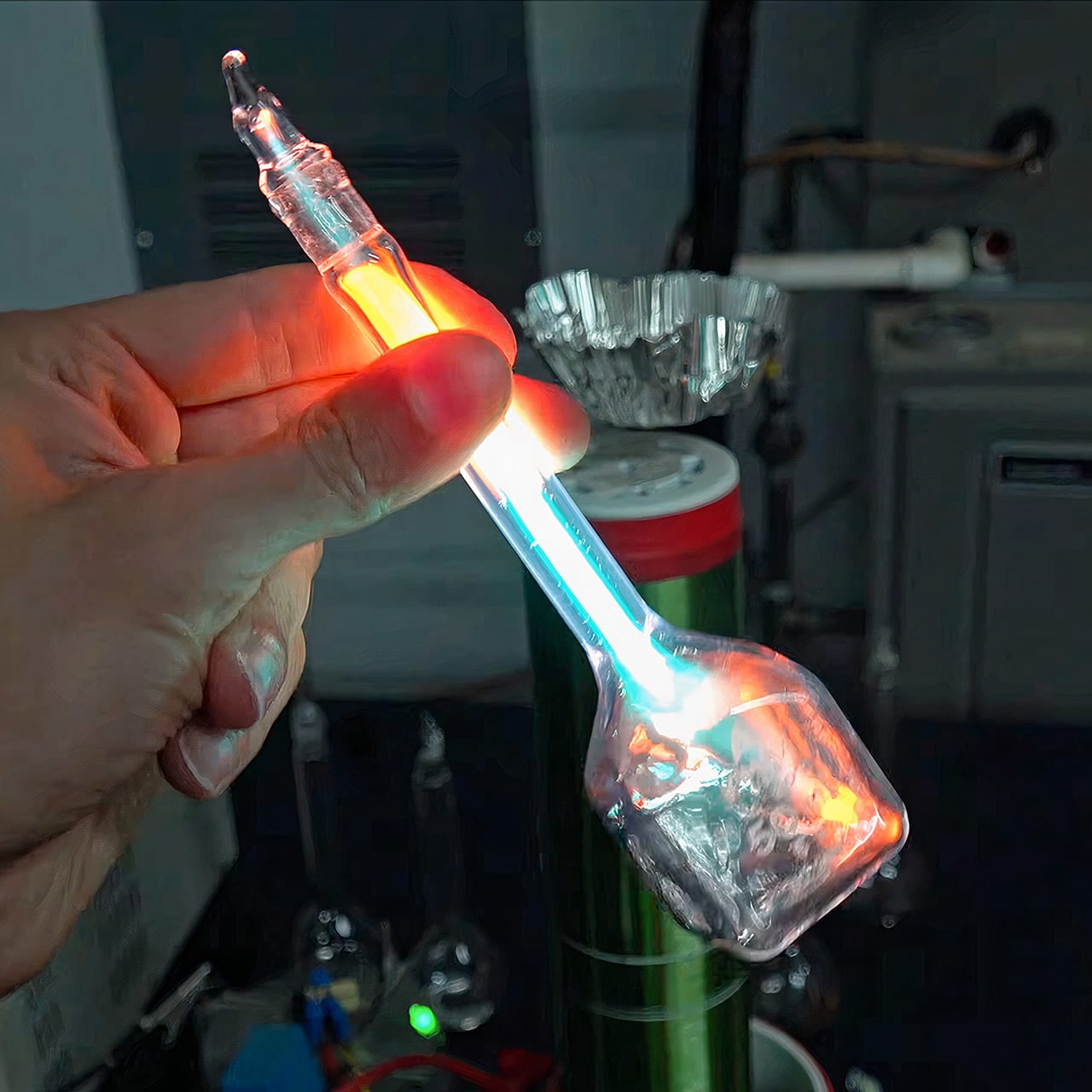
YouTuber Drake Anthony has successfully recreated a 17th-century phenomenon where mercury produces light when agitated in a vacuum. This experiment replicates Jean Picard's 1675 discovery of the 'barometric light' without requiring any modern power sources.
The Rebirth of Barometric Light
In a remarkable bridge between modern DIY engineering and 17th-century physics, YouTuber Drake Anthony—known for his channel 'styro pyro 2'—has successfully replicated the mysterious 'barometric light.' This phenomenon, first documented by French astronomer Jean Picard in 1675, represents a fascinating intersection of chemistry and optics, where the simple agitation of mercury within a vacuum produces a visible, eerie glow.
Historical Context: The Discovery of 1675
The history of this light dates back to a dark, clear night in Paris when Jean Picard noticed a faint luminosity emanating from his mercury barometer. Picard observed that the light only appeared when the mercury was stirred, exposing fresh glass surfaces to the liquid metal under low-pressure conditions. At the time, this discovery baffled scientists, as it occurred long before the invention of electricity or the understanding of modern triboluminescence and ionization, marking it as one of the earliest recorded examples of 'cold light.'
Modern Engineering Meets Ancient Science
Drake Anthony’s recreation utilizes basic materials to achieve what was once considered a scientific curiosity. By creating a vacuum-sealed glass flask containing mercury, Anthony demonstrates that the light is not a result of chemical combustion or electrical circuitry, but rather a physical interaction between the mercury and the glass container. The fact that this device functions entirely without batteries, wiring, or external power sources highlights a fundamental, albeit often overlooked, principle of physics that has remained unchanged for over 300 years.
The Mechanics of the Glow
The light produced in the flask is a consequence of the friction and electrostatic discharge generated when mercury slides against the inner walls of the glass. As the mercury is agitated, it creates a vacuum effect where the movement of the liquid metal creates a momentary electrical potential. This process, while simple in concept, requires precise craftsmanship to maintain the necessary vacuum seal, showcasing Anthony’s technical proficiency in working with volatile materials.
Broader Implications and Future Trends
While the barometric light is unlikely to replace modern LED technology, the recreation serves as a powerful educational tool. It reminds the scientific community and amateur hobbyists alike that historical experiments often hold untapped insights into material science. As we move toward more sustainable and energy-efficient lighting solutions, studying these 'passive' light sources could provide inspiration for low-energy displays or specialized scientific instrumentation that operates in environments where traditional power sources are unavailable.
Conclusion
Drake Anthony’s project is more than just a viral video; it is an act of historical preservation through experimentation. By bringing Jean Picard’s 1675 discovery into the digital age, he has bridged the gap between the Enlightenment era and modern maker culture. This successful demonstration proves that the fundamental laws of nature, once observed, remain a constant source of wonder and potential discovery for those willing to venture into the workshop.