CIA deception op, over 90 troops: How US rescued 'Alpha & Bravo' from Iran - video
Source Entity
AYUSH PANDEY
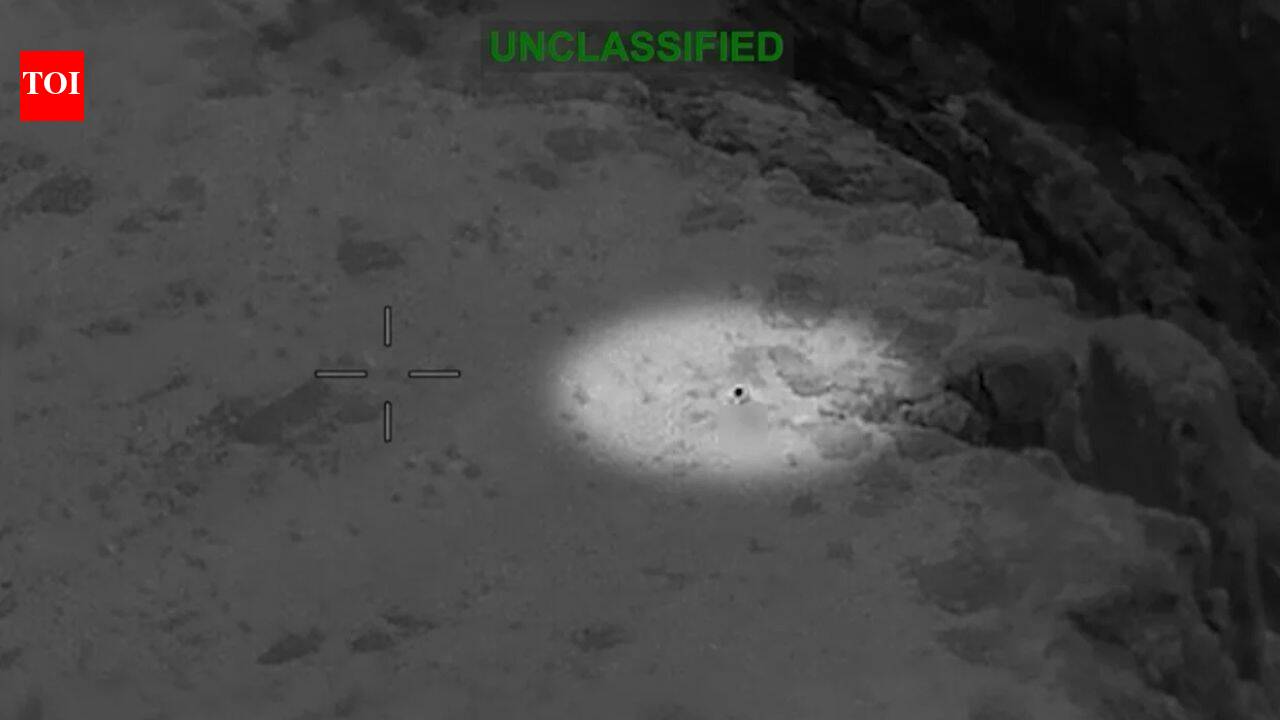
US Air Force officer 'Dude 44 Bravo' has shared his harrowing survival story after his F-15E was shot down over Iran. He spent 50 hours evading capture in the desert before being rescued in a complex military operation.
The Survival of Dude 44 Bravo: A Deep Dive into Behind-Enemy-Lines Recovery
The Incident Over Iran
The survival story of the US Air Force colonel known by the call sign 'Dude 44 Bravo' provides a rare and harrowing glimpse into the realities of modern aerial warfare. Serving as the weapons systems officer aboard an F-15E Strike Eagle, the officer was shot down approximately 100 miles inside southern Iran. The incident, which occurred during an April strike mission, saw the $30 million aircraft brought down by a shoulder-fired missile—a stark reminder of the lethal threat posed by portable air-defense systems (MANPADS) that cost a fraction of the jets they destroy.
Ejection and Survival
Following the missile strike, both the pilot, designated 'Alpha', and Dude 44 Bravo were forced to eject, landing in a rugged, mountainous region of the Iranian desert. Injured and isolated, Bravo spent nearly 50 hours in hostile territory. His survival was not merely a matter of luck; he managed to establish communication with US forces, relaying his status with the poignant first message: "God is good." This communication was vital, as it confirmed his survival and injury status, allowing command to coordinate a rescue operation while he remained in hiding.
A Complex Rescue Operation
The extraction of Dude 44 Bravo stands as one of the most complex personnel recovery missions in recent history. The US military mobilized over 90 service members to orchestrate the rescue on Easter Sunday. The mission was fraught with danger, as Iranian forces actively searched for the downed aviator. To facilitate the extraction, the US military utilized a multi-layered approach, employing drones and bombers to conduct strikes on Iranian Revolutionary Guard forces in the vicinity, effectively creating a buffer zone to allow for the recovery of their personnel.
Broader Strategic Implications
This event underscores the absolute commitment of the United States to the doctrine of 'Leave No One Behind.' The scale of the response—deploying nearly a hundred personnel and significant air assets to retrieve a single individual—serves as both a deterrent and a statement of military capability. It highlights the strategic necessity of maintaining robust Combat Search and Rescue (CSAR) capabilities, which are essential for maintaining pilot morale and operational confidence in contested airspace.
Historical Context and Future Trends
Historically, the recovery of downed aircrews has been a high-stakes endeavor, often defining the success or failure of military campaigns. The reliance on advanced communication, precision air power, and rapid deployment teams seen in the rescue of Dude 44 Bravo suggests a shift toward highly integrated, technology-driven recovery operations. As adversaries continue to acquire sophisticated anti-air capabilities, the future of aerial combat will likely see an increased focus on the integration of autonomous systems and rapid-response teams capable of operating in highly denied environments.
Conclusion
The account shared by Dude 44 Bravo on 60 Minutes serves as a testament to the resilience of the human spirit under extreme pressure. By surviving two days in a hostile desert while being actively hunted, the officer demonstrated the rigorous training and determination required of modern combat aviators. His story not only sheds light on the specific tactics of the rescue mission but also reinforces the immense logistical and military efforts required to ensure the survival of service members in the face of modern geopolitical conflict.
Multiple Citing Sources